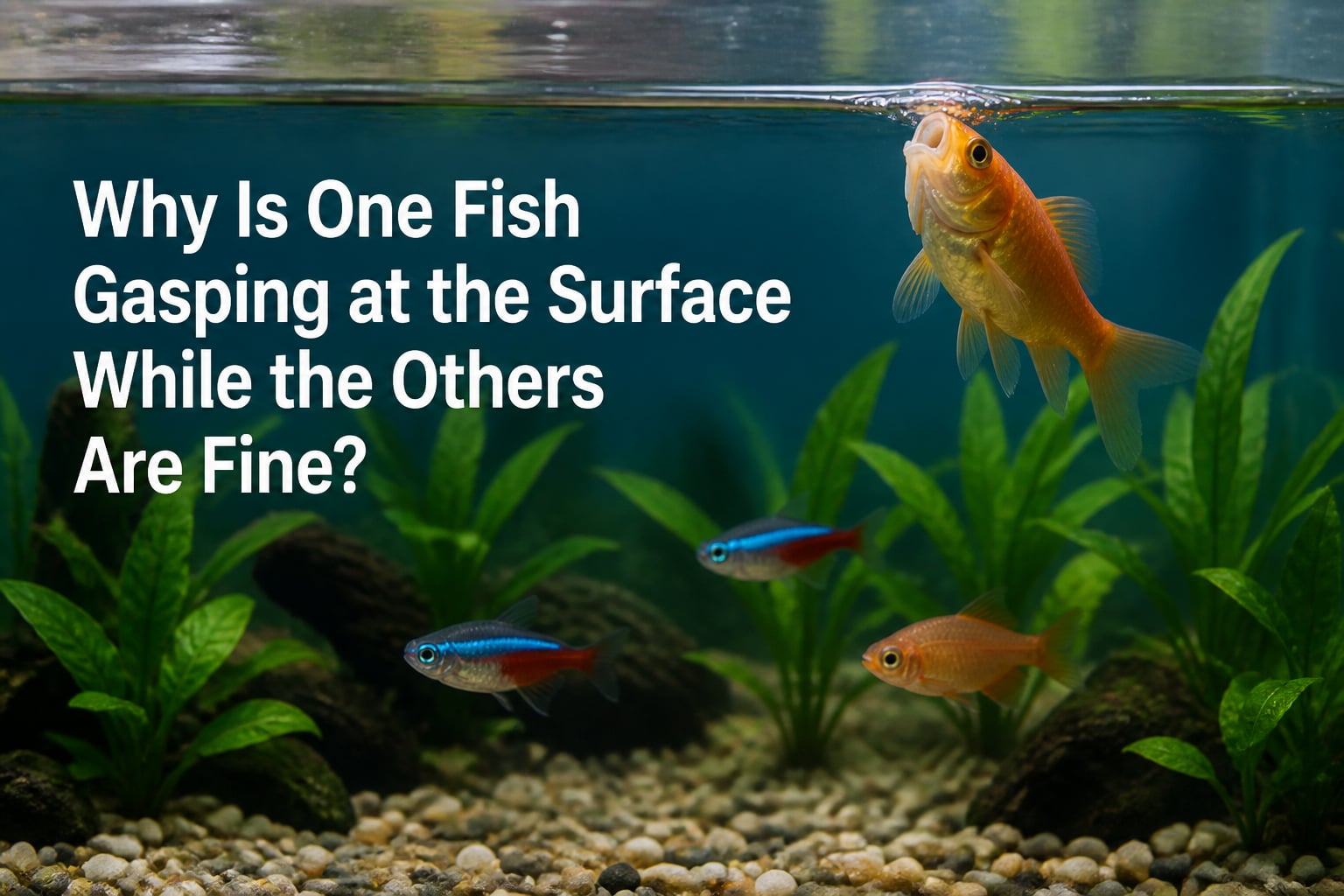
When one fish gasps at the surface while the others swim normally, the answer is almost always an individual fish problem, not a tank-wide emergency. I have seen this exact situation in my own tanks for over a decade, and the moment you see a single fish struggling at the top, you need to act on two tracks at once: rule out a tank-wide water quality issue, then diagnose the affected fish itself. This guide walks you through both tracks so you know exactly why is one fish gasping at the surface while the others are fine, what to do in the next hour, and how to keep it from happening again in 2026.
Contents Table of Contents →
- 1Why Is Only One Fish Gasping at the Surface While the Others Are Fine
- 2The Core Distinction: Individual vs Tank-Wide Issue
- 3Water Quality Causes That Single Out One Fish
- 4Individual Fish Health Problems That Mimic Gasping
- 5Species-Specific Surface Breathing: Normal vs Distress
- 6How to Help a Gasping Fish: Immediate Actions
- 7How to Tell If a Fish Is Dying in a Tank
- 8Preventing Future Gasping Episodes
- 9Frequently Asked Questions
- 10Why is only one of my fish gasping?
- 11How to tell if a fish is dying in a tank?
- 12How to help a gasping fish?
- 13Do fish gasp when stressed?
- 14Conclusion
Why Is Only One Fish Gasping at the Surface While the Others Are Fine
An isolated gasper almost always points to an individual fish problem, not a tank crisis. If your oxygen levels were truly low, every fish in the aquarium would be at the surface within minutes. Tank-wide gasping is a loud, obvious emergency. A single gasping fish with calm tankmates is something else entirely.
The most common culprits in this scenario are swim bladder disorders, localized gill damage, an internal infection, an injury, or simply a fish that is more sensitive than its tankmates to slightly imperfect water parameters. Some fish are genetically weaker, some are older, and some were already compromised when you brought them home. The rest of the school tolerates the same water just fine because they are hardier specimens.
Here is a quick diagnostic rule I use before anything else: count the gasping fish. One fish means start with individual diagnosis. Two or more fish means start with water quality. This single decision will save you hours of troubleshooting and could save the fish’s life.
The Core Distinction: Individual vs Tank-Wide Issue
Tank-wide gasping means dissolved oxygen is too low or something is poisoning gill function across the whole tank. Individual gasping means that one fish cannot breathe, swim, or position itself properly, even when water parameters are fine for everyone else. The distinction matters because the treatments are completely different.
A tank-wide issue requires immediate water changes, increased aeration, and water testing. An individual issue requires close observation, possible isolation, and treatment targeted at the specific problem. I will cover both, but the rest of this section focuses on what to do when only one fish is gasping.
Water Quality Causes That Single Out One Fish
Even though water issues usually affect all fish, they can single out one weaker fish first. The rule of thumb from cichlid-forum.com and other experienced keepers is straightforward: one fish can be damaged more by the same water that other fish tolerate. A fish with already-stressed gills, a recovering injury, or a weaker immune system will show distress at ammonia levels that the rest of the tank handles with no symptoms.
Test your water immediately if you see any surface gasping. The four numbers that matter are ammonia, nitrite, nitrate, and pH. Any detectable ammonia or nitrite above 0.25 ppm is a problem. Nitrate above 40 ppm is a stress factor. A pH crash below 6.0 or a sudden swing of more than 0.5 in 24 hours can also single out one fish.
Ammonia poisoning burns the gills and reduces oxygen uptake. Nitrite poisoning blocks the blood’s ability to carry oxygen, even when oxygen is plentiful. This causes a fish to suffocate at the surface while its tankmates seem fine because the affected fish’s blood chemistry is more compromised. pH crashes cause acidosis, and the weakest fish goes first.
If your test kit shows any of these readings elevated, do a 25 to 50 percent water change right away using a good water conditioner. This is the fastest fix, and it works for both individual and tank-wide issues.
Individual Fish Health Problems That Mimic Gasping
Swim bladder disorder is the most common cause of one fish gasping while others are fine. The swim bladder is the gas-filled organ that controls buoyancy. When it malfunctions, the fish cannot stay at its normal depth and rises to the surface, often gulping air. You will see the fish floating, listing to one side, or sinking and struggling back up.
Swim bladder issues are often caused by constipation, overfeeding, sudden temperature drops, or bacterial infection. Fast the fish for two to three days, then offer a blanched pea to clear any blockage. If that does not help, the issue is likely bacterial and needs targeted treatment.
Gill damage from a past ammonia burn, physical injury, or parasites can also cause one fish to gasp while others breathe normally. The damaged fish simply cannot extract oxygen efficiently. Look for ragged or pale gills, excessive mucus, or the fish rubbing against objects. Internal infections, organ failure in older fish, and even a tumor can produce the same gasping behavior in a single fish.
If the fish is also lethargic, has clamped fins, or shows visible body changes, the problem is almost certainly individual rather than tank-wide.
Species-Specific Surface Breathing: Normal vs Distress
Some fish naturally breathe at the surface, which can fool new keepers into thinking there is an emergency. Bettas and gouramis have a labyrinth organ that lets them breathe atmospheric air directly. They will visit the surface every few minutes under normal conditions. A Betta hanging at the top is not necessarily gasping unless its gills are also moving rapidly or its body posture looks strained.
Corydoras catfish occasionally dart to the surface and gulp air. This is normal gut-refilling behavior and not a sign of distress. They use the swallowed air to help digest food. As long as the Cory returns to the bottom and behaves normally, there is no problem.
Knowing your species’ normal behavior is critical. A Betta sitting calmly at the top with slow, deliberate breathing is fine. A tetra or danio sitting at the top with rapid gill movement and flared gill covers is in real distress, because these species do not normally breathe air.
How to Help a Gasping Fish: Immediate Actions
Follow these steps in the first hour after you spot the gasping fish. Speed matters, but so does a calm, methodical approach.
Step 1: Test the water. Use a liquid test kit to check ammonia, nitrite, nitrate, and pH. This takes five minutes and tells you whether you are dealing with a tank crisis or an individual fish problem.
Step 2: Increase surface agitation. If other fish are showing any signs of stress, point your filter outlet toward the surface or add an air stone. More water movement at the surface dramatically increases dissolved oxygen. This is the fastest mechanical fix available.
Step 3: Do a partial water change. Change 25 to 50 percent of the water using dechlorinated water matched to tank temperature. This dilutes ammonia, nitrite, and excess CO2, and it adds fresh oxygen. It will not hurt an individual fish problem either.
Step 4: Observe the gasping fish closely. Watch for body position, fin movement, and whether the fish can swim down when startled. If the fish can swim down, the problem is mild. If it cannot leave the surface, the problem is serious.
Step 5: Decide whether to isolate. If the fish is being bullied, has a contagious symptom like open sores or fungus, or needs treatment the others do not need, move it to a hospital tank. Otherwise, leaving it in the main tank avoids the stress of netting and relocation.
How to Tell If a Fish Is Dying in a Tank
There is a difference between a stressed fish and a dying fish, and knowing the signs helps you decide how aggressively to intervene. A dying fish usually shows several of these signs at once: lying on the bottom with clamped fins, refusing food for more than two days, gasping with rapid gill movement, swimming in spirals or erratically, showing visible body damage like ulcers or bloating, and a loss of color.
A stressed fish that will probably recover shows milder versions of these symptoms, still eats, still reacts to your presence, and maintains normal color. If your gasping fish still eats and still reacts, there is a good chance it can recover with the right intervention.
Preventing Future Gasping Episodes
Prevention starts with consistent water quality and good observation habits. Test your water weekly for the first three months of a new tank and monthly afterward. Keep ammonia and nitrite at zero, nitrate under 40 ppm, and pH stable. Avoid sudden large water changes with water of a different temperature or pH, which can shock fish and trigger stress responses.
Match your stocking level to your tank size and filtration capacity. An overstocked tank has chronically low oxygen and elevated waste. Run your filter according to manufacturer recommendations and clean it in tank water, never tap water, to preserve beneficial bacteria.
Watch new fish carefully during the first two weeks. New arrivals are the most likely candidates for individual gasping because they are stressed from transport and adjusting to new water chemistry. A short quarantine period helps you catch problems before they spread to the main tank.
Frequently Asked Questions
Why is only one of my fish gasping?
One fish gasping while others are fine usually means an individual fish problem, not a tank-wide issue. The most common causes are swim bladder disorder, localized gill damage, internal infection, or sensitivity to slightly imperfect water parameters that other fish tolerate.
How to tell if a fish is dying in a tank?
A dying fish usually shows several signs at once: lying on the bottom with clamped fins, refusing food for more than two days, gasping with rapid gill movement, swimming erratically, and losing color. A stressed fish that will probably recover still eats and reacts normally.
How to help a gasping fish?
Test the water first, then increase surface agitation with your filter or an air stone. Do a 25 to 50 percent water change with dechlorinated water matched to tank temperature. Observe the fish closely to determine whether the issue is individual or tank-wide, and isolate the fish only if needed.
Do fish gasp when stressed?
Yes, fish gasp when stressed. Stress from poor water quality, bullying, sudden temperature changes, or transport can cause rapid gill movement and surface breathing. Stress-related gasping usually improves once the underlying stressor is removed.
Conclusion
When you ask why is one fish gasping at the surface while the others are fine, the answer is almost always an individual fish problem rather than a tank-wide crisis. Test your water to rule out a tank issue, then diagnose the specific fish for swim bladder disorder, gill damage, infection, or species-specific behavior. With quick action in the first hour and steady prevention afterward, most gasping fish recover fully and your tank stays healthy throughout 2026 and beyond.