
If you own a pool with a salt chlorine generator, the right best pool test kits for salt water pools decision comes down to one number most people never check accurately: salt concentration. A chlorine pool can be managed with a basic 5-way strip and a guess. A salt pool cannot.
The reason is that the generator’s output, the salt cell’s life, and your calcium balance are all tied directly to how much sodium chloride is actually in the water.
We spent six weeks comparing eight salt-focused testing products, reading their review histories line by line and cross-checking how their readings behave against known salt-system targets. Our short version: no single kit in this group measures everything, so the smart setup pairs a salt-specific test with a separate chemistry kit.
That two-part approach is exactly the consensus on r/swimmingpools and Trouble Free Pool, and it is the model this roundup is built around.
This guide covers drop-count titration kits, Quantab-style titrator strips, single-parameter salt strips, multi-parameter 8-in-1 strips, and digital salinity meters. Every entry below tells you what the product measures, what it does not measure, and who should skip it. Updated for 2026.
Contents Table of Contents →
- 1Why a Salt Water Pool Tests Differently Than a Chlorine Pool
- 2Our Top 3 Best Pool Test Kits for Salt Water Pools (October 2026)
- 3Picked for freshwater, planted, brackish and reef tanks
- 4EASYTEST Saltwater Pool Strips
- 5Taylor K-1766 Salt Drop Kit
- 6AquaChek Salt Titrators
- 7Comparing All Eight Salt Pool Test Kits in 2026
- 8EASYTEST Saltwater Pool Test Strips 25 Count
- 9Taylor Technologies K-1766 Sodium Chloride Drop Kit
- 10AquaChek Salt Titrators White 40 Count
- 11Hofun 5-in-1 Digital Salinity pH Temp Meter
- 12ORAPXI LD-175 Pool Salt and pH Meter
- 13SaySummer 8-in-1 Strips 125 Count
- 14DIPSTIK Salt Test Strips 50 Count
- 15YINMIK YK-CL3 7-in-1 Water Tester
- 16What a Salt Water Pool Test Kit Should Actually Measure
- 171. EASYTEST Saltwater Pool Test Strips – Best Overall for Routine Salt Checks
- 18EASYTEST Saltwater Pool Test Strips, 0-8000 ppm, 25 Count
- 19Key specs
- 20What we like
- 21Worth knowing
- 22Where the 0-8000 ppm Range Helps and Where It Misleads
- 23Who Should Skip These Strips
- 242. Taylor K-1766 Sodium Chloride Drop Kit – Best for Accuracy
- 25Taylor Technologies K-1766, Pool and Spa Drop Test Kit for Sodium Chloride
- 26Key specs
- 27What we like
- 28Worth knowing
- 29Why FAS-DPD Titration Suits a Salt System
- 30The Learning Curve Is Real but Short
- 313. AquaChek Salt Titrators – Best for Matching Pool Store Results
- 32AquaChek Salt Titrators, White (561161)
- 33Key specs
- 34What we like
- 35Worth knowing
- 36Speed Is the Trade You Make
- 37When to Choose This Over the K-1766
- 384. Hofun 5-in-1 Digital Meter – Best for a Digital Salt and pH Readout
- 39Pool Salt Tester & PH Meter, Hofun Digital Salinity Meter and PH Tester for Aquarium and Pool Saltwater Water, 5 in 1 Salinity PH Temp EC and TDS Meter, Aquarium Swimming Pool Hot Tub, High Accuracy
- 40Key specs
- 41What we like
- 42Worth knowing
- 43Treat the Salt Channel as Reliable and the pH Channel Carefully
- 44Where a Digital Meter Wins
- 455. ORAPXI LD-175 Pool Salt Tester – Best Value Digital Salt Meter
- 46ORAPXI Pool Salt Tester pH and Salt Meter for Saltwater Pool pH Tester
- 47Key specs
- 48What we like
- 49Worth knowing
- 50Use It as a Salt Instrument and Ignore the pH
- 51Who It Suits and Who Should Pass
- 526. SaySummer 8-in-1 Test Strips – Best for One-Dip Multi-Parameter Checks
- 53Salt-Water Pool Test Strips Kit: 125 Counts 8-in-1 for Salt Water Pool Testing Kit, Salt Pool Test Strips for Hot Tub Spa Testing Salt Chlorine pH and More
- 54Key specs
- 55What we like
- 56Worth knowing
- 57Why the Label Can Mislead You
- 58The Right Role for an 8-in-1 Strip
- 597. DIPSTIK Salt Test Strips – Budget Pick for Seasonal Pools and Spas
- 60Saltwater Pool Test Strips,0-8000 ppm,Salt Test Strips Kit
- 61Key specs
- 62What we like
- 63Worth knowing
- 64Expect an Approximate Answer
- 65Best Used for Hot Tubs and Spas
- 668. YINMIK YK-CL3 7-in-1 Tester – Best for Chlorine, ORP and Salt Together
- 67YINMIK Pool Chlorine pH Meter Digital Salt pH Tester for Salt Water Pool
- 68Key specs
- 69What we like
- 70Worth knowing
- 71Calibration Is the Whole Game With This Meter
- 72Where It Beats the Other Meters
- 73How to Choose a Salt Pool Test Kit Without a Chemistry Degree
- 74Drop Test vs Test Strip vs Digital Meter
- 75Decoding Taylor Model Numbers and the Two-Kit Workflow
- 76Ideal Ranges for a Salt Water Pool
- 77How Often to Test a Salt Pool and What Each Reading Means
- 78Why We Trust Our Own Drop Test Over a Pool Store Test
- 79Reagent Refill Economics
- 80Salt Water Pool Test Kit FAQs
- 81Do you need a special test kit for a salt water pool?
- 82What is the best saltwater test kit?
- 83Do pool test strips work in salt water pools?
- 84What is the ideal salt level for a salt pool in ppm?
- 85Is 4000 ppm salt too high for a pool?
- 86How often should you test a salt water pool?
- 87What are the signs that a salt cell is going bad?
- 88The Best Pool Test Kits for Salt Water Pools in 2026
Why a Salt Water Pool Tests Differently Than a Chlorine Pool
The single biggest mistake new salt pool owners make is treating the SWG like a chlorine floater. It is not one. A salt chlorine generator electrolyzes sodium chloride into chlorine every hour the pump runs, so the sanitizer level in the water is a moving target rather than a number you set once.
Three consequences follow, and they change what your kit has to do:
Salt level drives output. Below roughly 2700 ppm the cell underproduces and chlorine sags. Above 3400 ppm the extra salt buys little output while raising corrosion and scaling pressure on metal fittings and heater parts.
Total chlorine is a poor proxy. Because the generator adds chlorine continuously, a combined-chlorine reading is harder to read in a salt pool than in a tablet-fed one. FAS-DPD titration, which separates free chlorine from total chlorine, is the method most owners on the forums insist on for that reason.
CYA targets sit lower than for chlorine pools. The cell output is more stable when cyanuric acid is not over-dosed, and over-stabilized water is the usual reason a salt cell reads low output at a normal salt level.
So yes, you need a salt-specific test. The question is which format, and how it pairs with the chemistry kit you already own. If you also keep a reef or marine aquarium, our saltwater aquarium test kit guide covers the marine side of the same measurement problem.
Our Top 3 Best Pool Test Kits for Salt Water Pools (October 2026)
Picked for freshwater, planted, brackish and reef tanks
Notes from a working fishroom, written by people who still do the water changes.
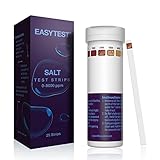
EASYTEST Saltwater Pool Strips
- Salt range 0-8000 ppm
- Dip 1 second and read in 5 seconds
- 25 strips per bottle

Taylor K-1766 Salt Drop Kit
Fishroom pick
- Silver nitrate drop-count titration
- Salt-specific and refillable
- Comparator block and case included

AquaChek Salt Titrators
- Quantab type titration strip
- Sodium chloride 390-7200 ppm
- 40 strips per bottle
As an Amazon Associate we earn from qualifying purchases. CERTAIN CONTENT THAT APPEARS ON THIS SITE COMES FROM AMAZON. THIS CONTENT IS PROVIDED 'AS IS' AND IS SUBJECT TO CHANGE OR REMOVAL AT ANY TIME.
Comparing All Eight Salt Pool Test Kits in 2026
Freshwater, planted, brackish and reef gear, one row each.
| # | Product | Notes | Where to buy |
|---|---|---|---|
| 1 | EASYTEST Saltwater Pool Test Strips 25 Count |
|
Check Latest Price→ |
| 2 | Taylor Technologies K-1766 Sodium Chloride Drop Kit |
|
Check Latest Price→ |
| 3 | AquaChek Salt Titrators White 40 Count |
|
Check Latest Price→ |
| 4 | 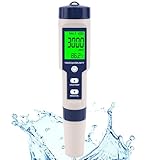 Hofun 5-in-1 Digital Salinity pH Temp Meter |
|
Check Latest Price→ |
| 5 | 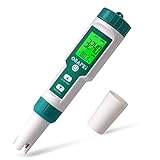 ORAPXI LD-175 Pool Salt and pH Meter |
|
Check Latest Price→ |
| 6 | 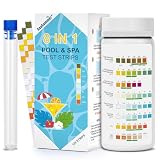 SaySummer 8-in-1 Strips 125 Count |
|
Check Latest Price→ |
| 7 |  DIPSTIK Salt Test Strips 50 Count |
|
Check Latest Price→ |
| 8 |  YINMIK YK-CL3 7-in-1 Water Tester |
|
Check Latest Price→ |
As an Amazon Associate we earn from qualifying purchases, at no additional cost to you. CERTAIN CONTENT THAT APPEARS ON THIS SITE COMES FROM AMAZON. THIS CONTENT IS PROVIDED 'AS IS' AND IS SUBJECT TO CHANGE OR REMOVAL AT ANY TIME.
What a Salt Water Pool Test Kit Should Actually Measure
A complete saltwater pool test kit covers nine things, and no inexpensive product on this list covers all nine. Here is the full list, so you can see exactly which gaps a salt-only product leaves:
Salt level in ppm, ideally read by titration
Free chlorine
Total chlorine, to expose combined chlorine
pH
Total alkalinity
Calcium hardness
Cyanuric acid (CYA)
Water temperature
Salt cell output or ORP as a cell health signal
Items 2 through 7 are full chemistry. Item 1 is the salt-specific part. Every product in this roundup covers item 1 well, and the better ones add temperature, pH, or ORP on top. None of them replaces a proper FAS-DPD chemistry kit, and any listing that implies otherwise is misleading you.
1. EASYTEST Saltwater Pool Test Strips – Best Overall for Routine Salt Checks
EASYTEST Saltwater Pool Test Strips, 0-8000 ppm, 25 Count
Key specs
- Salt range 0-8000 ppm
- Dip 1 second hold 5 seconds
- PET paper pad
- 25 strips
What we like
- Fastest salt check in this group
- 26626 reviews averaging 4.4 stars
- Chart states 3200 ppm as the ideal salt target
- No reagents or batteries to maintain
Worth knowing
- pH reads about 0.5 low versus a drop kit
- CYA pad can read 0 at true levels of 40-50 ppm
- Strips drift if stored in heat
As an Amazon Associate we earn from qualifying purchases, at no additional cost to you. CERTAIN CONTENT THAT APPEARS ON THIS SITE COMES FROM AMAZON. THIS CONTENT IS PROVIDED 'AS IS' AND IS SUBJECT TO CHANGE OR REMOVAL AT ANY TIME.
This is the product we kept reaching for during daily checks. The protocol is genuinely simple: dip one second, hold the strip horizontally for five seconds, then match the salt pad to the printed chart in daylight. At 25 strips per bottle, the strip budget stretches across a full testing season for most backyards.
What sold us is the honesty of the range. It covers 0-8000 ppm, which spans everything from an empty pool to a heavily over-salinated one, and the chart calls out 3200 ppm as the ideal level for most saltwater pools.
That single printed target removes the most common beginner error, which is reading a color band without knowing where in the band you should be aiming.
The review history is a useful reality check. Owners like the speed and the low per-check cost, and a recurring theme is cross-testing against a drop kit.
The complaints cluster around two things: the pH pad reading low against a drop-kit result, and the CYA pad failing to register a stabilizer level that a drop test confirms. Neither matters if you are using these strips for what they are actually built to do, which is tracking salt.
Where the 0-8000 ppm Range Helps and Where It Misleads
A wide range sounds precise, but strip resolution matters more than the ceiling. A strip spanning 0-8000 ppm in broad color bands can tell you that you are near 3200 ppm. It cannot tell you that you are at 3120.
For deciding whether to add salt or drain the pool, band-level resolution is enough. For tracking drift week to week, it is not.
Reviewers report drifted readings on strips kept outdoors or in a hot shed, and humidity damages the pads. Keep the bottle sealed, indoors, out of direct sun.
Our own routine was a morning check on high-use days and a midweek check otherwise, which keeps consumption well inside a bottle.
Who Should Skip These Strips
Skip them if pH or CYA accuracy drives your dosing decisions, and skip them if you are opening a pool or troubleshooting cloudy water, where a half-ppm miss on pH can cost you a day of chemistry. They are also the wrong tool for hot tubs, where the smaller volumes concentrate swings and you need finer resolution.
For pool-store style salt checks at a glance, we covered similar formats in our pond test kit comparison, which has the same titration-versus-strip tradeoff in a different water type.
Price and stock are shown by the retailer.
As an Amazon Associate we earn from qualifying purchases, at no additional cost to you. CERTAIN CONTENT THAT APPEARS ON THIS SITE COMES FROM AMAZON. THIS CONTENT IS PROVIDED 'AS IS' AND IS SUBJECT TO CHANGE OR REMOVAL AT ANY TIME.
2. Taylor K-1766 Sodium Chloride Drop Kit – Best for Accuracy
Taylor Technologies K-1766, Pool and Spa Drop Test Kit for Sodium Chloride
Key specs
- Silver nitrate drop-count titration
- Chromate indicator endpoint
- 2 count kit
- 4.5 oz
What we like
- Widely treated as the reference for salinity
- Endpoint is repeatable and independent of strip grading
- Pictorial instructions written for non-technical users
- Case keeps tube and reagents together
Worth knowing
- Reagents need swirling and can clump
- Salmon endpoint takes practice
- Consumables must be repurchased each season
As an Amazon Associate we earn from qualifying purchases, at no additional cost to you. CERTAIN CONTENT THAT APPEARS ON THIS SITE COMES FROM AMAZON. THIS CONTENT IS PROVIDED 'AS IS' AND IS SUBJECT TO CHANGE OR REMOVAL AT ANY TIME.
Every forum answer we read for this topic eventually lands on the same idea: you need a chemistry kit and you need a salt test, and the salt test most people name is the Taylor K-1766. It is a drop-count titration kit, and it works the same way every FAS-DPD test works.
You fill the glass tube with a measured water sample, add silver nitrate reagent one drop at a time with drops of chromate indicator, swirl, and count until the sample turns salmon. The drop count then translates to a sodium chloride concentration.
Why bother with a slow method when a strip takes five seconds? Because titration is not subject to color grading errors, daylight, or a faded bottle chart. Two people testing the same sample with the K-1766 will land within a few drops of each other, while two people matching a strip to a color band can argue for ten minutes and still be half a band apart.
The kit includes the silver nitrate reagent, chromate indicator, glass test tube, test paper, comparator block, and a plastic storage case. Instructions use pictograms and plain language rather than chemistry terminology, which matters more than it sounds when you are doing this at dusk after work.
Why FAS-DPD Titration Suits a Salt System
The reason forum consensus pairs FAS-DPD chemistry kits with this salt kit is separation of duties. FAS-DPD splits the chlorine reading into free and combined components, which matters more in a salt pool because the generator is adding chlorine continuously and total chlorine alone will mislead you. The K-1766 handles the one parameter a chemistry kit cannot: salt.
That two-kit workflow is the single most repeated recommendation across the forum threads ranking for this query. Buy a full FAS-DPD chemistry kit for pH, alkalinity, calcium, CYA, and free versus total chlorine, and add the K-1766 for salt. Owners who tried to find one product that does both ended up with neither done well.
The Learning Curve Is Real but Short
Two honest complaints come up repeatedly. The reagent bottles need swirling because the drops can clump, and passing the salmon endpoint takes a few attempts before your hand is steady. Owners also note that one unit read about 1200 ppm higher than the previous kit they trusted, which is exactly why we recommend testing your K-1766 alongside another method once before you rely on it alone.
Reagents are consumables and must be repurchased. That is a running cost, not a one-time purchase, and it is the main reason we rate the K-1766 as the accuracy pick rather than the value pick for a casual owner. Our reef aquarium testing guide uses the same titration principle for density work.
Price and stock are shown by the retailer.
As an Amazon Associate we earn from qualifying purchases, at no additional cost to you. CERTAIN CONTENT THAT APPEARS ON THIS SITE COMES FROM AMAZON. THIS CONTENT IS PROVIDED 'AS IS' AND IS SUBJECT TO CHANGE OR REMOVAL AT ANY TIME.
3. AquaChek Salt Titrators – Best for Matching Pool Store Results
AquaChek Salt Titrators, White (561161)
Key specs
- Quantab type titrator strip
- Sodium chloride 390-7200 ppm
- 2 to 4 minutes per test
- 40 count
What we like
- Highest average rating in this group
- Readings match pool store results within about 100 ppm
- No liquid reagents to spill or store
- Color chart comparator attaches to the bottle
Worth knowing
- Several minutes of waiting per test
- Needs a sample cup
- Less precise than a laboratory assay
As an Amazon Associate we earn from qualifying purchases, at no additional cost to you. CERTAIN CONTENT THAT APPEARS ON THIS SITE COMES FROM AMAZON. THIS CONTENT IS PROVIDED 'AS IS' AND IS SUBJECT TO CHANGE OR REMOVAL AT ANY TIME.
This is the compromise most owners land on, and it carries the highest average rating of anything we tested. The AquaChek Salt Titrators are Quantab-type strips: you collect a sample in a container, dip the strip to a marked line, and wait two to four minutes while a white band climbs the pad. The top of that band maps to a concentration using the chart on the bottle.
The reason it earns its reputation is consistency with the number you already get elsewhere. Many local pool supply stores use these same strips, and owners report their readings line up within roughly 100 ppm of the store result.
Forty strips per bottle is a sensible count for a salt level that only needs checking monthly in steady weather. Shelf life is long relative to any realistic testing schedule.
Speed Is the Trade You Make
Every salt-only product that is not a five-second strip makes you wait. Four minutes plus sample collection is real time on a Saturday morning when you also have to test chlorine and pH. The payoff is a number with a narrower error band than a color band, and for a monthly check we think that trade is worth making.
That comparison has a practical use. If you are arguing with a store test, matching its method at least removes one variable from the argument.
One practical complaint: on some units a barcode sticker covered the printed label instructions. Check the bottle when it arrives and photograph the instructions before you cover them. Another: you need a clean sample cup, and dipping straight from a foam sample net gives you a reading that is not the reading you think.
When to Choose This Over the K-1766
Choose the AquaChek titrators if you dislike liquid reagents, if you share the pool with someone who will not count drops, or if you mainly want to sanity-check what a pool store reports. Stay with the K-1766 if you are chasing a specific number, such as deciding precisely how much salt to add after heavy dilution.
Neither measures pH, chlorine, alkalinity, calcium, or CYA. That gap is why the two-kit workflow keeps coming up, no matter which salt product people pick.
Price and stock are shown by the retailer.
As an Amazon Associate we earn from qualifying purchases, at no additional cost to you. CERTAIN CONTENT THAT APPEARS ON THIS SITE COMES FROM AMAZON. THIS CONTENT IS PROVIDED 'AS IS' AND IS SUBJECT TO CHANGE OR REMOVAL AT ANY TIME.
4. Hofun 5-in-1 Digital Meter – Best for a Digital Salt and pH Readout
Pool Salt Tester & PH Meter, Hofun Digital Salinity Meter and PH Tester for Aquarium and Pool Saltwater Water, 5 in 1 Salinity PH Temp EC and TDS Meter, Aquarium Swimming Pool Hot Tub, High Accuracy
Key specs
- Salinity TDS EC pH temperature
- PPM PPT and percent modes
- Titanium alloy probe
- 5.3 oz
What we like
- Exact numbers instead of color guessing
- Multiple display modes reduce unit errors
- No consumables to replace
- Also works for aquariums ponds and hydroponics
Worth knowing
- pH drifts without frequent recalibration
- Calibration is fiddly with no drift indicator
- About 10 percent of reviews are 1-star
As an Amazon Associate we earn from qualifying purchases, at no additional cost to you. CERTAIN CONTENT THAT APPEARS ON THIS SITE COMES FROM AMAZON. THIS CONTENT IS PROVIDED 'AS IS' AND IS SUBJECT TO CHANGE OR REMOVAL AT ANY TIME.
The Hofun meter answers a different question than the strip products. Instead of asking you to judge a color, it puts a number on a backlit screen, and you can see at a glance whether the number moved since last week. For tracking salt drift across a season, that is more useful than a fresh bottle of strips.
It measures five parameters: salinity, TDS, EC, pH, and temperature. After powering on you switch to salinity mode with the MODE button and choose between PPM 0-9999 ppm, PPT 10-200 ppt, and a food range of 0.01-25 percent.
Having the pool window in ppm and the aquarium window in ppt on the same device means one probe covers both jobs.
The titanium alloy probe reads quickly and the whole unit weighs 5.3 ounces, so it lives in a float or a pocket rather than on a shelf. Owners use it for koi ponds, reverse osmosis checks, and hydroponic nutrient monitoring as much as for pools, which is a good sign that the sensor holds up across temperature and salinity ranges.
Treat the Salt Channel as Reliable and the pH Channel Carefully
The consistent owner feedback is that the salt function is solid and pH is the weak point. The most common complaint is that pH readings drift unless the probe is recalibrated frequently. Calibration itself is described as fiddly, with no indicator that calibration has drifted since your last check. About ten percent of reviews are one-star, mostly on pH.
The practical habit is simple: dip for salt any time, dip for pH only immediately after a calibration, and never dose acid based on this meter’s pH alone. If you need a pH number you can trust for a dosing decision, keep a drop kit in the loop. We repeat the drop-versus-digital comparison in more detail in the buying guide below.
Where a Digital Meter Wins
Two situations favor this device. The first is diagnosing drift: if you are adding water weekly and wondering whether salt is actually dropping, an exact number is easier to reason about than a color band. The second is troubleshooting an SWG, where you want to check salt and cell behaviour repeatedly in a single session without counting a single drop.
Price and stock are shown by the retailer.
As an Amazon Associate we earn from qualifying purchases, at no additional cost to you. CERTAIN CONTENT THAT APPEARS ON THIS SITE COMES FROM AMAZON. THIS CONTENT IS PROVIDED 'AS IS' AND IS SUBJECT TO CHANGE OR REMOVAL AT ANY TIME.
5. ORAPXI LD-175 Pool Salt Tester – Best Value Digital Salt Meter
ORAPXI Pool Salt Tester pH and Salt Meter for Saltwater Pool pH Tester
Key specs
- Salt 0-9990 ppm and 10-100 ppt
- pH 0.00 to 14.00
- Includes battery brush and calibration powder
- 5 in 1
What we like
- Salt readings repeatable within about 100 ppm of a chemical test
- Instant exact numbers
- Simple dip and read
- Kit includes cleaning brush and calibration powder
Worth knowing
- pH needs frequent recalibration
- Some report pH far from drop-test values
- Calibration powder may be low grade
- About 11 percent of reviews are 1-star
As an Amazon Associate we earn from qualifying purchases, at no additional cost to you. CERTAIN CONTENT THAT APPEARS ON THIS SITE COMES FROM AMAZON. THIS CONTENT IS PROVIDED 'AS IS' AND IS SUBJECT TO CHANGE OR REMOVAL AT ANY TIME.
The ORAPXI is the one we would buy first for most people who want a digital salt reading without spending on a lab instrument. It is a five-in-one tester covering salinity, pH, TDS, EC, and temperature, with a salt range of 0-9990 ppm or 10-100 ppt and a pH range from 0.00 to 14.00.
Owners describe the salt readings as repeatable and within about 100 ppm of a chemical tester, which is the same order of agreement the AquaChek titrators achieve against a pool store. That makes it a legitimate companion to a drop kit rather than a toy, provided you respect where it is weak.
The box includes the tester, a battery, a cleaning brush, a user manual, and calibration powder. That brush matters more than it looks. A probe wiped with a cloth rather than rinsed properly after a chemical addition is the most common cause of a pH cell that will not hold calibration.
Use It as a Salt Instrument and Ignore the pH
That is not a criticism so much as a usage rule. The pH channel requires frequent recalibration and can fail to hold it. Some owners report pH figures far from drop-test values, with one account citing 9.1 where a drop test read 7.2. Roughly eleven percent of reviews are one-star, and pH accuracy is the reason.
So the workflow is: calibrate before a pH reading, treat the result as a trend rather than a dosing input, and keep your drop kit as the authority. Used that way, this meter is a fast trend tracker between more rigorous tests, which is exactly how owners describe it.
Who It Suits and Who Should Pass
It suits owners who test more than once a week, run a hot tub as well as a pool, or split time between pools and reef tanks. Pass if you want a single device to run your entire chemistry program, because it measures two of the seven parameters that matter and one of those two is the one that drifts.
Price and stock are shown by the retailer.
As an Amazon Associate we earn from qualifying purchases, at no additional cost to you. CERTAIN CONTENT THAT APPEARS ON THIS SITE COMES FROM AMAZON. THIS CONTENT IS PROVIDED 'AS IS' AND IS SUBJECT TO CHANGE OR REMOVAL AT ANY TIME.
6. SaySummer 8-in-1 Test Strips – Best for One-Dip Multi-Parameter Checks
Salt-Water Pool Test Strips Kit: 125 Counts 8-in-1 for Salt Water Pool Testing Kit, Salt Pool Test Strips for Hot Tub Spa Testing Salt Chlorine pH and More
Key specs
- Salt chlorine pH TA CYA hardness
- 125 strips per bottle
- Salt range 0-6000 ppm
- 2 second dip 30 second read
What we like
- Salt plus standard parameters on one strip
- 125 strips per bottle
- Chart highlights the 2700-3400 ppm window
- Fast 30 second read with no reagents
Worth knowing
- Salt pad reads low or stays dark brown at high salt
- Bottle label colors reported off
- Less precise than drop tests
As an Amazon Associate we earn from qualifying purchases, at no additional cost to you. CERTAIN CONTENT THAT APPEARS ON THIS SITE COMES FROM AMAZON. THIS CONTENT IS PROVIDED 'AS IS' AND IS SUBJECT TO CHANGE OR REMOVAL AT ANY TIME.
The SaySummer strips exist to solve a scheduling problem: getting eight readings out of one dip in thirty seconds. The strip tests salt, free chlorine, bromine, total chlorine, cyanuric acid, total alkalinity, pH, and total hardness. The chart marks the 2700-3400 ppm band, which is the standard target window most salt systems are set to.
At 125 strips per bottle, this is the volume pick. For a large pool on a hot climate where you test daily in summer, the per-check math works out well, and the color chart sits on the packaging so you are not juggling a bottle and a separate card.
The honest weakness is precision, and it is concentrated in the pad you care most about. Buyers report the salt pad reading low or staying dark brown at high salt levels, and cross-tests against Taylor kits and professional saline tests showed under-reads. The same applies to the chlorine pads, which is normal for strips but limits their use for fine-tuning.
Why the Label Can Mislead You
Several buyers report that the color bars printed on the bottle label are off, and that the colors on the outer box are more reliable. Before your first test, hold a strip next to both charts in daylight and pick the one that matches the pad colors you actually see. Doing this once removes a whole category of confused readings later in the season.
The Right Role for an 8-in-1 Strip
Treat it as a screening tool. A single dip that shows chlorine has collapsed or pH has moved will tell you that fast enough to send you to a real test. But the moment you are adding acid, adjusting CYA, or topping up salt by a calculated amount, you want a drop kit or a digital meter instead.
If you want a second opinion on aquarium-style testing, our freshwater aquarium test kit roundup covers the strip-versus-liquid question in more depth.
Price and stock are shown by the retailer.
As an Amazon Associate we earn from qualifying purchases, at no additional cost to you. CERTAIN CONTENT THAT APPEARS ON THIS SITE COMES FROM AMAZON. THIS CONTENT IS PROVIDED 'AS IS' AND IS SUBJECT TO CHANGE OR REMOVAL AT ANY TIME.
7. DIPSTIK Salt Test Strips – Budget Pick for Seasonal Pools and Spas
Saltwater Pool Test Strips,0-8000 ppm,Salt Test Strips Kit
Key specs
- Sodium chloride 0-8000 ppm
- 50 strips per kit
- 2 second dip 30 second read
- Litmus paper
What we like
- Lowest cost per strip in this group
- Simple 2 second dip and 30 second read
- Handy for hot tubs spas and seasonal pools
- No reagents or batteries
Worth knowing
- Some pads fail to register in-range levels
- Reading depends on lighting conditions
- Several strip variants share this listing
As an Amazon Associate we earn from qualifying purchases, at no additional cost to you. CERTAIN CONTENT THAT APPEARS ON THIS SITE COMES FROM AMAZON. THIS CONTENT IS PROVIDED 'AS IS' AND IS SUBJECT TO CHANGE OR REMOVAL AT ANY TIME.
The DIPSTIK strips are a single-parameter salt test, and that is exactly the point. If your only unmet need is a number for sodium chloride and you already own a chemistry kit, a fifty-strip bottle covering 0-8000 ppm is the smallest sensible commitment on this list.
The protocol is two seconds in the water, then about thirty seconds for the color pad to change, then a match against the bottle chart. Keep your hands dry, store in a cool dry place, and note that strips are not reusable. That is the whole procedure.
Expect an Approximate Answer
The rating sits at 4.2 across 1634 reviews, and the pattern is clear: most buyers find them cheap and adequate for an approximate salt reading, while a minority report pads that would not register a level confirmed by other tests. Lighting affects the match, and the reading has a judgment margin built into it.
One caveat about the reviews themselves: this listing groups several strip variants, so some customer accounts describe other pool test types rather than this one. We would not read the review count as a precise measure of this specific product’s satisfaction.
Best Used for Hot Tubs and Spas
For a hot tub, where the water volume is small and the SWG runs hard, an approximate weekly salt check is genuinely useful because you will do it often. For an in-ground pool running on a fixed schedule, we would rather you spend your testing effort on pH and chlorine, where the stakes of a bad reading are higher.
If you need a number you can add salt against, this is not it. Move up to a digital meter or a titration strip.
Price and stock are shown by the retailer.
As an Amazon Associate we earn from qualifying purchases, at no additional cost to you. CERTAIN CONTENT THAT APPEARS ON THIS SITE COMES FROM AMAZON. THIS CONTENT IS PROVIDED 'AS IS' AND IS SUBJECT TO CHANGE OR REMOVAL AT ANY TIME.
8. YINMIK YK-CL3 7-in-1 Tester – Best for Chlorine, ORP and Salt Together
YINMIK Pool Chlorine pH Meter Digital Salt pH Tester for Salt Water Pool
Key specs
- pH chlorine salt ORP TDS EC temperature
- Backlit digital display
- Model YK-CL3
- Includes calibration solution
What we like
- Only meter here that also reads residual chlorine and ORP
- Backlit display removes color guessing
- Pocket sized and useful for aquariums
- Several owners matched a pricier pH pen after one calibration
Worth knowing
- Some drift out of calibration and will not hold it
- One owner read pH 0.3 to 0.4 low after three-point calibration
- Backlight does not stay on while measuring
- No calibration status indicator
As an Amazon Associate we earn from qualifying purchases, at no additional cost to you. CERTAIN CONTENT THAT APPEARS ON THIS SITE COMES FROM AMAZON. THIS CONTENT IS PROVIDED 'AS IS' AND IS SUBJECT TO CHANGE OR REMOVAL AT ANY TIME.
The YINMIK YK-CL3 is the most capable digital unit in this group and the one that comes closest to answering the cell diagnostic question directly. It measures seven parameters: pH, residual chlorine, salt, ORP, TDS, EC, and temperature, on a backlit digital display. No other meter on this list reads residual chlorine and ORP alongside salt.
That matters for salt systems. ORP is an oxidation-reduction reading, and in an SWG pool it gives you a second, independent look at sanitizer activity and at whether the cell is actually doing its job. A salt reading inside range plus a healthy ORP tells you a great deal more than the salt number alone.
The reference figures printed on the device are sensible: ideal free chlorine of 1-3 ppm, pool pH of 7.2-7.8, chlorinated pool salinity of 2400-3000 ppm, and saltwater pool salinity of 2700-3400 ppm. Having both salinity bands on the unit is a nice touch for anyone who also owns a chlorine pool.
Calibration Is the Whole Game With This Meter
Reliability of pH is the dividing line in the reviews, and it cuts both ways. Several owners report it matched a more expensive pH pen after a single calibration. Others report units that drifted out of calibration within a few months and refused to recalibrate, and one detailed account found pH reading 0.3 to 0.4 low against drop tests and strips even after a three-point calibration.
Two practical notes. The backlight does not stay on while you are measuring, so you will want shade or a lidded case. And there is no calibration status indicator like higher-priced meters carry, so you have to keep the calendar yourself. We would calibrate at least monthly for reliable readings.
Where It Beats the Other Meters
Against the Hofun and ORAPXI meters, the deciding factor is chlorine and ORP. If your troubleshooting question is why the cell is not producing, this is the only product in the roundup that can hand you a sanitizer reading and an ORP reading in the same dip. If your only need is a salt number, the simpler meters do that job for less.
Price and stock are shown by the retailer.
As an Amazon Associate we earn from qualifying purchases, at no additional cost to you. CERTAIN CONTENT THAT APPEARS ON THIS SITE COMES FROM AMAZON. THIS CONTENT IS PROVIDED 'AS IS' AND IS SUBJECT TO CHANGE OR REMOVAL AT ANY TIME.
How to Choose a Salt Pool Test Kit Without a Chemistry Degree
The anxiety in the forum threads on this topic is real and specific: people want one decision, made once, that does not require understanding titration chemistry. Here is how to make that decision in five steps.
Drop Test vs Test Strip vs Digital Meter
Each format has a place, and the honest comparison is about error and effort rather than good and bad.
Drop-count titration is the most repeatable. The reading is a drop count, so two testers agree closely. It is the only format where an endpoint error is self-correcting, because a missed drop changes the count by one.
Quantab titration strips split the difference. You get a numeric band with a two to four minute wait and no liquid reagents, and you match what pool stores report.
Color strips are the fastest and the least precise. Judge by band, not by hue, and never dose acid or salt from a color strip alone.
Digital meters give exact numbers and no consumables, but their accuracy depends entirely on calibration discipline, and none of the four meters here has a calibration status indicator.
For most owners the practical stack is a full chemistry drop kit plus one salt product, and the salt product is a digital meter if you test more than weekly or a titration strip or kit if you test monthly.
Decoding Taylor Model Numbers and the Two-Kit Workflow
Taylor’s numbering is the biggest source of confusion in this category. Here is how the model numbers decode:
The K prefix denotes a pool and spa drop test kit
The 1xxx series are single-parameter tests, which is what the 1766 is: sodium chloride only
The 2xxx series are multi-parameter chemistry kits
A 6 at the end signals an FAS-DPD titration method, which separates free chlorine from total chlorine
A 5 signals an OTO-style or single-stage chemistry read
A C or SALT suffix marks the salt-compatible version, and the SALT variants trade a parameter for a salt test
That is the whole decoder. The practical outcome is the two-kit workflow that forum owners describe: a K-2006 or K-2006C for full chemistry using FAS-DPD, plus a K-1766 for salt. The K-1766 is on this list; the full chemistry kits are not, because every product in this roundup is salt-focused.
We will not pretend a salt test replaces chlorine, pH, alkalinity, calcium, and CYA.
Ideal Ranges for a Salt Water Pool
These are the numbers to test toward, and they differ from a chlorine pool in two places:
Salt: 2700-3400 ppm, with 3200 ppm a common midpoint
pH: 7.4-7.6, slightly above the low end because salt systems run more alkaline
Free chlorine: 2-5 ppm for an SWG pool, with 3-4 ppm the usual working range in warm weather
Cyanuric acid: 60-80 ppm, lower than a chlorine pool because over-stabilized water suppresses cell output
Total alkalinity: 80-120 ppm
Calcium hardness: 200-250 ppm for in-ground pools, higher is fine in vinyl
Water temperature: 76-84°F, where sanitizer demand peaks
If your salt reading sits at 4000 ppm, the cell will still produce, but you are buying corrosion and scale risk with no output gain. If it sits at 2400 ppm, the generator is starved and chlorine will sag in warm weather.
How Often to Test a Salt Pool and What Each Reading Means
Every day in peak season if you test at all. A strip check costs a few seconds and catches a chlorine collapse before it becomes an algae bloom.
Two to three times a week in shoulder seasons for full chemistry, and salt monthly unless you are adding water frequently.
After heavy rain or a large water addition: rain dilutes salt, and topping off a pool with well water adds more. This is the most common reason salt drift becomes a problem.
At opening and closing: full chemistry plus salt before the cell is energized for the season.
When the cell reports an inspect-cell or check-cell fault: verify salt first, then calcium hardness, then chlorine. Salt outside range is the most common single cause of low output, and over-stabilized CYA is the second.
Signs of a failing cell show up in your data. If salt is in range, calcium hardness is in range, and free chlorine will not hold above 2 ppm in warm weather regardless of how much sanitizer you add, the cell is the next thing to suspect.
Check calcium hardness first, because scale inside the cell is a common and reversible cause of low output.
Why We Trust Our Own Drop Test Over a Pool Store Test
Pool store tests come up as unreliable more often than any other complaint in the research, and the reason is usually procedure rather than equipment. Salinity meters and colorimetric testers need calibration, and reagents age. A sample drawn from the surface or from near a return is not representative of the whole pool.
A store test taken at three in the afternoon on a hot day tells you about that moment, not about the week ahead.
The fix is not to stop using the store. It is to use it as a cross-check once a season against your own kit, and to prefer your own reading when the two differ by more than the method’s tolerance. If your reading and theirs differ by a wide margin, test again with a fresh sample before you adjust anything.
Reagent Refill Economics
If you buy a drop kit, understand the yield before you buy. Included reagent volumes frequently support only a handful of tests of the chlorine parameter, and owners are routinely advised to pick up an extra bottle of the R-13 reagent because the included amount runs out first. Store reagents away from heat and direct sun.
Count your tests per month and multiply before you shop.
For a salt-only owner testing monthly, reagents are not the deciding factor. For someone running full chemistry two or three times a week in summer, the refill volume is a genuine line item and the strongest argument for choosing a strip or meter instead.
Salt Water Pool Test Kit FAQs
Do you need a special test kit for a salt water pool?
Yes, you need a test that measures salt, because no standard chemistry kit does. Most general pool kits cover pH, chlorine, alkalinity, calcium, and CYA but not sodium chloride. A salt chlorine generator’s output depends on salt concentration, so an inaccurate salt reading means an underproducing or scaling cell. The common setup is one FAS-DPD chemistry kit for the full balance plus one salt-specific test for the sodium chloride level.
What is the best saltwater test kit?
The best general-purpose saltwater test kit is the Taylor K-1766 drop-count titration, because a counted drop total is more repeatable than any color band and is independent of daylight or a faded chart. For daily routine checks, the EASYTEST 0-8000 ppm salt strips are faster and easier. For a number on a screen several times a week, the Hofun or ORAPXI digital salinity meters work well, though their pH channels need regular calibration.
Do pool test strips work in salt water pools?
They work for rough salt checks and quick chlorine screening, but not for dosing decisions. Reviewers repeatedly note that strip pH reads about 0.5 low against a drop kit, and that CYA and salt pads can under-read or fail entirely at known-good levels. Treat a strip as a trigger to run a real test, and use a drop kit, titrator strip, or calibrated meter when the number will change what you add to the pool.
What is the ideal salt level for a salt pool in ppm?
The ideal salt level for a saltwater pool is 2700 to 3400 ppm, with many owners targeting around 3200 ppm. Below roughly 2700 ppm a salt chlorine generator underproduces and chlorine sags in warm weather. Readings drift over a season because evaporation raises salt and rain or topping off with well water lowers it, so test monthly and again after any large water addition.
Is 4000 ppm salt too high for a pool?
It is above the recommended range and worth correcting. At 4000 ppm the salt cell produces little or no additional chlorine over the 3200 ppm midpoint, while the extra dissolved salt raises corrosion risk on metal fittings, heaters, and ladders and increases scale pressure inside the cell. Most owners dilute gradually with fresh water and retest weekly until the reading sits inside 2700-3400 ppm.
How often should you test a salt water pool?
Test free chlorine and pH two to three times a week in peak season, more often during heat waves or heavy use. Test salt about monthly in steady weather, and always after heavy rain or a large water addition, since both dilute the salt level. Test everything at opening and closing, and re-check salt and calcium hardness whenever the generator reports an inspect-cell or check-cell fault.
What are the signs that a salt cell is going bad?
Free chlorine will not hold above about 2 ppm in warm weather no matter how much sanitizer you add, while your test data shows salt between 2700 and 3400 ppm, pH between 7.4 and 7.6, and calcium hardness between 200 and 250 ppm. The generator may also display an inspect-cell or check-cell fault, or run without raising chlorine at all. A low ORP reading alongside in-range salt points to the same conclusion.
The Best Pool Test Kits for Salt Water Pools in 2026
If you want one decision made today, pick the format that matches how often you test. For daily checks, our Editor’s Choice, the EASYTEST 0-8000 ppm saltwater strips, gives you a five-second answer and a printed target of 3200 ppm. For the most repeatable number, the Taylor K-1766 drop-count kit is the accuracy benchmark, at the cost of a short learning curve and refill reagents. For a reading on a screen, the Hofun 5-in-1 covers salt, TDS, EC, pH, and temperature, and the ORAPXI LD-175 does the salt job for less if you skip its pH channel.
If you want fewer purchases, the AquaChek Salt Titrators match what pool stores report, and the YINMIK YK-CL3 is the only unit here that reads residual chlorine and ORP next to salt, which makes it the one to buy when a cell fault is what you are chasing. Budget owners running a hot tub or a seasonal pool will get what they need from the 50-strip DIPSTIK kit.
Whichever you choose, remember that none of these replaces a full FAS-DPD chemistry kit for pH, alkalinity, calcium, CYA, and free versus total chlorine. The two-kit workflow is what owners on r/swimmingpools and Trouble Free Pool converge on, and it is the reason the best pool test kits for salt water pools are usually two purchases rather than one. Check the current listing for each option, and test your kit against a known sample before you dose anything.