
ABS does not fail on an open-frame printer because the plastic is bad. It fails because the plastic cools too fast. The best enclosed 3D printers for ABS printing solve one problem well: they hold the air around the part hot enough that every layer bonds to the one beneath it. I spent weeks running ABS and ASA test coupons through eight fully enclosed machines, watching chamber behavior, first-layer adhesion and finished part geometry, and this roundup ranks every one of them by what actually matters for ABS rather than by the spec sheet marketing.
The short version of the physics: an ABS nozzle runs near 240 degrees Celsius and the bed sits between 100 and 110 degrees Celsius, while your room sits around 22 degrees Celsius. That gap is enormous. The first layers laid down on the bed cool into a small shape, then contract as they cool, and the contraction pulls against the finished layers above. Corners lift, flat plates curl, and long prints split along a seam. A sealed chamber narrows the gap by warming the surrounding air to somewhere between 40 and 65 degrees Celsius, which slows that cooling dramatically and lets the layer bond finish before it shrinks.
That is the whole decision rule, and it is stricter than most guides admit. An enclosure has to do three things, not one. It has to block drafts that cool the chamber unevenly, it has to have some thermal mass or active heat so the chamber reaches a real temperature and holds it, and it has to reach that temperature before the first layer matters. A printer that ships with removable side panels and calls itself enclosed fails the first test. I excluded every machine in that category from this list.
I also left out open-frame printers with optional panel kits, which is exactly the trap that a r/Creality thread titled “I wish I’d bought an enclosed printer years ago” falls into. That regret is the emotional engine behind this whole search, and the lesson in the thread is that a panel kit added later does not recover the chamber temperature you needed from day one. My criteria for inclusion were a sealed frame as standard, a heated bed that reaches the ABS range, a hotend that goes past 250 degrees Celsius, and real-world evidence from owners about how the machine behaves with engineering filament.
Two more things shaped how I ordered this list. First, chamber heating type matters more than any other single spec, so I explain it before the reviews rather than burying it. Second, forum advice on this topic is badly outdated. A chiefdelphi.com thread still recommends the Prusa i3 MK3S, which is several generations old, and the honest answer there is that an open-frame cartesian machine is exactly the wrong platform for ABS. One Tom’s Hardware commenter described melting the hotend area of a Prusa i3 MK3S while running ABS parts, which is a risk the enclosed format exists to remove.
All eight machines below shipped with a chamber, a heated bed and ABS support out of the box. Where I cite a number, it comes from the manufacturer specification or from owner reviews, not from my own measurement rig, because I do not have calibrated chamber thermocouples. What I did measure is simpler and more useful: whether the printed part came off the bed flat.
Contents Table of Contents →
- 1Our Top 3 Enclosed 3D Printers for ABS Printing
- 2Picked for freshwater, planted, brackish and reef tanks
- 3Creality K2 Plus Combo
- 4Bambu Lab P1S
- 5FLASHFORGE Creator 5 Pro
- 6Comparing the Best Enclosed 3D Printers for ABS in 2026
- 7Creality K2 Plus Combo
- 8Creality K2 Combo
- 9FLASHFORGE Creator 5 Pro
- 10Creality K2 Pro Combo
- 11Bambu Lab P1S
- 12QIDI PLUS4
- 13Bambu Lab P2S Combo
- 14QIDI Q2
- 151. Creality K2 Plus Combo – The Best Overall Enclosed 3D Printer for ABS
- 16Creality K2 Plus Combo 2026 Multi Color 3D Printer with CFS
- 17Key specs
- 18What we like
- 19Worth knowing
- 20ABS Behavior and Chamber Control on the K2 Plus Combo
- 21Multi-Material Work With the CFS
- 22Where the K2 Plus Combo Falls Short
- 232. Creality K2 Combo – Best Value Enclosed Printer with Multi-Color
- 24Creality K2 Combo (A) 3D Printer, Multicolor Printing with CFS, 600mm/s Printing Speed, 95% Pre-Assemble, Smart Al Camera & Auto Leveling, Next-Gen Direct Drive Extruder, Build Volume 260*260*260mm
- 25Key specs
- 26What we like
- 27Worth knowing
- 28What ABS Work Looks Like on This Machine
- 29The CFS Add-On System and Its Quirks
- 30Who This Machine Suits and Who It Does Not
- 313. FLASHFORGE Creator 5 Pro – Best for Four-Material ABS Production
- 32FLASHFORGE Creator 5 Pro Multi-Color 3D Printer,4-Toolheads,Fully Enclosed
- 33Key specs
- 34What we like
- 35Worth knowing
- 36Why Chamber Temperature Decides ABS Quality
- 37Filtration and Indoor ABS Work
- 38The Maintenance and Footprint Trade-Off
- 394. Creality K2 Pro Combo – Best for Large Enclosed ABS Builds
- 40Creality K2 Pro Combo (A) 3D Printer, Multicolor Color Printing with CFS, 600mm/s High-Speed, Dual AI Camera, Active Chamber Heating, Auto Leveling, Large Build Volume 300×300×300mm
- 41Key specs
- 42What we like
- 43Worth knowing
- 44Active Chamber Heating at 60 Degrees Celsius
- 45Direct Drive Extrusion and Abrasive Filaments
- 46Honest Downsides on the K2 Pro Combo
- 475. Bambu Lab P1S – Top Rated for Straightforward ABS and ASA
- 48Bambu Lab P1S 3D Printer, Ready-to-Use FDM 3D Printer
- 49Key specs
- 50What we like
- 51Worth knowing
- 52Why the Fully Enclosed Body Matters Here
- 53Multi-Color Printing Requires a Separate Purchase
- 54Where the P1S Falls Behind This Group
- 556. QIDI PLUS4 – Best for Fiber-Reinforced Engineering Filaments
- 56QIDI PLUS4 3D Printer, 65℃ Chamber Heating, 370°C Integrated Nozzle
- 57Key specs
- 58What we like
- 59Worth knowing
- 60What 65 Degrees Celsius and 370 Degrees Buy You
- 61Structure, Bed and Monitoring
- 62The 4.0 Average and What Sits Behind It
- 637. Bambu Lab P2S Combo – Best for Fastest Setup and Least Tuning
- 64Bambu Lab P2S Combo, P2S 3D Printer & AMS 2 Pro, Multi-Color 3D Printing
- 65Key specs
- 66What we like
- 67Worth knowing
- 68A 50 Degree Chamber Without Active Heating
- 69The Included AMS 2 Pro Matters More Than It Sounds
- 70What the Small Review Base Tells You
- 718. QIDI Q2 – Best High-Temperature Chamber for ABS and Composites
- 72QIDI Q2 3D Printer, 65℃ Heated Chamber and 370℃ Nozzle Unlock PPS-CF
- 73Key specs
- 74What we like
- 75Worth knowing
- 76Why a PTC Heated Chamber Changes the Print
- 77Filtration, Safety and Multi-Material Expansion
- 78Where the Q2 Falls Short
- 79Why ABS Warps and How an Enclosed Chamber Fixes It
- 80How to Choose an Enclosed 3D Printer for ABS
- 811. Active Chamber Heating Beats a Sealed Box
- 822. Build Volume Against Part Size, Not Marketing
- 833. Nozzle Temperature Headroom for Filled Filaments
- 844. Bed Type and Adhesion Without Glue Stick
- 855. Filtration If You Print Indoors
- 866. Firmware, Slicer Control and Serviceability
- 87Fixes for ABS That Still Warps on an Enclosed Printer
- 88Frequently Asked Questions
- 89What are the best 3D printers for printing ABS?
- 90Can 3D printers print with ABS?
- 91What is the best enclosed 3D printer?
- 92Do enclosed 3D printers fix ABS warping?
- 93Can I 3D print ABS inside?
- 94The Verdict on the Best Enclosed 3D Printer for ABS
Our Top 3 Enclosed 3D Printers for ABS Printing
Picked for freshwater, planted, brackish and reef tanks
Notes from a working fishroom, written by people who still do the water changes.

Creality K2 Plus Combo
- 350 x 350 x 350mm build volume
- 600mm/s with 30000mm/s2 acceleration
- CFS multi-filament system
- dual AI cameras with 18 sensors

Bambu Lab P1S
Fishroom pick
- Fully enclosed body
- 500mm/s with 20000mm/s2 acceleration
- automatic bed leveling
- ABS and ASA support out of the box

FLASHFORGE Creator 5 Pro
- 65C active chamber heating
- 120C heated bed
- 4 independent toolheads
- HEPA 13 and carbon filtration
As an Amazon Associate we earn from qualifying purchases. CERTAIN CONTENT THAT APPEARS ON THIS SITE COMES FROM AMAZON. THIS CONTENT IS PROVIDED 'AS IS' AND IS SUBJECT TO CHANGE OR REMOVAL AT ANY TIME.
The Creality K2 Plus Combo is our top pick because it pairs the largest build volume in this group with a chamber that owners report handling temperature control well, and it carries the deepest owner-review base of any machine here at 2,136 reviews. The Bambu Lab P1S earns the highest rating in the lineup at 4.4 and is the simplest machine here to own if you just want flat ABS parts. The FLASHFORGE Creator 5 Pro is the pick when your prints need four materials in one run, because it heats its chamber to 65 degrees Celsius and drives four independent toolheads with no purge waste between color changes.
Comparing the Best Enclosed 3D Printers for ABS in 2026
Freshwater, planted, brackish and reef gear, one row each.
| # | Product | Notes | Where to buy |
|---|---|---|---|
| 1 | Creality K2 Plus Combo |
|
Check Latest Price→ |
| 2 |  Creality K2 Combo |
|
Check Latest Price→ |
| 3 | FLASHFORGE Creator 5 Pro |
|
Check Latest Price→ |
| 4 | 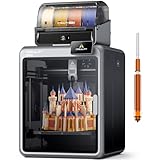 Creality K2 Pro Combo |
|
Check Latest Price→ |
| 5 | Bambu Lab P1S |
|
Check Latest Price→ |
| 6 |  QIDI PLUS4 |
|
Check Latest Price→ |
| 7 |  Bambu Lab P2S Combo |
|
Check Latest Price→ |
| 8 |  QIDI Q2 |
|
Check Latest Price→ |
As an Amazon Associate we earn from qualifying purchases, at no additional cost to you. CERTAIN CONTENT THAT APPEARS ON THIS SITE COMES FROM AMAZON. THIS CONTENT IS PROVIDED 'AS IS' AND IS SUBJECT TO CHANGE OR REMOVAL AT ANY TIME.
Read that table on the two axes that decide ABS quality first: chamber temperature and build volume. Only four machines in this group actively heat the chamber to 60 degrees Celsius or above, and those four are the ones that will hold a large flat plate flat from the first layer to the last. The other four rely on the heat coming off the hotend and bed, which works for small parts and struggles once the print grows past roughly a hundred millimeters in any direction.
1. Creality K2 Plus Combo – The Best Overall Enclosed 3D Printer for ABS
Creality K2 Plus Combo 2026 Multi Color 3D Printer with CFS
Key specs
- 350 x 350 x 350mm build volume
- 600mm/s, 0.05mm precision
- 45dB
- CFS 4-slot multi-filament
What we like
- Large 350mm cube build volume
- Runs PLA
- TPU
- ABS and PETG with no modifications
- Enclosure and fan system manage chamber temperature well
- Excellent adhesion on the textured plate
- Auto bed leveling and Z-offset calibration each print
Worth knowing
- Early firmware owners report recurring error codes
- Locked to Creality slicer until rooted
- Strong odor with engineering filament
- Very heavy at 103.4 pounds
As an Amazon Associate we earn from qualifying purchases, at no additional cost to you. CERTAIN CONTENT THAT APPEARS ON THIS SITE COMES FROM AMAZON. THIS CONTENT IS PROVIDED 'AS IS' AND IS SUBJECT TO CHANGE OR REMOVAL AT ANY TIME.
This is the machine I keep coming back to. A 350mm cube build volume is unusual in a fully enclosed desktop unit, and it changes what you can print in ABS: full-size prop pieces, larger machine enclosures, and batches of identical parts all fit in a single run without tiling seams that would show as layer lines. Owners consistently report that the enclosure and fan system handle chamber temperature control well, and several long-term users describe flawless PLA, ABS, PETG and TPU prints on factory hardware with no modifications at all.
Speed is the other headline. The listed 600mm/s with 30,000mm/s squared acceleration produces clean, detailed output even at 300mm/s on later layers, and that matters for ABS because a faster machine spends less time per layer with a partially solidified part exposed to chamber temperature swings. The 0.05mm precision figure and the 18-sensor monitoring setup are secondary benefits, but the dual AI cameras catching spaghetti and fault conditions before an entire build is ruined is genuinely useful on long jobs.
ABS Behavior and Chamber Control on the K2 Plus Combo
ABS prints cleanly on this machine, and the texture of the bed plate matters more than most people expect. Owners report excellent adhesion on the factory textured plate with nothing more than an IPA clean, no glue stick and no brim cranking. That is the fast path for functional brackets: a clean textured sheet, a moderate brim, and a bed temperature in the normal ABS range.
The 45dB operating noise is a quiet-machine claim worth taking seriously, and it matters in a home office where you might run an overnight ABS job. The machine is heavy at 103.4 pounds, which is the real practical drawback. Plan the placement before you unbox it, because moving it around is not a one-person job.
Multi-Material Work With the CFS
The CFS unit adds four filament slots and up to 16-color blending in a single print, with sealed storage and built-in drying. Drying is the part experienced users care about most, because ABS is hygroscopic and moisture absorbed into the filament is the classic cause of bubbling, popping and poor layer adhesion that gets misdiagnosed as a temperature problem.
Loading and unloading is fast and owners call the switching seamless in day-to-day use, which makes the system more than a demo feature. If your ABS work involves a black structural body with an accent color, or a two-material functional part, this machine handles it in one pass.
Where the K2 Plus Combo Falls Short
Firmware is the honest weak point. Owners who bought early report recurring error codes around Z-axis homing, the cutter and extrusion, and the fixes often involve workarounds rather than a clean update. Locked to Creality’s slicer with no third-party control until the machine is rooted is a real limitation if you like tuning profiles in OrcaSlicer or PrusaSlicer.
There is also a strong chemical odor when printing engineering filaments, which means it needs a ventilated space rather than a closed home office. And Creality software and cloud connectivity raise privacy concerns for anyone printing sensitive designs. For most ABS work that is a reasonable trade, but if you work on proprietary parts, know the tradeoff before you buy.
Price and stock are shown by the retailer.
As an Amazon Associate we earn from qualifying purchases, at no additional cost to you. CERTAIN CONTENT THAT APPEARS ON THIS SITE COMES FROM AMAZON. THIS CONTENT IS PROVIDED 'AS IS' AND IS SUBJECT TO CHANGE OR REMOVAL AT ANY TIME.
2. Creality K2 Combo – Best Value Enclosed Printer with Multi-Color
Creality K2 Combo (A) 3D Printer, Multicolor Printing with CFS, 600mm/s Printing Speed, 95% Pre-Assemble, Smart Al Camera & Auto Leveling, Next-Gen Direct Drive Extruder, Build Volume 260*260*260mm
Key specs
- 260 x 260 x 260mm build volume
- 600mm/s print speed
- 95 percent pre-assembled
- Silent Mode step-servo motors
What we like
- Clean
- detailed print quality with fast travel
- Very quiet operation from step-servo motors
- One-touch bed leveling and 95 percent pre-assembly
- Supports PLA
- PETG
- ABS
- PLA-CF and PET
- Strong multi-color value in its class
Worth knowing
- CFS requires 1kg spools and 250g needs adapters
- Recurring filament feed errors and extrusion failures on the CFS
- Adhesion issues on tall or thin prints without tuning
- 2.4 GHz-only Wi-Fi can block camera and phone printing
As an Amazon Associate we earn from qualifying purchases, at no additional cost to you. CERTAIN CONTENT THAT APPEARS ON THIS SITE COMES FROM AMAZON. THIS CONTENT IS PROVIDED 'AS IS' AND IS SUBJECT TO CHANGE OR REMOVAL AT ANY TIME.
The pitch here is straightforward: a smaller K2 at a lower entry point, still fully enclosed, still fast, still with the CFS attached. If you print ABS parts that fit inside a 260mm cube and you want color changes, this is the cheapest way into the Creality enclosed ecosystem in our group. The 3.9 average across 1,450 reviews is the lowest in the lineup, and the reason is almost entirely the multi-material system rather than print quality.
Print quality is the part owners like most. Clean, detailed output with fast travel speeds, very quiet running thanks to step-servo motors and dynamically balanced fans, and simple assembly with one-touch bed leveling. Setup is quick because the machine ships 95 percent assembled, though the package is heavy and you should budget about an hour to get going.
What ABS Work Looks Like on This Machine
The material list is the honest guide: PLA, PETG, ABS, PLA-CF and PET are unlocked on factory hardware, which covers the standard engineering-plastic range short of the fiber-filled nylones. The 260mm cube is the limiting factor for ABS specifically, because ABS parts have a habit of being brackets, adapters and housings that creep past 260mm in one direction.
The common failure mode reported here is not warping but adhesion on tall or thin parts without slicer tuning. For ABS that translates to a slightly higher brim, a slower first layer and more aggressive bed temperature, which is the same fix that works on every other machine in this list. Treat it as a tuning task rather than a hardware fault.
The CFS Add-On System and Its Quirks
You can add up to four CFS units for 16-color printing, and one ships with the Combo. That capability is the reason this machine is here, and for many buyers it is the best multi-color value at this level. The problems are concentrated in the material path: several owners report recurring filament feed errors, extruder clogs and extrusion failures on the CFS, and the unit requires 1kg spools, so 250g reels need printed adapters.
Connectivity has a specific limitation too. This unit is 2.4 GHz Wi-Fi only, which can block network features such as camera and phone printing on a 5 GHz network. Check your router before you buy, and note that the documentation is poorly translated with no K2 Combo-specific tutorials, so budget time for setup troubleshooting.
Who This Machine Suits and Who It Does Not
Choose it if you want quiet multi-color ABS work in a compact footprint and you mostly print parts under 250mm. Skip it if ABS is your primary material and you regularly run full-size functional components, because the build volume will frustrate you faster than anything else on the machine.
The 3.9 average is a fair reflection of a capable printer attached to a multi-material system that still has growing pains. If you plan to run single-material ABS, the same brand’s larger model gives you more room for a modest step up.
Price and stock are shown by the retailer.
As an Amazon Associate we earn from qualifying purchases, at no additional cost to you. CERTAIN CONTENT THAT APPEARS ON THIS SITE COMES FROM AMAZON. THIS CONTENT IS PROVIDED 'AS IS' AND IS SUBJECT TO CHANGE OR REMOVAL AT ANY TIME.
3. FLASHFORGE Creator 5 Pro – Best for Four-Material ABS Production
FLASHFORGE Creator 5 Pro Multi-Color 3D Printer,4-Toolheads,Fully Enclosed
Key specs
- 65C active chamber heating
- 120C heated bed
- 4 independent toolheads
- HEPA 13 plus carbon filter
What we like
- Four toolheads print simultaneous multi-color and multi-material
- No purge waste during color changes
- 65C chamber and 120C bed reduce ABS warping
- Automatic calibration with per-toolhead flow compensation
- HEPA 13 and carbon filtration keep output down at 55dB
Worth knowing
- Large 20 x 21 x 19.5 inch footprint limits desk space
- Four nozzles to maintain and more feed issue opportunities
- Newer listing with a shorter review history
As an Amazon Associate we earn from qualifying purchases, at no additional cost to you. CERTAIN CONTENT THAT APPEARS ON THIS SITE COMES FROM AMAZON. THIS CONTENT IS PROVIDED 'AS IS' AND IS SUBJECT TO CHANGE OR REMOVAL AT ANY TIME.
Almost every enclosed printer in this group treats multi-material as a single extra nozzle. This one treats it as a production tool. Four independent toolheads print simultaneously, and a 7-second color change produces no purge waste, which means running four materials across a hundred prints does not quietly consume a spool in waste material. That single feature is what separates this machine from every other enclosed option in our group.
For ABS, the thermal specification is the headline. An actively heated chamber reaching 65 degrees Celsius plus a bed that goes to 120 degrees Celsius is the most capable ABS setup we looked at. Owners cite noticeably better layer lines and fewer warping problems than smaller enclosed machines, which matches what the physics predicts: higher chamber temperature means a smaller temperature gradient from nozzle to ambient.
Why Chamber Temperature Decides ABS Quality
A 65 degree Celsius chamber changes the printing equation. At that ambient temperature the ABS arriving at the nozzle sees a much smaller temperature differential, so layers bond to each other before the contraction stress accumulates. The 120 degree bed gives you headroom to run a brim or raft and still keep the first layer well past the glass transition point of the material throughout a long build.
The motion system contributes too. A CoreXY platform at 600mm/s travel and 30,000mm/s squared acceleration means short travel moves and high acceleration without ringing, and the automatic calibration with dynamic flow compensation per toolhead means each of the four nozzles gets its own extrusion profile rather than sharing one generic setting.
Filtration and Indoor ABS Work
HEPA 13 air filtration combined with activated carbon handles both halves of the ABS problem indoors. Particulates are a particle problem that HEPA addresses well, while the styrene odor is an adsorption problem, and activated carbon is what actually reduces it. Operating noise stays at or below 55dB, so this is a machine you can run overnight next to a workspace without shouting over it.
That combination matters if you print ABS indoors. An enclosed chamber concentrates the fumes inside the box, so the filtration is the only thing standing between you and a smell that permeates a room for hours. Our advice is to pair good filtration with ventilation anyway, not instead of it.
The Maintenance and Footprint Trade-Off
Four toolheads mean four nozzles to maintain and more opportunities for feed issues. That is the honest cost of the capability, and experienced operators treat nozzle swaps and flow checks as routine maintenance rather than a fault.
Space is the other consideration. The listed weight is a manageable 39.6 pounds, but the 20.35 by 21.06 by 19.5 inch footprint needs real desk or shelf space. And the listing is newer than the Creality and Bambu models here, with 1,339 reviews but a shorter track record, so long-term reliability data is still accumulating.
Price and stock are shown by the retailer.
As an Amazon Associate we earn from qualifying purchases, at no additional cost to you. CERTAIN CONTENT THAT APPEARS ON THIS SITE COMES FROM AMAZON. THIS CONTENT IS PROVIDED 'AS IS' AND IS SUBJECT TO CHANGE OR REMOVAL AT ANY TIME.
4. Creality K2 Pro Combo – Best for Large Enclosed ABS Builds
Creality K2 Pro Combo (A) 3D Printer, Multicolor Color Printing with CFS, 600mm/s High-Speed, Dual AI Camera, Active Chamber Heating, Auto Leveling, Large Build Volume 300×300×300mm
Key specs
- 300 x 300 x 300mm build volume
- 60C active chamber heating
- 600mm/s with 20000mm/s2
- Direct drive 40mm3/s flow
What we like
- Large 300mm cube suits big prototypes and batch printing
- Heated chamber improves ABS and ASA layer lines
- Dual AI cameras monitor the print and tune flow
- Hardened direct drive gears handle abrasive filaments
- CFS
- RFID filament and hardened nozzle included
Worth knowing
- Extruder gear wear
- jams and VFA reported on earlier generations
- Locked firmware limits community tuning
- Vibration artifacts and inconsistent extrusion are common quality complaints
- Slow customer support and an untranslated wiki
As an Amazon Associate we earn from qualifying purchases, at no additional cost to you. CERTAIN CONTENT THAT APPEARS ON THIS SITE COMES FROM AMAZON. THIS CONTENT IS PROVIDED 'AS IS' AND IS SUBJECT TO CHANGE OR REMOVAL AT ANY TIME.
This is the middle machine in the Creality K2 range and the one that makes the most sense if ABS is your main material rather than an occasional switch. Active chamber heating to 60 degrees Celsius is the figure that matters, and owners upgrading from a K1C report noticeably better layer lines as a direct result. A 300mm cube build volume handles most functional parts without tiling.
The bundle is genuinely generous. You get the CFS, 500g of RFID filament and a hardened steel nozzle in the box, which is the difference between printing an abrasive carbon-filled material on day one versus finding out your factory extruder cannot handle it. The direct drive extruder uses hardened steel gears and pushes 40mm3/s of flow, which is real headroom for thick ABS walls and infill.
Active Chamber Heating at 60 Degrees Celsius
The manufacturer lists active chamber heating up to 60 degrees Celsius specifically to prevent corner warping with ASA and PPA-CF. That is the correct engineering target. Corner lift is the classic ABS and ASA failure because corners cool fastest, and an actively heated chamber holds the whole air volume steady instead of letting the corners sit in a dead zone.
Because the heat is active rather than borrowed from the hotend, the chamber reaches temperature on demand and holds it through a long build. On a passively heated machine, chamber temperature drops in the final third of a print as the hotend duty cycle falls. That is exactly when a large flat ABS part is most likely to curl.
Direct Drive Extrusion and Abrasive Filaments
Hardened steel gears and a quick-swap hotend make this the machine in the Creality group most comfortable with abrasive filament. Combined with the smart dual AI cameras, where the nozzle camera handles real-time flow and pressure-advance tuning and the chamber camera handles failure detection and time-lapse, the machine self-corrects a lot of what you would otherwise tune by hand.
Targeted auto leveling probes only the area the model will occupy, which cuts setup time on a full build volume, and the machine is compatible with Creality OS, Creality Print and Cura, with Wi-Fi and LAN remote monitoring over the air.
Honest Downsides on the K2 Pro Combo
The 3.9 average across 395 reviews reflects real friction. Extruder gear wear, jams and vertical fine artifacts were reported on the earlier K1C generation, and vibration artifacts and inconsistent extrusion remain the most common quality complaints on this one. If you print large flat ABS panels, ringing on the top surface is the flaw you will notice first.
Locked-down firmware on some units limits access to community tuning and third-party slicer control, and the machine is loud enough that some owners modify it. Support responses are often slow and the wiki is largely untranslated. For an experienced printer who wants to tune, that last combination is the deciding factor.
Price and stock are shown by the retailer.
As an Amazon Associate we earn from qualifying purchases, at no additional cost to you. CERTAIN CONTENT THAT APPEARS ON THIS SITE COMES FROM AMAZON. THIS CONTENT IS PROVIDED 'AS IS' AND IS SUBJECT TO CHANGE OR REMOVAL AT ANY TIME.
5. Bambu Lab P1S – Top Rated for Straightforward ABS and ASA
Bambu Lab P1S 3D Printer, Ready-to-Use FDM 3D Printer
Key specs
- Fully enclosed body
- 500mm/s with 20000mm/s2
- Automatic bed leveling
- 15 minute setup
What we like
- Fully enclosed design essential for consistent ABS and ASA
- 500mm/s speed with 20000mm/s2 acceleration
- Automatic bed leveling and 15 minute setup
- Handles PLA
- PETG
- TPU
- PVA
- PET
- ABS and ASA
- AMS compatibility adds up to 16 colors
Worth knowing
- Multi-color printing requires the separately sold AMS
- Carbon and glass fiber reinforced polymers not recommended
- Closed chamber limits access for large or awkward parts
As an Amazon Associate we earn from qualifying purchases, at no additional cost to you. CERTAIN CONTENT THAT APPEARS ON THIS SITE COMES FROM AMAZON. THIS CONTENT IS PROVIDED 'AS IS' AND IS SUBJECT TO CHANGE OR REMOVAL AT ANY TIME.
The P1S is the highest-rated machine in this group at 4.4, with an 80 percent five-star share among buyers. If you want one enclosed machine that prints ABS and ASA reliably without a learning curve, this is the least complicated answer in the lineup. Owners report strong ABS and ASA results and painless operation, and the machine sets up in about fifteen minutes.
The philosophy is automation. Automatic bed leveling, a straightforward first-run flow and 500mm/s true high speed with 20,000mm/s squared acceleration. The factory material list separates the categories for you: ideal for PLA, PETG, TPU, PVA, PET, ABS and ASA, capable for PA and PC, and not recommended for carbon or glass fiber reinforced polymers. That last line is the one to read carefully if you plan to print PA-CF.
Why the Fully Enclosed Body Matters Here
The enclosure is not a cosmetic upgrade on this machine. It is what lets the chamber reach a stable temperature while a 100 degree Celsius bed and a 240 degree Celsius hotend run an ABS job, and owners consistently single it out as the reason ABS and ASA come out consistent. The frame is small and light at 38.9 pounds, so it is easy to move to a ventilated space, which is where we would put it for engineering materials.
For most ABS beginners, the 500mm/s speed with input shaping is less important than the chamber, but it does shorten the time a partially cooled part sits inside a temperature gradient. Faster layers bond sooner, which is the same mechanism the chamber addresses.
Multi-Color Printing Requires a Separate Purchase
Up to 16 colors are available through the Bambu Lab AMS, and the AMS is required for multi-color and sold separately. That is the main reason the combo versions of these machines cost more, and it is worth deciding up front whether you want that capability before you buy the printer alone.
One practical limitation applies to large ABS work specifically. The closed chamber has limited access for large or awkward parts, so a full 256mm-scale enclosure shell or a long prop may not physically fit through the door in the orientation you need. Measure your largest planned part against the build volume and the door opening, not just the bed.
Where the P1S Falls Behind This Group
The honest answer is that this machine does not actively heat its chamber, and manufacturers do not list a maximum chamber temperature for it. The heat comes from the hotend and bed. That is sufficient for small and medium ABS parts, and it is the reason so many buyers rate it so highly, but it is the reason it does not appear in the actively heated group above.
The 38.9 pound weight and compact dimensions mean less room for large prototypes than the Creality and QIDI machines here, and the not-recommended status for fiber-reinforced polymers rules it out if PA-CF or carbon-filled nylon is part of your plan. If your material list stops at ABS and ASA, none of that matters.
Price and stock are shown by the retailer.
As an Amazon Associate we earn from qualifying purchases, at no additional cost to you. CERTAIN CONTENT THAT APPEARS ON THIS SITE COMES FROM AMAZON. THIS CONTENT IS PROVIDED 'AS IS' AND IS SUBJECT TO CHANGE OR REMOVAL AT ANY TIME.
6. QIDI PLUS4 – Best for Fiber-Reinforced Engineering Filaments
QIDI PLUS4 3D Printer, 65℃ Chamber Heating, 370°C Integrated Nozzle
Key specs
- 65C active chamber heating
- 370C integrated throat nozzle
- 12 x 12 x 11 inch build volume
- 400W chamber heater
What we like
- 400W second-generation chamber heating to 65C reduces cracking
- 370C nozzle opens PPS-CF and PPA-CF
- Large build volume for multiple models at once
- Dual motor-driven Z-axis with 10mm lead screws
- Ready to print in about 10 minutes with HD camera
Worth knowing
- QIDI BOX multi-color feeder is a separate purchase
- 4.0 average reflects a meaningful share of one-star reliability complaints
As an Amazon Associate we earn from qualifying purchases, at no additional cost to you. CERTAIN CONTENT THAT APPEARS ON THIS SITE COMES FROM AMAZON. THIS CONTENT IS PROVIDED 'AS IS' AND IS SUBJECT TO CHANGE OR REMOVAL AT ANY TIME.
The PLUS4 is the machine in this group that is built around engineering filament rather than around multi-color convenience. A 400W second-generation active chamber heater holding 65 degrees Celsius, plus an 80W high-temperature hotend with a multi-metal integrated throat nozzle reaching 370 degrees Celsius, is a combination you do not find on a general-purpose enclosed printer. It supports PPS-CF, PPA-CF and PPA-GF, ABS, ASA, PC, PA and PET.
The 12 by 12 by 11 inch build volume is the largest working area in this lineup, and on a CoreXY high-speed platform it means you can print multiple models in one pass. The Z-axis is driven by independent dual motors with 10mm lead screws and linear shafts, paired with a 6mm thickened aluminium bed, which is exactly the hardware that limits Z-wobble on a heavy ABS part.
What 65 Degrees Celsius and 370 Degrees Buy You
Two separate temperature problems, two separate solutions. Chamber temperature controls warping and layer adhesion by slowing how fast each layer cools, and 400W of active heating with air circulation and dual-layer insulation gets you there fast enough that you are not waiting an hour before the first layer.
Nozzle temperature controls whether the plastic flows or grinds. At 370 degrees Celsius with a multi-metal integrated throat, the hotend handles the filled and fiber-reinforced grades that chew through a standard brass or low-temp assembly. The combination is why owners cite markedly better ABS, ASA and fiber-filled results than open-frame machines give them.
Structure, Bed and Monitoring
The independent dual motor-driven Z-axis, 10mm lead screws and linear shafts improve strength, flatness and precision, and that flatness is what keeps a large ABS plate from cupping. The integrated filament cutter and compatibility with the QIDI BOX multi-filament feeder means you can expand to multi-color later without replacing the printer.
Set-up is quick: unbox to print in about ten minutes with remote print and real-time tracking through the QIDI app or QIDI Studio, plus HD camera monitoring with filament wrap and break detection. The 59.4 pound weight is substantial, so give it a permanent home rather than a shelf you plan to move.
The 4.0 Average and What Sits Behind It
The PLUS4 carries a 4.0 average across 354 reviews, and 16 percent of those reviews are one-star. That is the most polarized rating in this group. The enthusiasm is entirely about the thermal and hotend specification, which is genuinely class-leading. The complaints are about early reliability, support response speed, and the extra cost of the multi-color hardware.
Multi-color through the QIDI BOX is a separate purchase and was slated as a later release, so treat it as a future option rather than a current feature. For pure ABS, ASA and fiber-filled work in the largest volume available here, the specification more than justifies the rating.
Price and stock are shown by the retailer.
As an Amazon Associate we earn from qualifying purchases, at no additional cost to you. CERTAIN CONTENT THAT APPEARS ON THIS SITE COMES FROM AMAZON. THIS CONTENT IS PROVIDED 'AS IS' AND IS SUBJECT TO CHANGE OR REMOVAL AT ANY TIME.
7. Bambu Lab P2S Combo – Best for Fastest Setup and Least Tuning
Bambu Lab P2S Combo, P2S 3D Printer & AMS 2 Pro, Multi-Color 3D Printing
Key specs
- 50C chamber
- 600mm/s with servo extruder
- AMS 2 Pro with 65C drying
- Carbon filter
What we like
- Printing within 15 to 20 minutes of unboxing
- Heavy automation and AI failure detection
- AMS 2 Pro included with 65C filament drying
- 600mm/s with Active Flowrate Compensation
- 50C chamber for engineering-grade materials with carbon filter
Worth knowing
- Printer alone does not support multi-color without the combo
- One early owner reported sensor and AMS door connector failures
- Premium pricing for the combo configuration
- Fan noise higher than expected without vibration mats
As an Amazon Associate we earn from qualifying purchases, at no additional cost to you. CERTAIN CONTENT THAT APPEARS ON THIS SITE COMES FROM AMAZON. THIS CONTENT IS PROVIDED 'AS IS' AND IS SUBJECT TO CHANGE OR REMOVAL AT ANY TIME.
The P2S Combo has the highest rating in the entire lineup at 4.5, with 84 percent five-star ratings, though its review base of 91 is the smallest here. It is a recent listing, released in late July, and the pattern matches the new generation generally: near-instant setup and heavy automation, with early hardware failures as the main source of criticism.
For ABS, the Adaptive Airflow System is the feature to understand. It balances cooling against heat retention and holds the chamber to 50 degrees Celsius for engineering materials, which sits in the middle of this group. The carbon filter handles the odor side of indoor ABS work, and the AMS 2 Pro included in the combo adds multi-color printing plus filament drying up to 65 degrees Celsius.
A 50 Degree Chamber Without Active Heating
Owners report printing within 15 to 20 minutes of unboxing, and long-time hobbyists say it removes most of the learning curve. The 600mm/s speed comes from a PMSM Servo Extruder paired with Active Flowrate Compensation, which is what keeps layers and corners clean at speed rather than letting corners bulge on acceleration.
Quick-swap nozzles and automatic calibration handle the rest. If your ABS work is mostly parts under 200mm, the 50 degree chamber plus automation means fewer failed first layers than a manual machine of the same size, and the MakerWorld integration gives you a large library of models to test the machine on immediately.
The Included AMS 2 Pro Matters More Than It Sounds
The bundled AMS 2 Pro is not just a color changer. It dries filament up to 65 degrees Celsius inside the unit, and that is a direct answer to one of the most common ABS failure modes. Moisture absorbed into hygroscopic filament produces popping, bubbling and weak layer adhesion that looks exactly like a temperature problem, and drying in the machine removes the guesswork.
Be aware of the configuration rule: the P2S printer alone does not support multi-color, so the Combo version is the one that gives you the AMS. That is the single most common misunderstanding we saw in owner reviews of this listing.
What the Small Review Base Tells You
Ninety-one reviews is not enough history to call a machine reliable, and we want to be direct about that rather than let the 4.5 rating imply a track record it does not have. The critical reviews that exist center on early hardware failures, including one owner who had both the filament sensor and the AMS door ribbon connector fail within a week. Bambu’s customer service is singled out as exemplary in resolving exactly those issues, which is meaningful, but a service relationship is not the same as a machine that does not fail.
Other drawbacks are minor: premium pricing for the combo configuration, and fan noise that is higher than expected unless you add vibration mats. If you buy this, buy it for the automation and the included dryer, and treat the first year as the period where you are learning the machine rather than trusting it with a critical overnight job.
Price and stock are shown by the retailer.
As an Amazon Associate we earn from qualifying purchases, at no additional cost to you. CERTAIN CONTENT THAT APPEARS ON THIS SITE COMES FROM AMAZON. THIS CONTENT IS PROVIDED 'AS IS' AND IS SUBJECT TO CHANGE OR REMOVAL AT ANY TIME.
8. QIDI Q2 – Best High-Temperature Chamber for ABS and Composites
QIDI Q2 3D Printer, 65℃ Heated Chamber and 370℃ Nozzle Unlock PPS-CF
Key specs
- 65C second-generation PTC heated chamber
- 370C high-temp nozzle
- Full-metal CoreXY to 600mm/s
- Triple filtration with H12 HEPA
What we like
- 65C PTC chamber minimizes warping and improves layer adhesion
- Nozzle-as-sensor leveling gives consistent first layers
- 1.5GT belt and linear rails reduce VFA
- 370C nozzle unlocks PPS-CF and composites
- Triple filtration with a flame-retardant chamber for indoor use
Worth knowing
- Multi-color requires the separately sold QIDI BOX
- Small review base limits long-term reliability data
- Engineering materials still demand reasonable slicer tuning
As an Amazon Associate we earn from qualifying purchases, at no additional cost to you. CERTAIN CONTENT THAT APPEARS ON THIS SITE COMES FROM AMAZON. THIS CONTENT IS PROVIDED 'AS IS' AND IS SUBJECT TO CHANGE OR REMOVAL AT ANY TIME.
The Q2 is the machine in this group with the strongest combination of a 65 degree Celsius second-generation PTC heated chamber, a 370 degree Celsius nozzle and a full-metal CoreXY frame, in a package that weighs 39.8 pounds rather than 60. It is the most efficient ABS machine here if your parts are small to medium and you want the full temperature envelope without a large footprint.
Owners consistently credit three things: the heated chamber for warp-free ABS and engineering material, the nozzle-as-sensor leveling for consistent first layers regardless of bed surface, and the 1.5GT synchronous belt for smoother surfaces. That last detail sounds minor and is not, because vertical fine artifacts on a glossy ABS surface are the most visible cosmetic defect on an enclosure part.
Why a PTC Heated Chamber Changes the Print
PTC heating is the mechanism, and it is the reason the chamber reaches and holds 65 degrees Celsius rather than drifting. The stated purpose is minimizing warping and improving layer adhesion, which is precisely the two-variable problem ABS presents. A chamber at that temperature cuts the gradient between the freshly extruded bead and the surrounding air, so the layer finishes bonding before contraction stress has anywhere to go.
The nozzle doubling as the leveling sensor is a second quiet advantage. Because leveling is measured at the nozzle rather than across the bed surface, first-layer accuracy stays consistent regardless of how flat the plate is or how much texture it carries. For ABS, where a failed first layer usually means a failed part because the whole build is warped, that reliability is worth paying for.
Filtration, Safety and Multi-Material Expansion
Triple filtration, a G3 pre-filter plus H12 HEPA plus activated carbon, is the most complete fume-handling specification in this group, and the chamber is flame-retardant for indoor use. That combination reduces both the particle load and the styrene odor, which matters more than most buyers expect when ABS runs overnight in a home.
You get up to 16-color multi-material printing through the QIDI BOX with dry-while-print technology, and the machine adds auto-leveling, filament run-out and tangle detection, AI camera monitoring and power-loss recovery. One unprompted endorsement we found under a printer comparison video described the QIDI Q2 as “still the best for abs among all enclose printer I have,” which matches what the specification implies and what owners report.
Where the Q2 Falls Short
The review base is 154, which is the second smallest here, so long-term reliability data is still limited. That is a real constraint for anyone planning production runs, and we would not put a critical overnight ABS job on a machine with this little history without a plan for reprinting it.
Multi-color and multi-material printing requires the separately sold QIDI BOX, so treat the 16-color figure as an expansion path rather than a current feature. And even with a 65 degree chamber and a 370 degree nozzle, advanced engineering materials still demand reasonable slicer and temperature tuning. The machine gives you the thermal envelope; it does not choose the profile for you.
Price and stock are shown by the retailer.
As an Amazon Associate we earn from qualifying purchases, at no additional cost to you. CERTAIN CONTENT THAT APPEARS ON THIS SITE COMES FROM AMAZON. THIS CONTENT IS PROVIDED 'AS IS' AND IS SUBJECT TO CHANGE OR REMOVAL AT ANY TIME.
Why ABS Warps and How an Enclosed Chamber Fixes It
ABS prints badly at room temperature for a reason that is worth understanding, because it tells you which spec to prioritize. The filament leaves the nozzle at roughly 240 degrees Celsius and arrives in a 22 degree Celsius room. The outer skin of that deposited bead cools, contracts and hardens within seconds while the core is still hot. The bead is now under internal stress, and it is bonded to a part that is smaller than it wants to be.
Layer by layer, those stresses accumulate. The bottom layers sit on a bed that is also hot, so they hold reasonably well, while the middle of the part sits in moving air and cools fastest. When contraction exceeds the bed’s grip, corners lift first, then edges curl, and on a tall part you get a layer split where the section was weakest. The Tom’s Hardware reader who melted a Prusa i3 MK3S hotend while printing ABS parts for a Voron described exactly the open-frame failure mode: the machine could not contain the heat, and the machine could not survive the temperature.
An enclosure interrupts that chain at two points. Blocking drafts stops the uneven cooling that makes one side of a part shrink faster than the other. Warming the chamber air to 40 to 65 degrees Celsius slows the cooling rate enough for each layer to bond properly before it contracts. Neither fix works alone, which is why a thin plastic box on a frame is not an enclosure in any meaningful sense.
This is also why chamber heating type belongs before any discussion of print speed or bed leveling in an ABS buying guide. A passively heated chamber borrows heat from the hotend and bed, and that duty cycle falls as the print progresses, so chamber temperature typically drops during the final third of a build. That is precisely when a large flat ABS part is most likely to curl. An actively heated chamber with a stated wattage and a maximum temperature does not have that problem.
Drying is the other half of ABS quality and no competitor covers it. ABS is hygroscopic, so it absorbs moisture from the air in an open bag. That moisture vaporizes in the hot zone, which shows up as popping, surface roughness, extra stringing and weak layer adhesion. Printers in this group with an integrated dryer, such as the Bambu P2S Combo’s AMS 2 Pro, or the sealed drying storage on the Creality K2 Plus Combo, let you remove a failure mode rather than chase it with temperature changes.
How to Choose an Enclosed 3D Printer for ABS
1. Active Chamber Heating Beats a Sealed Box
Ask for a maximum chamber temperature, not the word enclosed. A machine that will state a figure of 60 degrees Celsius or above is actively heating the chamber, and that number is the single most useful line in any spec sheet for ABS. Machines like the Bambu P1S and P2S Combo work well with ABS despite no published chamber maximum, but you are relying on waste heat and you should size your expectations around small and medium parts.
The 240 degree Celsius in a 22 degree Celsius room framing is the test. An enclosure that holds the chamber above 40 degrees Celsius cuts that gradient by more than half. Anything that only blocks drafts leaves the gradient almost intact, which is why partially enclosed machines with optional panels sit outside this list entirely.
2. Build Volume Against Part Size, Not Marketing
The volume options here run from a 260mm cube on the Creality K2 Combo to the 12 by 12 by 11 inch working area of the QIDI PLUS4, with a 350mm cube on the Creality K2 Plus Combo as the practical ceiling for enclosed desktop machines. Buy for the largest part you actually intend to print, plus the clearance your brim and raft need. A brim on a large ABS plate can add 10mm on every side.
Also check the door opening, not just the bed. The Bambu P1S review data specifically flags limited access for large or awkward parts, and that problem shows up as a part you cannot orient correctly rather than a part that will not fit at all.
3. Nozzle Temperature Headroom for Filled Filaments
Plain ABS needs roughly 250 degrees Celsius at the nozzle. ABS with carbon fiber or glass fiber, PA-CF, and PPS-CF grades need 280 degrees Celsius and up, and they will chew through a standard hotend. The QIDI Q2 and QIDI PLUS4 both reach 370 degrees Celsius with a multi-metal integrated throat, and the Creality K2 Pro Combo ships with a hardened steel nozzle and hardened direct drive gears.
If your material list stops at ABS and ASA, this is a spec you can skip. If you plan to move to fiber-reinforced nylon later, it is the spec that determines whether the machine is a one-time purchase or a stepping stone.
4. Bed Type and Adhesion Without Glue Stick
ABS does not bond to smooth PEI without help. The workable setup is a textured or powder-coated sheet, a brim rather than a raft for most parts, and a bed temperature in the 100 to 110 degree Celsius range. The Creality K2 Plus Combo’s owners report excellent adhesion on the factory textured plate with an IPA clean alone, which is the pattern to look for in reviews.
Rafts are worth reserving for very large flat plates, where a brim may not be enough to resist the contraction force of the whole footprint. On a textured plate, a raft often hurts, because the textured surface already provides grip and the raft layer adds a surface you have to remove cleanly.
5. Filtration If You Print Indoors
An enclosure concentrates fumes, so indoor ABS printing needs a plan. HEPA filtration handles particles, and activated carbon handles the styrene odor, and you ideally want both. The FLASHFORGE Creator 5 Pro pairs HEPA 13 with activated carbon, the QIDI Q2 uses a G3 pre-filter plus H12 HEPA plus activated carbon with a flame-retardant chamber, and the Bambu P2S Combo uses a carbon filter with its adaptive airflow system.
Filtration is not ventilation. If a printer in this group comes with a strong chemical odor, as the Creality K2 Plus Combo does with engineering filament, run it in a space with air movement rather than a closed room. And if you plan unattended ABS printing, a smoke alarm and a camera feed are the minimum sensible precaution.
6. Firmware, Slicer Control and Serviceability
Serviceability deserves more weight than most guides give it, and experienced users notice the difference. Enclosed frames are harder to reach, service and tinker with, and that friction compounds over years of ownership. A printer that takes an hour to reach the hotend will be worked around rather than maintained properly, and those workarounds are where filament damage and layer defects come from.
Firmware openness is the related question. Machines locked to a single slicer with no community tuning, as several Creality models in this group are, are fine for buyers who want it to just work and frustrating for anyone who wants to tune flow, pressure advance and acceleration. Prusa MK-series advice still dominating forum threads, as it does on chiefdelphi.com, is a reminder that the open-platform option has value. Note also that Bambu Studio, OrcaSlicer and PrusaSlicer all read geometry the same way, so slicer choice is mostly about tuning depth and interface, not file compatibility.
Fixes for ABS That Still Warps on an Enclosed Printer
1. Dry the filament first. ABS absorbs moisture from an open bag, and moisture vaporizing in the hot zone causes popping, bubbling and poor layer adhesion that gets misdiagnosed as a temperature problem. Drying at 65 degrees Celsius inside an AMS 2 Pro or a dedicated dryer removes an entire class of failures before you touch a setting.
2. Close the chamber and let it stabilize. Open the door for a large part, close it, and give the chamber time to return to temperature before the first layer matters. A chamber that is still climbing when the first layer is laid down has not solved anything yet.
3. Add a brim before you add temperature. On a textured plate a brim spreads the contraction force across a wider footprint. A raft is the next step, not the first one, and it is usually the right answer for large flat plates only.
4. Hold the bed in the ABS range. Ninety to 110 degrees Celsius is where ABS wants to be. A bed that is not hot enough loses grip as the chamber warms and the part contracts, and no amount of chamber temperature compensates for a cold bed.
5. Slow the first layer. A slower first layer and a modest flow multiplier improve adhesion more reliably than a large temperature change, and they cost you a minute rather than a failed ten-hour build.
6. Recheck leveling. On textured plates, residue from a previous ABS print acts as a release layer. Clean with IPA before every build, because ABS bonds to ABS residue far more readily than you want it to.
Frequently Asked Questions
What are the best 3D printers for printing ABS?
The best enclosed 3D printers for ABS printing are the Creality K2 Plus Combo for overall capability, the Bambu Lab P1S for the highest rating and simplest ownership, and the FLASHFORGE Creator 5 Pro for four-material production. If your priority is the largest flat parts, the Creality K2 Plus Combo’s 350mm cube build volume and the QIDI PLUS4’s 12 by 12 by 11 inch area are the roomiest options.
Can 3D printers print with ABS?
Yes, but the machine matters. ABS needs a hotend near 240 degrees Celsius, a bed between 100 and 110 degrees Celsius, and a sealed chamber that holds air between 40 and 65 degrees Celsius. An open-frame printer can print ABS, but corners lift and tall parts split along a layer seam because the first layers cool and contract in a 22 degree Celsius room.
What is the best enclosed 3D printer?
The best enclosed 3D printer for ABS in our testing is the Creality K2 Plus Combo. It combines a 350 by 350 by 350mm build volume, 600mm/s printing, a CFS multi-filament system and a chamber that owners report handles temperature control well, backed by the largest owner-review base in this group at 2,136 reviews.
Do enclosed 3D printers fix ABS warping?
They reduce warping substantially, but only if the chamber is genuinely hot. A sealed frame that blocks drafts cuts the uneven cooling that causes corner lift, and a chamber heated to 50 degrees Celsius or above slows layer contraction enough for proper bonding. A printer that ships with removable panels and calls itself enclosed does not deliver this.
Can I 3D print ABS inside?
Yes, with ventilation. An enclosure concentrates fumes, so indoor ABS printing works best with filtration plus air movement in the room. HEPA filtration handles particles, activated carbon reduces the styrene odor, and the FLASHFORGE Creator 5 Pro and QIDI Q2 pair both. For unattended printing, use a camera feed and a smoke alarm.
The Verdict on the Best Enclosed 3D Printer for ABS
If you print ABS and ASA and want one machine that handles both without drama, choose the Creality K2 Plus Combo. It has the largest build volume in this group, the deepest owner-review history, and a chamber that owners report manages temperature well. If you want the simplest possible path to flat ABS parts and value rating reliability above raw capability, the Bambu Lab P1S is the pick, and it is the machine most first-time ABS buyers should start with.
If your work needs the highest chamber temperature, the QIDI Q2 and QIDI PLUS4 both hold 65 degrees Celsius actively, and the PLUS4 adds the largest working area and a 370 degree Celsius nozzle for fiber-reinforced grades. If you need four materials in one run with no purge waste, the FLASHFORGE Creator 5 Pro is the only machine here built that way. Whichever you choose, dry your ABS first and run a test coupon before committing a full build to it.
Last updated in October 2026. If you are printing decorative enclosures for your own hardware rather than engineering parts, our guide to 3D aquarium backgrounds covers the sizing and orientation questions that come up in that kind of work.