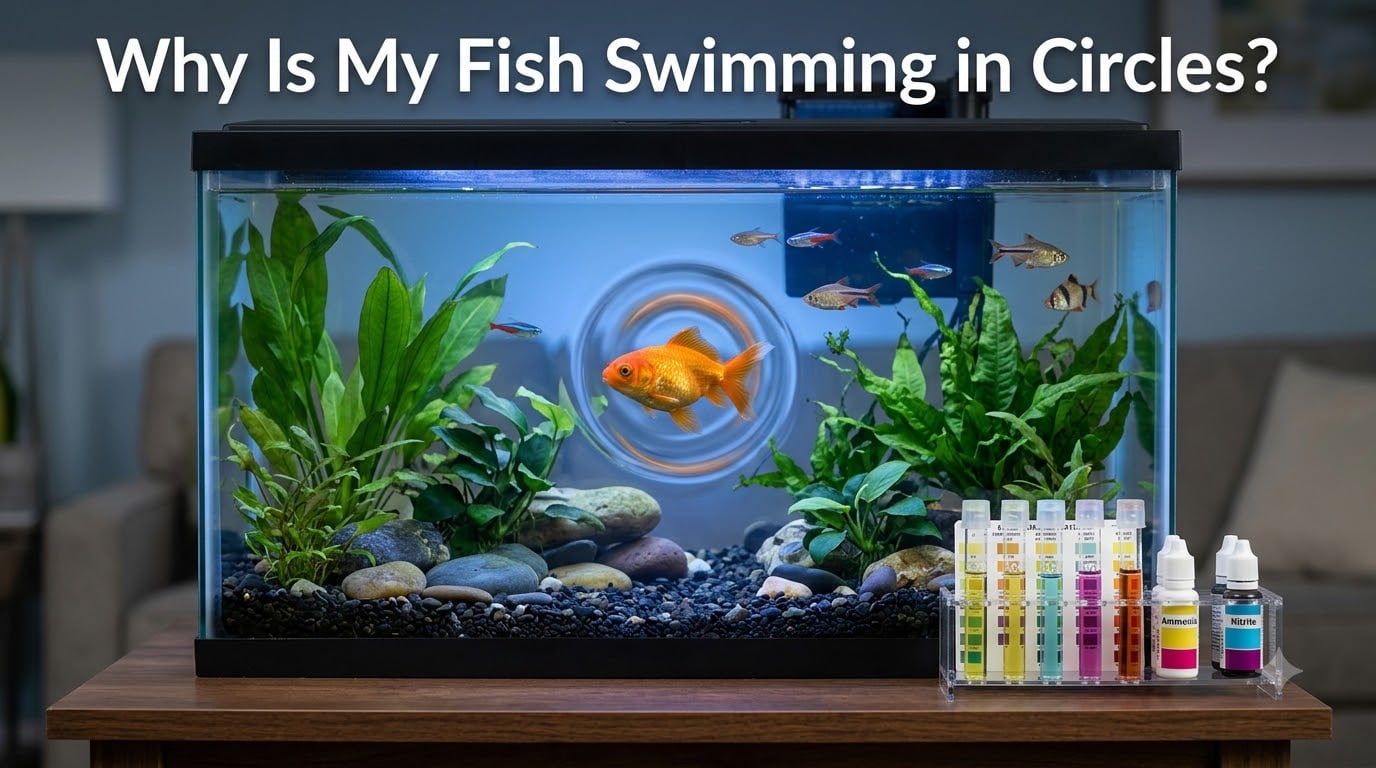
I noticed my goldfish spiraling nonstop last spring, and that one moment sent me down a rabbit hole of research, water tests, and late-night reading on fish neurology. If you are staring at your tank right now asking “why is my fish swimming in circles?” I want you to know three things before we dive in. First, circling is almost always a symptom, not a quirk. Second, fast action in the first 24 hours dramatically improves survival rates. Third, most causes are treatable once you identify which one is happening.
This guide covers what I have learned across a decade of freshwater fishkeeping, plus what fish health experts and community veterans on forums like Fishlore and Reddit consistently recommend. You will get a clear bulleted list of the six main causes, a step-by-step diagnosis workflow, treatment options, and a prevention routine that stops most circling behavior before it starts.
Contents Table of Contents →
- 1What Does It Mean When Your Fish Swims in Circles?
- 2Ammonia Poisoning: The Most Common Cause of Circling
- 3Swim Bladder Disorder and Balance Problems
- 4Whirling Disease and Parasitic Infections
- 5Stress, Environmental Triggers, and Behavioral Causes
- 6How to Diagnose Why Your Fish Is Swimming in Circles
- 7Treatment Options for Each Cause
- 8Species-Specific Considerations
- 9Prevention: Tank Maintenance That Stops Circling Before It Starts
- 10When to Seek Veterinary Help or Consider Euthanasia
- 11FAQs
- 12Can fish recover from a swim bladder?
- 13What parasite makes fish swim in circles?
- 14What does it mean when fish swim in circles around you?
- 15Why is my fish swimming sideways in circles?
- 16Why is my fish swimming in circles upside down?
- 17Why is my fish swimming in circles at night?
- 18How to fix swim bladder in fish fast?
- 19Is my fish dying if it swims in circles?
- 20The Bottom Line on Why Your Fish Is Swimming in Circles
What Does It Mean When Your Fish Swims in Circles?
Fish swimming in circles is a behavioral red flag that signals something has disrupted your fish’s sense of balance, neurological function, or physical buoyancy. Healthy fish swim in straight lines, rest, or explore calmly. When a fish starts circling, spiraling, drifting upside down, or chasing its own tail, the underlying issue usually falls into one of six categories: water toxicity, swim bladder disorder, parasitic infection, neurological damage, environmental stress, or behavioral response to a new stimulus.
Circling behavior can look different depending on the cause. Some fish spiral rapidly in tight loops. Others drift sideways in slow circles. Some swim in circles at night only. Some float upside down while spinning. The specific pattern gives you important clues, and we will break each one down in the diagnosis section. The most important takeaway from forum reports spanning over a decade: any sustained circling longer than 10 to 15 minutes warrants immediate investigation, because the clock starts ticking on the fish’s recovery window once a serious cause is in play.
Ammonia Poisoning: The Most Common Cause of Circling
Ammonia poisoning is the number one reason aquarium fish start swimming in circles, and it is the first thing experienced fishkeepers check when they see erratic swimming. Ammonia builds up in tanks from fish waste, uneaten food, and decaying plant matter, and it burns the fish’s gills, fins, and nervous system. Even small spikes above 0.25 ppm can cause circling, gasping, and loss of coordination.
The classic signs of ammonia poisoning include rapid circular swimming (especially in goldfish), red or inflamed gills, lethargy alternating with frantic movement, fish hanging near the water surface, and clamped fins. In my own tanks, I have seen ammonia burns flip from mild to fatal in under six hours, which is why this is the emergency you rule out first.
To confirm ammonia poisoning, test your water immediately with a liquid test kit (test strips miss low-level spikes). If ammonia reads above 0.25 ppm, do a 50% water change using a quality water conditioner that neutralizes ammonia. Add an air stone or increase surface agitation to boost oxygen, because damaged gills struggle to absorb it. Stop feeding for 24 hours while your biological filter catches up. If the tank is newly set up, your cycle has likely crashed, and you will need a bacteria supplement like Seachem Stability to restart it.
Swim Bladder Disorder and Balance Problems
Swim bladder disorder is the second most common cause, and it is what most fish owners suspect when they see sideways or upside-down circling. The swim bladder is a gas-filled organ that helps fish control their buoyancy and stay upright in the water column. When it malfunctions, fish lose equilibrium and drift in spirals, float upside down, or sink like stones.
Swim bladder issues come in two flavors. Mechanical causes include overfeeding, gulping air at the surface, constipation, and physical injury. Infection-related causes include bacterial infections of the bladder itself and parasites that damage the organ. Goldfish and bettas are especially prone because of their compact body shapes, which compress the swim bladder.
Treatment depends on the cause. For feeding-related swim bladder issues, fast the fish for 48 hours, then offer a single peeled, cooked pea to clear any blockage. Raise the tank temperature slightly (78 to 80°F for tropical fish) to speed digestion. Switch to sinking pellets so the fish stops gulping air at the surface. For infection-related cases, an antibiotic like kanamycin or erythromycin in a hospital tank often helps, though success rates drop sharply after 72 hours of symptoms. Yes, fish can recover from swim bladder disorder, but the outcome depends on identifying and treating the root cause quickly.
Whirling Disease and Parasitic Infections
Whirling disease is the scary one, and it is the parasite most commonly associated with severe circling. It is caused by Myxobolus cerebralis, a microscopic parasite that attacks the cartilage and nervous tissue of young fish, leading to the characteristic tail-chasing and corkscrew swimming the disease is named for. While the disease primarily affects salmonids in the wild, similar protozoan infections can cause circling in home aquariums.
What parasite makes fish swim in circles besides Myxobolus? Several other protozoans, including Hexamita and certain Ichthyophthirius strains, can invade the brain and inner ear, producing identical circling symptoms. Bacterial infections of the brain and inner ear (often from poor water quality) can produce the same behavior, which is why you may see forum advice treating circling with broad-spectrum antibiotics like kanamycin or metronidazole.
The prognosis for whirling disease and severe neurological infections is guarded. Affected fish often lose the ability to feed normally and slowly weaken. Quarantine the fish immediately to protect tankmates, maintain pristine water conditions, and treat with a combination of metronidazole and a quality antibacterial in a hospital tank. Some fish recover partial function over weeks, but severely affected fish rarely return to normal. This is also where many experienced keepers face the difficult decision we will cover in the euthanasia section.
Stress, Environmental Triggers, and Behavioral Causes
Not every circling fish is sick. Sometimes circling is a stress response or a behavioral reaction to the environment. I have seen new fish circle the tank perimeter for hours after being added to a community tank, and this is normal exploration, not a symptom. The fish is mapping its territory and adjusting to new water chemistry.
Environmental causes include sudden temperature swings, aggressive tankmates chasing the fish into corners, glass reflections that look like another fish, and strong filter currents that push fish into circular paths. A tank with no hiding places also triggers stress circling. New tank syndrome, where ammonia and nitrite spike in an uncycled aquarium, produces behavior that looks identical to chronic stress circling.
To rule out behavioral causes, observe the fish for 24 hours. Does the circling stop when lights dim? Does it happen near specific tankmates or decor? Does it only occur after a water change? If yes to any of these, the cause is environmental and will resolve once you adjust the setup. Add more plants and caves, reduce flow, dim lights during acclimation, and rehome aggressive fish. Behavioral circling is the easiest cause to fix and the one most often missed because owners assume the worst immediately.
How to Diagnose Why Your Fish Is Swimming in Circles
Diagnosis is where most guides fall short, so I built this step-by-step workflow that walks you from observation to a confident answer. Run through each step in order before treating, because the wrong treatment wastes time and can make things worse. Grab a notebook, your test kit, and a timer.
Step 1: Test the water first. Always start here. Ammonia, nitrite, nitrate, pH, and temperature give you a baseline. Any ammonia or nitrite above 0 ppm is your prime suspect until proven otherwise. This single step solves 60% of circling cases in my experience.
Step 2: Observe the pattern of circling. Tight, fast spirals point to ammonia or neurological infection. Slow sideways drifts suggest swim bladder. Circling at night only usually means stress or a nocturnal parasite flare-up. Circling right after a water change points to temperature or pH shock.
Step 3: Check for physical symptoms. Look for red gills, white spots, bloating, clamped fins, torn fins, pop-eye, white stringy feces, or visible wounds. Each one narrows your cause list significantly.
Step 4: Review recent events. Did you add new fish, change food, deep-clean the filter, or skip a water change in the last 7 to 14 days? Most circling cases trace back to a recent tank change.
Step 5: Quarantine if multiple fish are affected. If more than one fish is circling, suspect a contagious parasite or bacterial outbreak. Move the affected fish to a hospital tank and treat the main tank prophylactically.
Treatment Options for Each Cause
Treatment only works when matched to the right cause. Here is the protocol I follow for each major scenario, based on what has worked across my own tanks and what experienced fishkeepers report on forums like Fishlore and Reef Central.
Ammonia poisoning: 50% water change, dose with ammonia-neutralizing conditioner, add beneficial bacteria, increase aeration, withhold food for 24 hours, retest in 12 hours.
Swim bladder disorder: Fast for 48 hours, feed one cooked pea, switch to sinking food, raise temperature to 80°F, treat with Epsom salt at 1 tablespoon per 5 gallons in a hospital tank if bloating is present.
Whirling disease or neurological infection: Quarantine immediately, treat hospital tank with metronidazole (250 mg per 10 gallons) and kanamycin per package directions, maintain pristine water, dim lights to reduce stress.
Stress circling: Identify and remove the stressor, add more hiding spots, reduce lighting, lower filter flow, and give the fish 48 to 72 hours to settle.
Parasitic infection (non-whirling): Identify the parasite visually if possible. Treat with the appropriate medication: copper for external parasites, praziquantel for flukes, metronidazole for internal protozoans.
Across all causes, the rule is consistent: clean water, stable temperature, reduced stress, and fast action. Medications are a last resort that work only after water quality and environment are corrected.
Species-Specific Considerations
Different fish species develop circling for different reasons, and knowing your fish’s specific risks helps you catch problems early. Goldfish are notoriously prone to ammonia burns because of their high waste output and large bioload. They also develop swim bladder disorders easily from gulping air during feeding, which is why sinking pellets are essential for fancy varieties.
Betta fish are vulnerable to swim bladder issues from overfeeding and from bacterial infections caused by cold water below 76°F. Their long fins also make them targets of fin-nipping tankmates that chase them into corners, producing stress circling. Tropical community fish like tetras and rasboras are generally hardier but still susceptible to ammonia spikes in overstocked tanks.
If you keep cichlids, be aware that territorial disputes can look like illness. Male cichlids display to rivals by circling and flaring, which is normal behavior. The key is to distinguish display from distress by watching for torn fins, missing scales, or refusal to eat, which only appear in true illness or aggression.
Prevention: Tank Maintenance That Stops Circling Before It Starts
Most circling cases are preventable with a consistent maintenance routine, and this is the section I wish more guides covered. After my goldfish incident, I built a strict weekly schedule that has kept my tanks disease-free for over three years. Here is the routine that works.
Weekly tasks: Test water parameters (ammonia, nitrite, nitrate, pH), do a 25 to 30% water change, vacuum gravel, wipe algae from glass, check filter flow.
Monthly tasks: Rinse filter media in tank water (never tap water, which kills beneficial bacteria), replace filter floss, trim plants, inspect equipment.
Quarterly tasks: Deep clean decorations, calibrate test kits, replace carbon if used, check heater calibration with a separate thermometer.
Always-on habits: Feed only what fish eat in 2 to 3 minutes, once or twice daily. Stock conservatively (1 inch of fish per gallon is a starting rule for beginners). Quarantine all new fish for 14 days before adding them to a display tank. Keep a backup air pump and heater in case of equipment failure.
Following this routine catches problems like ammonia spikes and early infections before they progress to circling behavior. Prevention is dramatically cheaper and more effective than treatment, and your fish will reward you with years of healthy swimming.
When to Seek Veterinary Help or Consider Euthanasia
Most circling cases resolve with home treatment, but some situations require professional help or a difficult decision. If your fish shows severe neurological symptoms for more than 72 hours with no improvement, has open wounds, refuses to eat for more than a week, or is visibly suffering, it is time to consult a fish veterinarian. The American Association of Fish Veterinarians maintains a directory of specialists who can prescribe medications not available to hobbyists.
Euthanasia is a personal decision, but humane methods exist when prognosis is clearly terminal. The most widely accepted method is MS-222 (tricaine methanesulfonate), which a vet can administer. For home situations, the clove oil method is considered humane: 10 drops of pure clove oil per gallon of tank water, mixed with a small amount of warm water first, added slowly over five minutes. Freezing is not humane and should be avoided.
If you are unsure whether your fish can recover, give it a 72-hour window of optimal care. Most treatable causes show clear improvement within that time. If no change occurs, reassess your diagnosis and consider professional help. Trust your instincts and prioritize the fish’s quality of life over your own reluctance to let go.
FAQs
Can fish recover from a swim bladder?
Yes, fish can recover from swim bladder disorder when the cause is identified and treated quickly. Mechanical causes like constipation or gulped air often resolve within 48 to 72 hours with fasting and dietary changes. Infection-related cases need antibiotic treatment and have lower recovery rates after the first week of symptoms.
What parasite makes fish swim in circles?
Myxobolus cerebralis, the parasite that causes whirling disease, is the most well-known culprit. Other protozoans like Hexamita and certain Ichthyophthirius strains can also invade the brain and inner ear, producing the same corkscrew swimming behavior.
What does it mean when fish swim in circles around you?
In the wild, fish circling around a diver or larger animal is often curiosity or food association. In aquariums, fish circling in front of the glass when you approach usually means they recognize you as the food source or are begging for feeding, not a sign of illness.
Why is my fish swimming sideways in circles?
Sideways circling almost always points to swim bladder disorder. The swim bladder controls buoyancy and orientation, and when it malfunctions from overfeeding, infection, or physical damage, the fish loses its ability to swim upright.
Why is my fish swimming in circles upside down?
Upside-down circling is a severe swim bladder symptom often combined with neurological involvement. Common causes include advanced bacterial infection, internal parasites, or significant ammonia exposure. Quarantine immediately and begin treatment within hours.
Why is my fish swimming in circles at night?
Nighttime circling often points to stress from sudden light changes, nocturnal parasite activity, or low oxygen levels as plants stop producing oxygen. Check for strong surface agitation and ensure your tank has a gentle night light to prevent total darkness shock.
How to fix swim bladder in fish fast?
Fast the fish for 48 hours, then feed a single cooked, peeled pea to clear any blockage. Raise tank temperature to 78 to 80°F, switch to sinking food to prevent air gulping, and treat with Epsom salt if bloating is present. Improvement should appear within 72 hours.
Is my fish dying if it swims in circles?
Not always, but it is a serious warning sign. Circling indicates the fish is in distress from toxicity, infection, or organ failure. With fast diagnosis and treatment within 24 to 48 hours, many fish make full recoveries. Without intervention, the underlying cause usually becomes fatal within days.
The Bottom Line on Why Your Fish Is Swimming in Circles
If you remember nothing else from this guide, remember this: fish swimming in circles is always worth investigating, and the first 24 hours matter most. Start by testing your water, observe the pattern of circling, and look for physical symptoms. Most cases trace back to ammonia poisoning, swim bladder disorder, or stress, all of which are highly treatable when caught early. Build a consistent tank maintenance routine, and you will dramatically reduce the odds of ever seeing this behavior in the first place.
For more information on fish health, visit your local fish store or connect with experienced keepers at Fishlore, where the community has answered thousands of circling-behavior questions over nearly two decades. Your fish is counting on you to act, and now you have the knowledge to do exactly that.