By Planet Fish | Updated October 2026
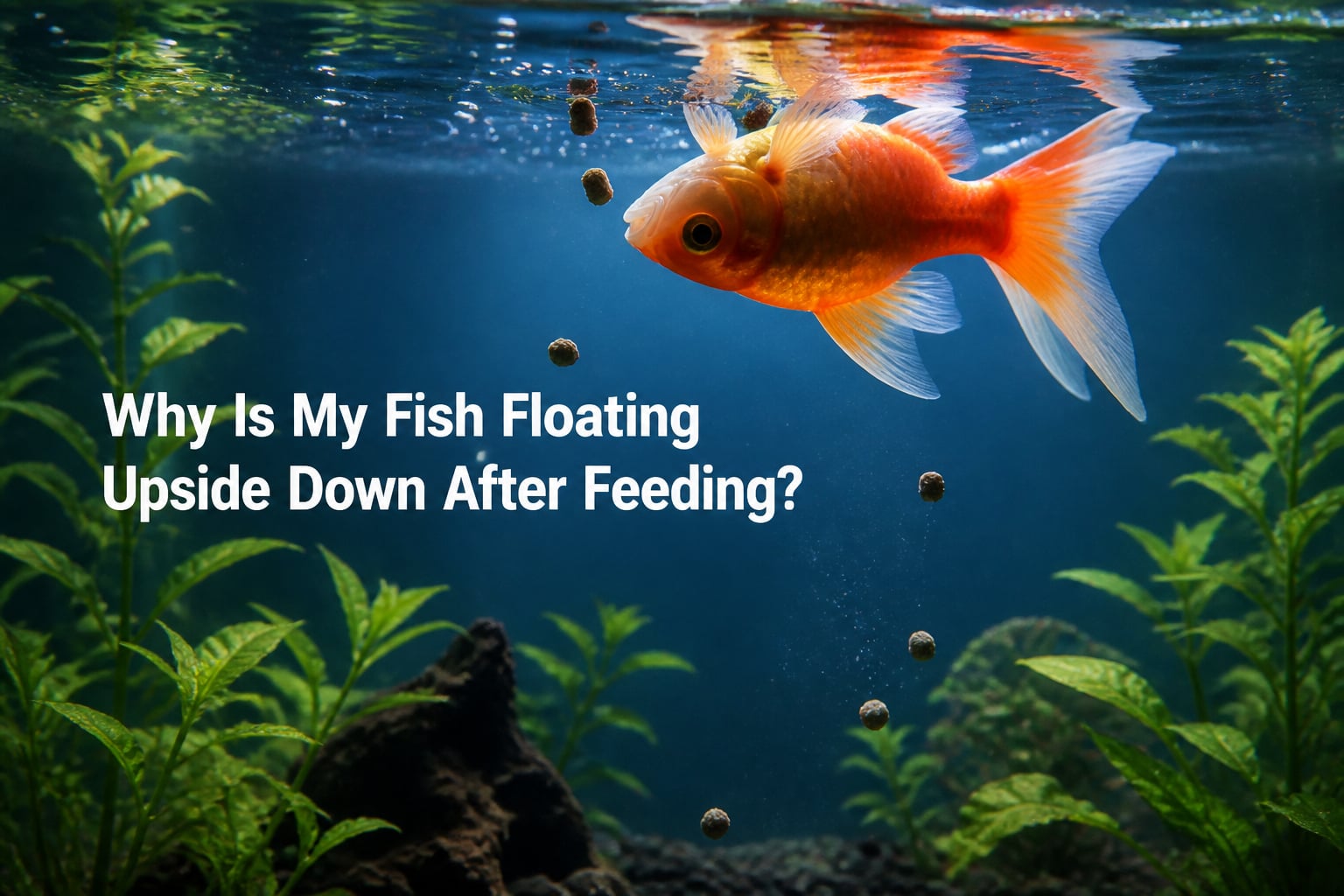
If your fish is floating upside down after feeding, the most likely cause is swim bladder disorder, a condition where the organ that controls buoyancy becomes compressed, infected, or temporarily blocked. The good news is that most cases are treatable at home, especially when you catch them early.
Many fish owners panic when they see their goldfish or betta floating belly-up at the surface, assuming the worst. I have been there myself, staring at a tank wondering if my fish was dying or just uncomfortable. In most cases, the fish is still very much alive and recoverable.
The connection between feeding and floating is direct. A fish’s digestive tract sits right next to the swim bladder, so when the stomach or intestines become bloated from overeating or constipation, they press against the swim bladder and throw off its ability to regulate buoyancy. This is why the problem so often appears right after mealtime.
In this guide, I will walk you through exactly what swim bladder disorder is, how to identify it, what causes it, and the step-by-step treatment plan that fish keepers across forums like r/Aquariums and r/Goldfish have used successfully for years. You will also learn how to prevent it from happening again and when to call a veterinarian.
Contents Table of Contents →
- 1What Is Swim Bladder Disorder?
- 2Signs and Symptoms of Swim Bladder Problems
- 3Why Is My Fish Floating Upside Down After Feeding? Common Causes
- 41. Overfeeding
- 52. Constipation
- 63. Poor Water Quality
- 74. Bacterial and Parasitic Infections
- 85. Water Temperature Fluctuations
- 96. Physical Trauma and Birth Defects
- 10Fish Species Most Prone to Swim Bladder Issues
- 11How to Fix Fish Floating Upside Down: Step-by-Step Treatment Guide
- 12Swim Bladder Disorder vs Dropsy: What’s the Difference?
- 13How Long Can a Fish Live With Swim Bladder Problems?
- 14When to Consult a Veterinarian
- 15How to Prevent Swim Bladder Issues in 2026
- 16Feed the Right Amount
- 17Soak Dry Food Before Feeding
- 18Offer a Varied Diet
- 19Stick to a Feeding Schedule
- 20Maintain Excellent Water Quality
- 21Avoid Temperature Shocks
- 22Adjust Filter Flow for Comfort
- 23Frequently Asked Questions
- 24How to fix fish floating upside down?
- 25How long will my fish survive with a swim bladder problem?
- 26Do dying fish float or sink?
- 27How do you fix a fish swim bladder?
- 28Is swim bladder disorder contagious?
- 29Can swim bladder disease be cured?
- 30Conclusion
What Is Swim Bladder Disorder?
Swim bladder disorder is a condition where a fish’s internal gas-filled organ, which controls buoyancy and depth in the water, stops functioning properly. The swim bladder inflates and deflates with gas to let the fish rise, sink, or hover at any depth without effort. When something disrupts this organ, the fish loses control of its position in the water column.
Importantly, swim bladder disorder is not a single disease. It is a cluster of symptoms with multiple possible causes, ranging from simple overfeeding to bacterial infections. Most fish keepers use the term loosely to describe any buoyancy problem, which is perfectly fine for practical purposes.
The reason this condition ties so closely to feeding is anatomical. The swim bladder sits directly adjacent to the digestive tract in most fish. When the stomach expands from too much food, or when constipation builds up in the intestines, that swelling pushes against the swim bladder and prevents it from expanding or contracting normally. The result is a fish that floats upside down, sinks to the bottom, or swims at an angle.
This is why the problem so often appears minutes to hours after a feeding session, and why fasting is almost always the first step in treatment.
Signs and Symptoms of Swim Bladder Problems
Recognizing swim bladder disorder early gives your fish the best chance of a quick recovery. The symptoms are usually obvious once you know what to look for.
Here are the most common signs:
- Floating upside down at the surface, often near the top of the tank
- Sinking to the bottom and struggling to swim back up
- Swimming sideways or listing to one side at an unnatural angle
- Distended or swollen belly, especially visible from above
- Difficulty maintaining position in the water, with erratic or labored swimming
- Lethargy, where the fish stays in one spot and avoids normal activity
- Loss of appetite, refusing food even when it was previously eager to eat
- Curved spine or visible bloating in severe or chronic cases
One important distinction: a fish with swim bladder disorder is still alert and responsive. Its eyes track movement, it tries to swim, and it reacts when you approach the tank. If your fish is completely unresponsive, floating lifelessly with no gill movement, that points to a more serious or terminal situation.
Reddit users in r/Aquariums frequently describe their fish “just lying upside down like a dead fish” and then recovering after treatment, so do not assume the worst just because the posture looks alarming.
Why Is My Fish Floating Upside Down After Feeding? Common Causes
Understanding the specific cause of your fish’s buoyancy problem helps you choose the right treatment. Here are the most common culprits, starting with the ones most likely to trigger problems right after feeding.
1. Overfeeding
Overfeeding is the number one cause of post-meal floating. When a fish eats too much, the stomach expands significantly and presses against the swim bladder. Dry flake and pellet foods are especially problematic because they expand further when they absorb water in the digestive tract.
Fish do not have a built-in fullness signal the way humans do. Many species will keep eating as long as food is available, so it is up to you to control portions. If your fish ate eagerly and then started floating within an hour, overfeeding is the prime suspect.
2. Constipation
Constipation goes hand in hand with overfeeding. When food moves too slowly through the digestive tract, it builds up and creates a physical blockage. That backed-up material swells the intestines, which then compress the swim bladder from below.
A constipated fish often has a visibly distended belly and may produce stringy or no feces. This is why the classic home remedy of feeding a cooked, peeled green pea works so well. The fiber helps clear the digestive tract and relieves the pressure on the swim bladder.
3. Poor Water Quality
Ammonia, nitrite, and nitrate spikes can irritate and stress fish, weakening their immune systems and sometimes directly affecting the swim bladder. Bacterial infections that take hold in poor water conditions can inflame the swim bladder lining and cause chronic buoyancy issues.
If you have not tested your water recently, do this before anything else. High ammonia or nitrite levels require an immediate partial water change, not just a treatment for the fish.
4. Bacterial and Parasitic Infections
Sometimes a bacterial infection targets the swim bladder directly, causing inflammation that prevents it from functioning. These cases tend to be more serious than simple overfeeding and often come with additional symptoms like clamped fins, redness, or ulcers.
Parasitic infections can cause similar problems, though they are less common. If your fish has buoyancy issues that do not respond to fasting and pea treatment within a few days, an infection becomes a more likely explanation.
5. Water Temperature Fluctuations
Sudden temperature changes slow down a fish’s digestion, making constipation more likely. Cold water in particular reduces gut motility, so fish kept in unheated tanks or near drafty windows are more susceptible during winter months.
Raising the temperature by 2 to 3 degrees Fahrenheit during treatment can speed up digestion and help clear blockages more quickly.
6. Physical Trauma and Birth Defects
Some fish are born with malformed swim bladders, particularly in selectively bred varieties with exaggerated body shapes. Physical injury from aggressive tank mates, rough netting, or jumps out of the water can also damage the organ.
These cases are harder to treat and may become chronic, but the fish can still live a comfortable life with some accommodations.
Fish Species Most Prone to Swim Bladder Issues
Not all fish face the same risk. Body shape plays a huge role because the swim bladder has to fit within the abdominal cavity alongside the digestive organs. Selectively bred fish with shortened, rounded, or compressed bodies are far more susceptible.
Fancy goldfish are the most commonly affected species. Their round bodies and compact digestive tracts mean even a small amount of bloating can press on the swim bladder. Orandas, ryukins, telescope eyes, and bubble eyes are all high-risk varieties.
Betta fish also deal with swim bladder problems, particularly when overfed or kept in cold water that slows their digestion.
Balloon mollies and platies have been selectively bred for their balloon-like body shape, which compresses their internal organs. Guppies and angelfish can also experience swim bladder issues, though less frequently.
If you keep any of these species, prevention through careful feeding and water maintenance matters even more. A slim-bodied fish like a standard comet goldfish or a danio will rarely develop swim bladder disorder compared to a fancy variety.
How to Fix Fish Floating Upside Down: Step-by-Step Treatment Guide
This is the treatment plan that fish keepers have refined over years of trial and community sharing. Follow these steps in order, and give each step time to work before moving on.
Step 1: Stop feeding immediately. Fast your fish for 2 to 3 days. This gives the digestive tract time to empty and reduces pressure on the swim bladder. Healthy fish can easily go a week without food, so do not worry about starvation.
Step 2: Test your water quality. Check ammonia, nitrite, and nitrate levels with a reliable test kit. If ammonia or nitrite reads above zero, perform a 25 to 30 percent water change right away. Clean water supports the fish’s immune system during recovery.
Step 3: Raise the water temperature slightly. Increase the tank temperature by 2 to 3 degrees Fahrenheit, up to about 78 to 80 degrees for goldfish. Warmer water speeds up digestion and helps clear constipation. Do this gradually over several hours to avoid shocking the fish.
Step 4: Feed a cooked, peeled green pea. After the fasting period, offer one soft green pea (cooked, cooled, and with the skin removed). Mash it slightly. The fiber acts as a natural laxative and helps push blocked material through the digestive tract. Many Reddit users in r/Goldfish swear by this method.
Step 5: Lower the water level. Reduce the water depth in the tank so the fish does not have to struggle as hard to reach the surface or settle at the bottom. This reduces exhaustion and stress during recovery. A shallower tank also means the fish expends less energy maintaining its position.
Step 6: Add aquarium salt. Dissolve 1 to 3 teaspoons of aquarium salt per gallon of water (use the lower end for delicate species). Salt helps reduce fluid retention, supports the slime coat, and creates a mildly antiseptic environment. Never use table salt with iodine or anti-caking agents.
Step 7: Consider quarantine. If the affected fish is being bullied or outcompeted for food by tank mates, move it to a separate hospital tank. A stressed fish recovers more slowly, and weaker fish can become targets when they cannot swim normally.
Step 8: Monitor and adjust. Watch your fish closely over the next several days. If buoyancy improves, gradually resume feeding in small amounts with high-quality, soaked food. If symptoms persist beyond a week of treatment, consider that the cause may be bacterial or structural rather than dietary.
Throughout this process, keep the tank well-aerated. A fish struggling with buoyancy may have trouble reaching the surface to gulp air if it is a labyrinth species, and good oxygenation supports healing in any case.
Swim Bladder Disorder vs Dropsy: What’s the Difference?
Fish owners frequently confuse swim bladder disorder with dropsy because both involve a swollen belly and abnormal behavior. They are actually quite different conditions with different underlying causes and treatments.
The key distinguishing sign is pinecone scales. In dropsy, the scales stick outward from the body, giving the fish a pinecone-like appearance when viewed from above or the side. This happens because of internal fluid buildup (edema) pushing the scales outward. Swim bladder disorder does not cause raised scales.
Swim bladder disorder primarily affects buoyancy and posture. The fish floats, sinks, or tilts but usually maintains a normal body shape without raised scales. Dropsy, on the other hand, involves severe internal organ failure, usually kidney-related, and causes whole-body swelling.
Dropsy is far more serious and often fatal, especially if not caught early. It usually stems from a bacterial infection that has spread internally. Swim bladder disorder is typically less dangerous and responds well to the treatment steps above.
If your fish has a swollen belly but no raised scales, treat for swim bladder disorder first. If the scales are protruding, you are likely dealing with dropsy and should move quickly with antibacterial treatment and isolation.
How Long Can a Fish Live With Swim Bladder Problems?
This is one of the most common and anxious questions fish owners ask. The answer depends on the underlying cause.
For diet-related cases caused by overfeeding or constipation, recovery typically happens within 3 to 7 days of starting treatment. Fasting clears the digestive tract, the pressure on the swim bladder releases, and buoyancy returns to normal. Many fish recover completely after a single round of fasting and pea feeding.
For cases caused by bacterial infection, recovery takes longer and depends on how quickly the infection is addressed. With clean water and sometimes antibiotic treatment, fish can recover over 1 to 3 weeks.
For fish with permanent swim bladder damage from birth defects, physical trauma, or advanced chronic infection, the condition may persist for life. These fish can still live comfortably for months or even years with some accommodations. Lowering the water level, providing gentle filter flow, and using feeding rings that keep food accessible at the surface all help a chronically affected fish thrive.
Forum members in r/Aquariums confirm that fish can live for extended periods with swim bladder issues as long as they can still eat and are not in distress. Do not assume a chronic case means your fish cannot have a good quality of life.
When to Consult a Veterinarian
Home treatment resolves most swim bladder cases, but some situations call for professional help. Knowing when to escalate can save your fish’s life.
Consult a veterinarian if your fish shows any of these signs:
- Symptoms persist beyond 7 to 10 days of consistent home treatment
- The fish develops raised, pinecone-like scales (indicating dropsy)
- You notice redness, ulcers, or visible lesions on the body or fins
- The fish stops eating entirely for more than a week
- Buoyancy problems worsen rather than improve during treatment
- Multiple fish in the same tank develop symptoms simultaneously
An aquatic veterinarian can prescribe antibiotics for bacterial infections, perform X-rays to check for tumors or structural swim bladder damage, and provide treatments that are not available over the counter. Finding one may require searching for an exotic or aquatic vet in your area, as not all clinics treat fish.
If multiple fish are affected, the issue is almost certainly environmental rather than individual. Focus immediately on a thorough water change and full parameter testing while you seek veterinary advice.
How to Prevent Swim Bladder Issues in 2026
Prevention is always easier than treatment. These habits will dramatically reduce the chance of your fish developing swim bladder problems.
Feed the Right Amount
The single most effective prevention step is controlling how much you feed. A good rule of thumb is to offer only what your fish can consume in 1 to 2 minutes, once or twice a day. Remove any uneaten food immediately with a net or siphon.
Fish always act hungry. Do not let begging convince you to add more food. Their small stomachs fill quickly, and excess food just rots in the tank.
Soak Dry Food Before Feeding
Dry flakes and pellets expand when they absorb water. If a fish eats dry food, it continues expanding inside the stomach. Soak pellets and flakes in a small cup of tank water for 5 to 10 minutes before feeding so the food expands before entering the fish, not after.
Offer a Varied Diet
Include vegetable matter regularly. Cooked, peeled green peas are excellent for digestive health. Blanched spinach, cucumber, and zucchini also provide fiber that keeps the digestive tract moving. Variety prevents nutritional gaps and reduces the risk of constipation.
Stick to a Feeding Schedule
Feed at the same times each day. Consistent schedules help regulate digestion and make it easier to notice when a fish loses its appetite, which is an early warning sign of health problems.
Maintain Excellent Water Quality
Perform regular partial water changes of 20 to 30 percent weekly. Test ammonia, nitrite, and nitrate levels consistently. A cycled, well-maintained tank is the foundation of fish health and dramatically reduces the risk of infections that can affect the swim bladder.
Avoid Temperature Shocks
Keep your tank at a stable, species-appropriate temperature. Avoid placing the tank near windows, vents, or exterior doors where temperature swings occur. When doing water changes, match the new water temperature to the tank within a degree or two.
Adjust Filter Flow for Comfort
A filter that creates too much current forces fish to fight against the flow constantly, which is exhausting for a fish already struggling with buoyancy. Choose a filter rated for your tank size and adjust the output if your fish seem to be working hard just to stay in place.
Frequently Asked Questions
How to fix fish floating upside down?
Fast your fish for 2 to 3 days, then feed a cooked peeled green pea to clear constipation. Test and improve water quality, raise the temperature slightly, lower the water level, and add aquarium salt. Most cases resolve within a week of this treatment.
How long will my fish survive with a swim bladder problem?
Diet-related swim bladder issues typically resolve within 3 to 7 days of treatment. Fish with chronic or permanent swim bladder damage can live comfortably for months or years with accommodations like shallower water and accessible feeding. Recovery depends on the underlying cause.
Do dying fish float or sink?
Dying fish may do either. However, a fish floating upside down but still breathing and responsive is usually experiencing swim bladder disorder, not dying. If the fish is completely unresponsive with no gill movement, that signals a more serious situation. Always check for signs of life before assuming the worst.
How do you fix a fish swim bladder?
The fastest fix is to stop feeding for 2 to 3 days to let the digestive tract empty. Then feed a cooked peeled green pea for fiber. Check and correct water parameters, raise the temperature 2 to 3 degrees, lower the water level to reduce effort, and add aquarium salt at 1 to 3 teaspoons per gallon.
Is swim bladder disorder contagious?
Swim bladder disorder itself is not contagious. It is a physical condition caused by diet, water quality, or individual anatomy. However, if the underlying cause is a bacterial infection in poor water conditions, other fish in the tank could develop health problems too.
Can swim bladder disease be cured?
Yes, most cases of swim bladder disorder are curable, especially when caused by overfeeding or constipation. Fasting and dietary adjustment typically resolve these cases within days. Cases caused by permanent physical damage or birth defects may not be curable but can be managed long-term.
Conclusion
Seeing your fish floating upside down after feeding is alarming, but it is one of the most common and treatable problems in the aquarium hobby. In the vast majority of cases, the cause is overfeeding or constipation compressing the swim bladder, and a few days of fasting followed by a green pea clears it up.
The key takeaways are simple: feed less, soak dry food, maintain clean water, and act quickly when you notice symptoms. If your fish is still breathing and responsive, there is almost always time to help it recover.
For cases that do not respond to home treatment within a week, or if you see raised pinecone scales, consult a veterinarian. And remember that understanding why your fish is floating upside down after feeding is the first step toward fixing it. With the right care, most fish bounce back and return to swimming normally in a matter of days.