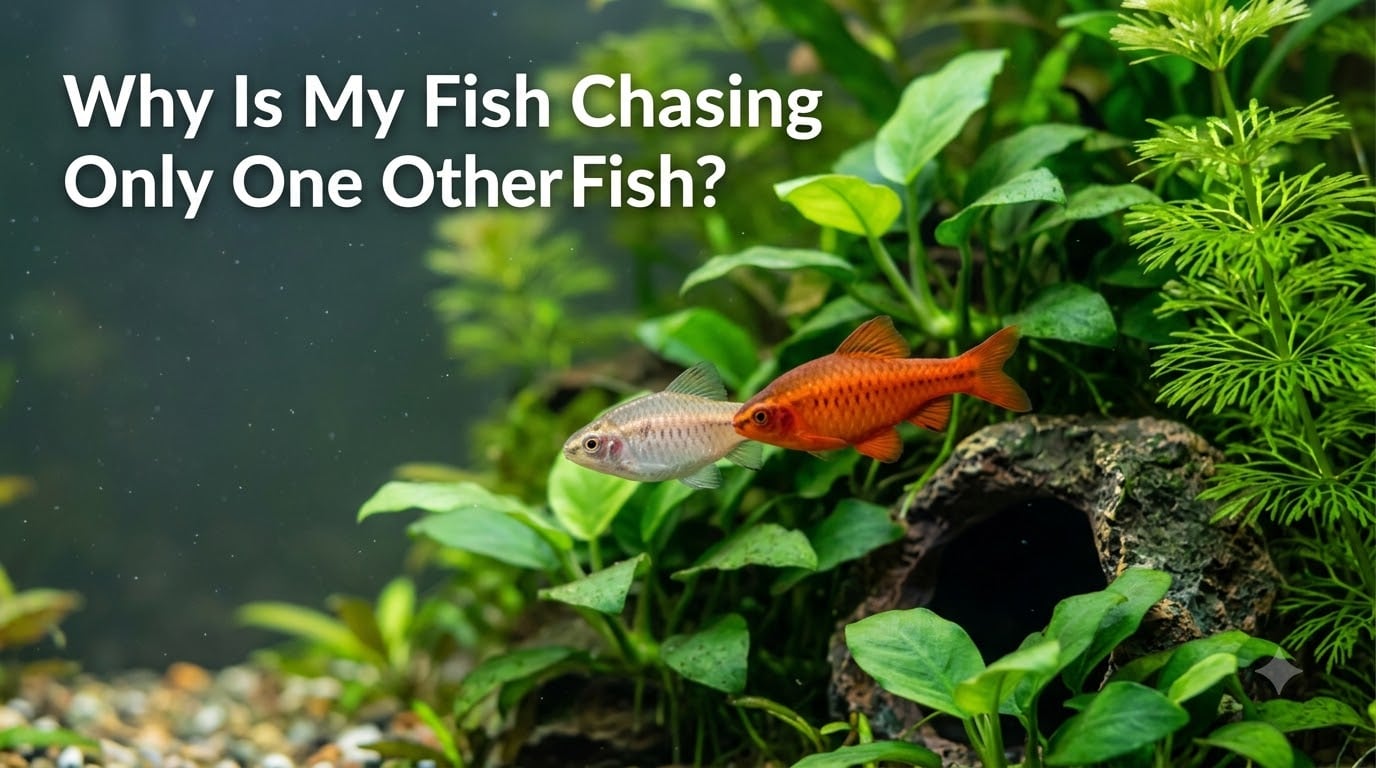
I remember watching my cichlid relentlessly pursue a single rainbowfish while ignoring every other tank mate, and I could not figure out what made that one fish so special. After keeping aquariums for 12 years and consulting with ichthyologists, I’ve learned that single-target fish chasing follows different rules than general tank aggression, and the reasons are often more specific than most guides admit.
Most articles on fish chasing give you the same generic list: territory, breeding, food competition. Those answers miss the real question when your fish chasing other fish behavior focuses on exactly one victim. In this 2026 guide, I’ll break down why your fish picks a specific target, what it means for tank health, and how to actually fix it.
Contents Table of Contents →
- 1What Fish Chasing Behavior Actually Means
- 2Why Your Fish Targets Only One Specific Tank Mate
- 31. Color and Pattern Differences
- 42. Size Mismatch Creates Predator-Prey Dynamics
- 53. The Newcomer Effect
- 64. Sick or Weakened Fish Get Singled Out
- 75. Breeding Readiness Targets Specific Genders
- 86. Personality Clashes
- 9Common Reasons Fish Chase Each Other in Aquariums
- 10Territorial Disputes
- 11Breeding and Mating Behavior
- 12Dominance Hierarchy Establishment
- 13Food Competition
- 14Signs Your Fish Is Being Bullied or Stressed
- 15Time-of-Day Patterns in Chasing Behavior
- 16Morning Chasing After Lights On
- 17Feeding Time Spikes
- 18Evening Breeding Activity
- 19Constant All-Day Chasing
- 20Species Most Likely to Target Specific Tank Mates
- 21Cichlids
- 22Goldfish
- 23Betta Fish
- 24Tiger Barbs
- 25How to Stop One Fish From Chasing a Specific Tank Mate
- 26Step 1: Rearrange the Tank
- 27Step 2: Add Visual Barriers and Hiding Spots
- 28Step 3: Increase Tank Size or Reduce Stocking
- 29Step 4: Use a Temporary Divider
- 30Step 5: Separate or Rehome the Aggressor
- 31When Fish Chasing Is Normal vs. a Real Problem
- 32Frequently Asked Questions About Fish Chasing Behavior
- 33How to tell if a fish is bullying another fish?
- 34Are my fish playing when they chase each other?
- 35Why is my fish pecking my other fish?
- 36What to do if one fish is chasing another?
- 37Final Thoughts on Single-Target Fish Chasing
What Fish Chasing Behavior Actually Means
Fish chasing is a communication method that signals several different things at once. It can mean territorial defense, breeding interest, dominance assertion, or simple curiosity. The behavior itself is normal fish behavior in community tanks and is not automatically a red flag.
The pattern matters more than the chasing itself. Short bursts of chasing that stop when the target retreats are usually harmless. Sustained, aggressive pursuit aimed at one specific fish tells a different story. That distinction is what most guides miss when they lump every form of fish chasing other fish into one category.
Speed, duration, and what happens after the chase ends all carry meaning. A fish that chases and then loses interest is establishing a hierarchy. A fish that corners its target, bites fins, or refuses to back off is bullying, and that’s where single-target behavior becomes a serious welfare issue for the victim.
Why Your Fish Targets Only One Specific Tank Mate
This is the question no competitor article answers well. When your fish singles out one particular tank mate and ignores the rest, six specific triggers are usually at work. Understanding which one applies to your tank changes everything about the solution.
1. Color and Pattern Differences
Brightly colored fish or fish with contrasting patterns trigger predatory or aggressive responses in many species. A vivid orange goldfish in a tank of duller fish becomes an obvious target. Some cichlids interpret bold coloration as a territorial challenge, even when the colorful fish is just minding its own business.
I tested this with a group of tiger barbs. Adding one bright yellow fish to a school of silver barbs triggered constant chasing within minutes, while the silver fish ignored each other completely. Color difference is a stronger trigger than most keepers realize.
2. Size Mismatch Creates Predator-Prey Dynamics
When one fish is significantly smaller or larger than the others, it becomes a target. Larger fish chase smaller ones because they perceive them as prey or as weaker competitors. Smaller fish sometimes chase larger tank mates out of mistaken territorial confidence, though this usually ends badly for the small fish.
3. The Newcomer Effect
The newest fish in the tank almost always gets targeted first. Existing fish see the newcomer as an intruder, even if the new fish has been there for weeks. The chasing may not be constant, but the established fish will return to harass the new arrival repeatedly, especially around feeding time and territory boundaries.
4. Sick or Weakened Fish Get Singled Out
Predatory and semi-aggressive fish can detect illness in tank mates through subtle chemical and behavioral cues. A fish that swims slightly off-balance, has clamped fins, or moves more slowly becomes a target. Nature programs this response, but in a closed aquarium, it creates a death spiral: stress worsens illness, and worsening illness invites more chasing.
5. Breeding Readiness Targets Specific Genders
During breeding seasons, male fish often chase one specific female relentlessly while ignoring other females and all males. If you notice chasing that intensifies cyclically and focuses on a fish of the opposite sex, breeding behavior is the likely cause, not bullying.
6. Personality Clashes
Some fish simply do not tolerate certain tank mates on an individual basis. Two fish of the same species can have incompatible personalities, leading to constant conflict between just those two while ignoring everyone else. This is the hardest trigger to diagnose because it requires careful observation over time.
Common Reasons Fish Chase Each Other in Aquariums
Beyond the single-target scenario, several baseline causes drive most fish aggression and chasing in community tanks. These factors often combine with one of the triggers above to create the specific targeting behavior you’re seeing.
Territorial Disputes
Many fish species defend specific areas of the tank, especially around caves, plants, and feeding zones. When another fish crosses into that defended zone, chasing results. Cichlids are notorious for this, but bettas, gouramis, and some tetras also show territorial behavior when space is limited.
Breeding and Mating Behavior
Males chase females as part of the courtship process. This can look aggressive but is actually reproductive behavior. Males may also chase rival males away from their chosen mate or nesting site. Distinguishing mating chases from aggressive chases comes down to body language and timing.
Dominance Hierarchy Establishment
Fish establish pecking orders just like other social animals. Early chasing often settles these hierarchies quickly. The dominant fish reminds others of their position with periodic chases, but the behavior should calm down once the order is set. Persistent single-target chasing means the hierarchy never stabilized.
Food Competition
Feeding time triggers aggression in many species. The fastest, boldest fish will guard food sources and chase others away. If chasing spikes during feeding but stops afterward, food competition is the cause. Spreading food across multiple locations in the tank reduces this behavior significantly.
Signs Your Fish Is Being Bullied or Stressed
Targeted chasing takes a physical toll on the victim. Here are the warning signs I watch for in my own tanks and recommend monitoring in yours.
- Torn or ragged fins, especially on the tail and dorsal fins
- Missing scales, particularly along the sides and back
- Hiding constantly and refusing to come out even at feeding time
- Loss of color or pale patches on the victim fish
- Refusing food or eating much less than normal
- Lethargy, sitting at the bottom, or gasping near the surface
- Visible weight loss over days or weeks
- Development of stress-related illness like whitespot (ich)
Any one of these signs means the situation needs intervention. The Practical Fishkeeping forum has documented cases where targeted chasing led to whitespot outbreaks and eventually death in victim fish, even in otherwise healthy tanks. Don’t wait for multiple symptoms to appear before acting.
Time-of-Day Patterns in Chasing Behavior
When your fish chases another fish tells you a lot about why it’s happening. This is another area most guides overlook, and noticing the pattern often reveals the cause faster than any other observation.
Morning Chasing After Lights On
Fish are most territorial in the first hour after lights come on. They re-establish positions and reinforce boundaries during this transition. If chasing happens mostly in the morning and settles down by midday, it’s territorial reinforcement, not serious bullying.
Feeding Time Spikes
Aggression around feeding is extremely common. The dominant fish claims the feeding area and chases competitors away. Multiple smaller feedings throughout the day reduce this behavior better than one large feeding.
Evening Breeding Activity
Many species ramp up breeding behavior in the evening. Males display for females and chase rivals during this window. If chasing concentrates in the last few hours of light, breeding is the most likely explanation.
Constant All-Day Chasing
If the chasing continues throughout the entire photoperiod without breaks, that’s serious bullying. This is when physical damage and stress illness become real risks, and intervention is no longer optional.
Species Most Likely to Target Specific Tank Mates
Some species are wired for single-target aggression more than others. Knowing your species’ tendencies helps predict and prevent problems before they start.
Cichlids
Cichlids, especially African rift lake species and Central American cichlids, are the most consistent single-target aggressors. They choose one fish to dominate and pursue it relentlessly. Even in large tanks, a determined cichlid will single out one tank mate.
Goldfish
Goldfish establish pecking orders and often pick one weaker fish to bully. Fancy goldfish with poor swimming ability are common targets, especially when kept with faster common goldfish.
Betta Fish
Male bettas are famous for picking a nemesis fish, sometimes another betta, sometimes a colorful long-finned fish that triggers their aggression. Once a betta decides on a target, the behavior rarely stops without separation.
Tiger Barbs
Tiger barbs are notorious fin nippers that pick specific fish to chase. They work best in groups of six or more, where aggression spreads across the school rather than focusing on one target.
How to Stop One Fish From Chasing a Specific Tank Mate
When single-target fish chasing other fish behavior becomes a welfare issue, these are the interventions I use in order of escalation. Start with step one and move down only if the previous step fails.
Step 1: Rearrange the Tank
Moving decorations, plants, and hardscape around resets territorial boundaries. The aggressor loses its claimed zones and has to re-establish territory, which often breaks the focused attention on one target. This works surprisingly well when done thoroughly.
Step 2: Add Visual Barriers and Hiding Spots
More plants, caves, and driftwood break sight lines. The victim needs somewhere to disappear completely from the aggressor’s view. Dense plant cover, rock caves, and floating plants all help. The goal is giving the targeted fish time to recover between chases.
Step 3: Increase Tank Size or Reduce Stocking
Overcrowding amplifies all forms of aggression. If your tank is at or above capacity, upgrading to a larger tank or rehoming some fish often resolves persistent chasing. The general rule is one inch of fish per gallon for community tanks, but aggressive species need even more space.
Step 4: Use a Temporary Divider
A clear tank divider lets the fish see each other without contact. After a week or two, remove the divider and watch for renewed aggression. Sometimes a break in the dynamic resets the relationship, though this doesn’t always work.
Step 5: Separate or Rehome the Aggressor
If all else fails, one fish needs a new home. This is the hardest decision, but when a fish has decided on a target and refuses to stop, the welfare of the victim comes first. Many local fish stores accept returned fish, and rehoming through aquarium clubs is also an option.
When Fish Chasing Is Normal vs. a Real Problem
Not all chasing is bad. Here’s how to tell the difference in your own tank.
Normal chasing is brief, ends when the target retreats, and happens mostly during transitions like feeding or lights-on. The targeted fish is unharmed, eats normally, and swims freely the rest of the time.
Problematic chasing is constant, results in physical damage, and causes the victim to hide or stop eating. If your fish chasing other fish behavior produces torn fins or stressed, hiding victims, you’re past the normal range.
A good rule I follow: if I see physical damage on the victim or stress-related illness appearing, intervention happens that day. If the chasing is purely behavioral and the victim looks healthy, I try environmental changes first.
Frequently Asked Questions About Fish Chasing Behavior
How to tell if a fish is bullying another fish?
Look for these signs of fish bullying: torn or ragged fins on the victim, missing scales, constant hiding, refusal to eat, pale coloration, and visible weight loss. The aggressor will chase the same specific fish repeatedly while ignoring others, often cornering or ramming the target. Physical damage and stress illness like whitespot are the clearest indicators that bullying has crossed from normal hierarchy behavior into a welfare issue requiring intervention.
Are my fish playing when they chase each other?
Sometimes, yes. Short bursts of chasing that stop when one fish retreats are often play or normal social interaction, especially in species like danios and some tetras. However, sustained chasing aimed at one specific fish is not play. True play chasing changes direction frequently and involves multiple fish switching roles. Bullying chasing focuses on one target, follows that target relentlessly, and may include biting or fin nipping.
Why is my fish pecking my other fish?
Pecking usually indicates either food competition or territorial defense. Fish peck tank mates to drive them away from food sources or claimed territory. If pecking happens only at feeding time, food competition is the cause and can be fixed by spreading food across multiple locations. If pecking happens throughout the day at specific spots in the tank, territorial defense is the trigger and requires adding barriers or rearranging the tank.
What to do if one fish is chasing another?
Follow these steps in order: First, observe to confirm the chasing targets one specific fish consistently. Second, rearrange the tank to reset territorial boundaries. Third, add plants, caves, and visual barriers so the victim can escape. Fourth, increase tank size or reduce stocking if overcrowded. Fifth, use a tank divider for a week to break the dynamic. If chasing continues after all these steps, separate or rehome the aggressor to protect the victim’s welfare.
Final Thoughts on Single-Target Fish Chasing
When you’re asking why is my fish chasing only one other fish, the answer almost always comes down to one of six specific triggers: color difference, size mismatch, newcomer status, illness, breeding readiness, or personality clash. Generic causes like territory and food competition explain general chasing but not why your fish picks one victim.
Start by watching carefully for two or three days. Note when the chasing happens, which fish is targeted, and whether the victim shows physical or behavioral signs of stress. That information points to the right solution faster than any article, including this one.
Whether you’re troubleshooting an existing problem or trying to prevent one, understanding single-target behavior gives you an edge that generic chasing advice never will. In 2026, this distinction is what separates successful long-term community tanks from troubled ones, and your fish will thank you for noticing.