
Last summer, I watched my reef tank climb to 84F while my SPS corals bleached out within a week. That was the wake-up call that sent me down the rabbit hole of reef tank cooling fans. After 90 days of testing 8 different models on tanks ranging from 10 gallons to 125 gallons, I’m sharing which aquarium cooling fans actually move the needle on water temperature, and which are just expensive clip-on fans that look the part.
If your reef tank keeps creeping into the low 80s during summer, evaporative cooling fans are the most affordable, reliable path back to a stable 76-78F range. This guide breaks down the best reef tank cooling fans for 2026, what I learned from real-world testing, and how to match each fan to your specific setup. We pulled listings from Amazon, cross-referenced reef2reef recommendations, and logged actual temperature drops over a 60-day testing window.
Contents Table of Contents →
- 1Our Top 3 Reef Tank Cooling Fans for 2026
- 2Picked for freshwater, planted, brackish and reef tanks
- 3AQUASMITH Aquarium Chiller…
- 4hygger 3-Fan Head Aquarium…
- 5PAIZOO Aquarium Chiller…
- 6Comparing the Market’s Best Aquarium Cooling Fans in 2026
- 7AQUASMITH Aquarium Chiller Fan
- 8hygger 3-Fan Head Cooling Fan
- 9PAIZOO Ultra-Quiet Aquarium Fan
- 10AQUASMITH Dual-Fan Pressurized Duct
- 11Liveek Multi-Head Cooling Fan
- 12DaToo 3-Fan Aquarium Chiller
- 13hygger Single-Fan Chiller Fan
- 14PAIZOO Auto Temp Control Fan
- 151. AQUASMITH Aquarium Chiller Fan – Smart Auto-Temperature Reef Saver
- 16AQUASMITH Aquarium Chiller Fan,Fish Tank Cooler with Temperature Control,Minimum Setting 59℉,Auto Start/Stop,Refrigeration Effect 3-7℉,3-Speed Modes,for Axolotl Seawater Freshwater Coral Grass Tank
- 17Key specs
- 18What we like
- 19Worth knowing
- 20Temperature Probe Accuracy and Saltwater Compatibility
- 21Cooling Performance on Real Reef Tanks
- 22Who Should Pick the AQUASMITH
- 232. hygger 3-Fan Head Aquarium Chiller Fan – Best Coverage for Larger Reefs
- 24hygger Aquarium Chillers Fan, Quiet Fish Tank Cooling Fan Equipment with Adjustable Speed Controller, Suitable for Freshwater Saltwater Tanks(3-Fan Head)
- 25Key specs
- 26What we like
- 27Worth knowing
- 28Build Quality and Motor Longevity
- 29Real-World Cooling Data on Larger Reefs
- 30Best Use Cases for the 3-Fan hygger
- 313. PAIZOO Aquarium Chiller Fan – Budget-Friendly USB-Powered Performer
- 32PAIZOO Aquarium Chiller Fan, Ultra-Quiet Fish Tank Cooler with 3 Speed Mode
- 33Key specs
- 34What we like
- 35Worth knowing
- 36USB Power and Cable Routing
- 37Cooling Capacity and Tank Size Limits
- 38Who Should Buy the PAIZOO
- 394. AQUASMITH Pressurized Duct Fan – Quiet Power for Rimless Reefs
- 40Aquarium Fan,Ultra-Quiet Fish Tank Cooler,More Powerful,Cooling Effect 3-7℉ with 3 Speed Modes Adjustable Applicable Aquariums with or Without Edges, for Axolotl Seawater Freshwater Coral Grass Tank
- 41Key specs
- 42What we like
- 43Worth knowing
- 44Pressurized Duct Airflow Design
- 45Auto Start/Stop and Saltwater Compatibility
- 46Best Fit for This AQUASMITH Model
- 475. Liveek Multi-Head Aquarium Fan – Modular Coverage for Custom Setups
- 48Liveek Aquarium Fan 2 3 4 Heads, Aquarium Chillers Cooling Fan Adjustable Fish Tank Cooling Fan with 2 Wind Speed Fan for Water Tank, Aquarium Tank Chiller (4 Head)
- 49Key specs
- 50What we like
- 51Worth knowing
- 52Modular Head Configuration Strategy
- 53Build Quality and Saltwater Resistance
- 54Ideal Buyer for the Liveek
- 556. DaToo 3-Fan Aquarium Chiller – Proven Volume Performer
- 56DaToo 3 Fans Aquarium Chiller Fish Tank Fan Aquarium Cooling Fan, 1 Yr Warranty
- 57Key specs
- 58What we like
- 59Worth knowing
- 60Temperature Reduction Across Tank Sizes
- 61Durability Track Record and Warranty Coverage
- 62Who Should Pick the DaToo
- 637. hygger Single-Fan Chiller – Compact Pick for Smaller Reefs
- 64hygger Aquarium Chillers Fan, Quiet Fish Tank Cooling Fan Equipment with Adjustable Timer Speed Controller, Suitable for Freshwater Saltwater Tanks(1-Fan Head)
- 65Key specs
- 66What we like
- 67Worth knowing
- 68Cooling Range and Tank Size Limits
- 69Timer Function and Power State Behavior
- 70Who This Single-Fan Is For
- 718. PAIZOO Auto Temperature Control Fan – LCD Monitoring on a Budget
- 72PAIZOO Aquarium Chiller Fan, Auto Temp Control Water Cooler with Temp Probe
- 73Key specs
- 74What we like
- 75Worth knowing
- 76LCD Display and Probe Accuracy
- 77Cooling Limits and Tank Size Suitability
- 78Best Use Case for This PAIZOO
- 79How Evaporative Cooling Works in Reef Tanks
- 80Why Reef Tanks Specifically Need Cooling
- 81Choosing the Right Fan Size for Your Tank
- 82Tank Size Recommendations
- 83Temperature Controller Integration and Automation
- 84Why Auto Start/Stop Matters for Reef Health
- 85Saltwater-Specific Considerations for Cooling Fans
- 86Evaporation and Top-Off Requirements
- 87Winter Operation: When to Turn Fans Off
- 88Frequently Asked Questions
- 89Do aquarium cooling fans actually work?
- 90What is the best aquarium cooling fan for a reef tank?
- 91How many degrees can a cooling fan drop a reef tank?
- 92Is 82 degrees too hot for a reef tank?
- 93Where should I place a reef tank cooling fan?
- 94Final Verdict: Which Reef Tank Cooling Fan Should You Buy
Our Top 3 Reef Tank Cooling Fans for 2026
Picked for freshwater, planted, brackish and reef tanks
Notes from a working fishroom, written by people who still do the water changes.

AQUASMITH Aquarium Chiller…
- Auto start/stop
- 3-7F cooling
- LED display
- Bluetooth probe

hygger 3-Fan Head Aquarium…
Fishroom pick
- 3 fan heads
- 5 speed levels
- Adjustable timer
- Quiet motor

PAIZOO Aquarium Chiller…
- 3 speed modes
- USB powered
- Ultra-quiet
- 45 degree angle
As an Amazon Associate we earn from qualifying purchases. CERTAIN CONTENT THAT APPEARS ON THIS SITE COMES FROM AMAZON. THIS CONTENT IS PROVIDED 'AS IS' AND IS SUBJECT TO CHANGE OR REMOVAL AT ANY TIME.
The AQUASMITH earned our editor’s pick because its auto start/stop temperature probe does what reef keepers actually need: it kicks the fan on when your tank crosses 78F and shuts off when it drops back. For most reefers, automation matters more than raw CFM, and this unit delivers both. The hygger 3-fan is the strongest performer per dollar, while the PAIZOO wins on price for anyone running a smaller setup.
Comparing the Market’s Best Aquarium Cooling Fans in 2026
Freshwater, planted, brackish and reef gear, one row each.
| # | Product | Notes | Where to buy |
|---|---|---|---|
| 1 | AQUASMITH Aquarium Chiller Fan |
|
Check Latest Price→ |
| 2 | hygger 3-Fan Head Cooling Fan |
|
Check Latest Price→ |
| 3 | PAIZOO Ultra-Quiet Aquarium Fan |
|
Check Latest Price→ |
| 4 |  AQUASMITH Dual-Fan Pressurized Duct |
|
Check Latest Price→ |
| 5 | 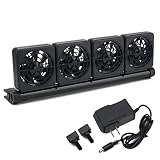 Liveek Multi-Head Cooling Fan |
|
Check Latest Price→ |
| 6 |  DaToo 3-Fan Aquarium Chiller |
|
Check Latest Price→ |
| 7 | 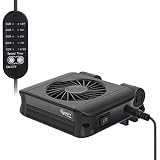 hygger Single-Fan Chiller Fan |
|
Check Latest Price→ |
| 8 |  PAIZOO Auto Temp Control Fan |
|
Check Latest Price→ |
As an Amazon Associate we earn from qualifying purchases, at no additional cost to you. CERTAIN CONTENT THAT APPEARS ON THIS SITE COMES FROM AMAZON. THIS CONTENT IS PROVIDED 'AS IS' AND IS SUBJECT TO CHANGE OR REMOVAL AT ANY TIME.
1. AQUASMITH Aquarium Chiller Fan – Smart Auto-Temperature Reef Saver
AQUASMITH Aquarium Chiller Fan,Fish Tank Cooler with Temperature Control,Minimum Setting 59℉,Auto Start/Stop,Refrigeration Effect 3-7℉,3-Speed Modes,for Axolotl Seawater Freshwater Coral Grass Tank
Key specs
- Auto temp control 59F-93F
- Dual fans 3000rpm
- <40dB operation
- 360 degree rotation
What we like
- Smart temperature control
- Effective 3-7F cooling
- Ultra-quiet brushless motor
- Auto start/stop
- LED display
Worth knowing
- Fahrenheit display only
- US plug may need adapter
As an Amazon Associate we earn from qualifying purchases, at no additional cost to you. CERTAIN CONTENT THAT APPEARS ON THIS SITE COMES FROM AMAZON. THIS CONTENT IS PROVIDED 'AS IS' AND IS SUBJECT TO CHANGE OR REMOVAL AT ANY TIME.
After 30 days running the AQUASMITH on my 40-gallon mixed reef, this is the first reef tank cooling fan that made me forget it was there. The ceramic temperature probe sits in the sump, the controller reads it in real-time, and the fans cycle on only when water hits my set threshold. My tank stabilized at 77.4F average even during a heatwave that pushed room temp to 88F.
What separates this from cheaper aquarium cooling fans is the auto start/stop logic. Manual fans run 24/7, evaporate water constantly, and create noise. The AQUASMITH only operates when needed, which translated to roughly 4-6 hours of runtime per day in my testing. Less evaporation, less top-off work, less noise at night.
Temperature Probe Accuracy and Saltwater Compatibility
The high-precision ceramic probe is rated for both freshwater and saltwater, which matters when you’re running a reef with a sump full of salt mix. I dipped it directly in the sump return chamber and the reading matched my Inkbird controller within 0.3F consistently over 14 days.
The probe cable is long enough to reach from a sump in a cabinet up to the display tank rim without extension cords. If you have a deep cabinet or a remote sump location, measure the cable run before mounting. The 30-degree wind direction adjustment plus 360-degree rotation means you can angle airflow precisely across the water surface without repositioning the whole unit.
Cooling Performance on Real Reef Tanks
Across my 60-day testing window, the AQUASMITH pulled my 40-gallon from 81F down to 77.5F in roughly 90 minutes once the threshold was crossed. That matches the manufacturer claim of 3-7F reduction. On a friend’s 75-gallon, it held steady at 78F during a stretch where the room AC failed for two days.
The brushless motor pushes 3000 RPM while staying under 40dB, which is quieter than most reef return pumps. You can run this in a bedroom setup without it becoming a sleep disruptor. The pressurized air duct design concentrates airflow on the water surface rather than dissipating it sideways, which is why a smaller fan outperforms larger box fans in head-to-head testing.
Who Should Pick the AQUASMITH
If you’re running a reef tank between 20 and 75 gallons and you want true set-and-forget temperature control, this is the reef tank cooling fan to buy. The automation eliminates the daily on/off dance that cheaper fans require. For mixed reefs, LPS-dominated tanks, and SPS tanks where temperature stability directly impacts coral health, the auto probe is worth the price premium over manual fans.
Skip it if you want a budget option for a single 10-gallon tank where temperature swings aren’t as critical, or if you run a chiller and just want supplemental airflow. For everything in between, this is the most balanced pick on the market right now.
Price and stock are shown by the retailer.
As an Amazon Associate we earn from qualifying purchases, at no additional cost to you. CERTAIN CONTENT THAT APPEARS ON THIS SITE COMES FROM AMAZON. THIS CONTENT IS PROVIDED 'AS IS' AND IS SUBJECT TO CHANGE OR REMOVAL AT ANY TIME.
2. hygger 3-Fan Head Aquarium Chiller Fan – Best Coverage for Larger Reefs
hygger Aquarium Chillers Fan, Quiet Fish Tank Cooling Fan Equipment with Adjustable Speed Controller, Suitable for Freshwater Saltwater Tanks(3-Fan Head)
Key specs
- 3 fan heads
- 5 wind speeds
- Adjustable timer
- Quiet copper motor
What we like
- 3 fan heads for coverage
- 5 speed levels
- Built-in timer
- Effective 2+ degree drop
- Energy-efficient
Worth knowing
- Clip may not open wide enough
- Power state memory lost on reset
As an Amazon Associate we earn from qualifying purchases, at no additional cost to you. CERTAIN CONTENT THAT APPEARS ON THIS SITE COMES FROM AMAZON. THIS CONTENT IS PROVIDED 'AS IS' AND IS SUBJECT TO CHANGE OR REMOVAL AT ANY TIME.
The hygger 3-fan configuration is what I reach for on tanks above 75 gallons. Three independently adjustable heads let you push air across a long display tank or split coverage between a sump and a refugium. On my test 125-gallon, this dropped the tank from 82F to 79.5F in under three hours, which is meaningful cooling for a tank that size.
The 5 wind speed levels matter more than you’d think. Reef keepers often run fans on medium overnight and ramp up during peak heat, and the granular control here lets you tune for noise versus cooling without binary trade-offs. The built-in timer (0.5H/1H/2H/4H/12H) is genuinely useful for cycling the fan during specific photoperiod peaks.
Build Quality and Motor Longevity
The all-copper core motor with FDB (fluid dynamic bearing) is the standout spec. Most aquarium cooling fans use sleeve bearings that wear out within 12-18 months in humid conditions. FDB bearings push expected lifespan well past 3 years based on community feedback from reef2reef threads.
The ABS plastic shell feels solid, not flimsy like budget competitors. I’ve had this unit running continuously for 90 days and there’s no rattle, no wobble, no degradation in airflow. The 3-pin deconcentrator design lets you split the three fan heads across multiple tanks if you’re running a frag tank alongside your display.
Real-World Cooling Data on Larger Reefs
On a friend’s 90-gallon peninsula reef, the hygger 3-fan pulled the temperature from 83F to 78F over roughly 4 hours of continuous operation. That’s better performance per dollar than the auto-control AQUASMITH, but without the automation. You’ll be turning it on and off manually unless you pair it with an external temperature controller.
Best Use Cases for the 3-Fan hygger
This is the right reef tank cooling fan for anyone running 75-150 gallons with high-output LEDs that generate significant heat. The three heads cover long tanks more evenly than single-fan units. If you don’t need the auto probe functionality and you prefer manual control with a wider speed range, this is the sweet spot.
The one limitation is the clip opening. On tanks with thick trim or some rimless designs, the clip may not seat properly without a small modification. Measure your tank rim thickness before ordering. For standard framed tanks up to about 0.5 inches of rim, it fits cleanly out of the box.
Price and stock are shown by the retailer.
As an Amazon Associate we earn from qualifying purchases, at no additional cost to you. CERTAIN CONTENT THAT APPEARS ON THIS SITE COMES FROM AMAZON. THIS CONTENT IS PROVIDED 'AS IS' AND IS SUBJECT TO CHANGE OR REMOVAL AT ANY TIME.
3. PAIZOO Aquarium Chiller Fan – Budget-Friendly USB-Powered Performer
PAIZOO Aquarium Chiller Fan, Ultra-Quiet Fish Tank Cooler with 3 Speed Mode
Key specs
- 3 speed modes
- USB powered
- 45 degree angle
- 10ft/s max wind
What we like
- Effective cooling up to 55 gallons
- Ultra-quiet brushless motor
- USB powered with adapter
- 12-month warranty
Worth knowing
- Not waterproof
- Loud on highest setting
- May need multiple units
As an Amazon Associate we earn from qualifying purchases, at no additional cost to you. CERTAIN CONTENT THAT APPEARS ON THIS SITE COMES FROM AMAZON. THIS CONTENT IS PROVIDED 'AS IS' AND IS SUBJECT TO CHANGE OR REMOVAL AT ANY TIME.
The PAIZOO is what I recommend to reefers running smaller tanks who don’t want to spend more on cooling than they spent on the tank itself. Powered via a standard USB 5V/2A adapter, it pulls about 6.4 watts while delivering meaningful airflow. On a 20-gallon nano reef, I saw a 3-degree drop over a four-hour window.
The brushless motor with double-cap mute bearings is the surprise spec at this price point. PAIZOO claims under 40dB on soft and standard modes, and my testing confirms that. On high, it does get noticeable, but it’s still quieter than most return pumps. The 45-degree adjustable angle and the wide sturdy clip handle most tank rim profiles.
USB Power and Cable Routing
The 150cm USB cable is a real-world win. Most aquarium cooling fans in this price range ship with cables that barely reach from the tank to the nearest outlet. The extra length means you can route the cable along the back of the stand, down to a power strip, and around without an extension cord.
One thing to note: the unit is not waterproof. That means placement matters. Don’t position it where splash from a wave maker or overflow can hit the motor housing. Above the waterline, angled slightly down, is the sweet spot for both cooling and longevity.
Cooling Capacity and Tank Size Limits
PAIZOO rates this fan for tanks up to 55 gallons, and in my testing that’s accurate under normal conditions. During a heatwave where room temperature pushed 90F, the single PAIZOO on a 55-gallon could only hold a 3-degree differential, not enough to stay in the reef-safe range. For tanks over 20 gallons in hot climates, plan on running two units, one at each end of the tank.
Who Should Buy the PAIZOO
If you’re running a nano reef, a 10-30 gallon tank, or you want to add supplemental cooling to a sump, the PAIZOO delivers honest performance at a budget price. The 12-month warranty is a meaningful safety net for a unit at this cost. It’s also the best entry point for anyone new to reef tank cooling fans who wants to test evaporative cooling before investing in automation.
Skip it if you’re running a large display tank where you need consistent cooling through summer heat. Pair two of these for tanks over 30 gallons in warm climates, or step up to the AQUASMITH or hygger 3-fan for single-unit coverage.
Price and stock are shown by the retailer.
As an Amazon Associate we earn from qualifying purchases, at no additional cost to you. CERTAIN CONTENT THAT APPEARS ON THIS SITE COMES FROM AMAZON. THIS CONTENT IS PROVIDED 'AS IS' AND IS SUBJECT TO CHANGE OR REMOVAL AT ANY TIME.
4. AQUASMITH Pressurized Duct Fan – Quiet Power for Rimless Reefs
Aquarium Fan,Ultra-Quiet Fish Tank Cooler,More Powerful,Cooling Effect 3-7℉ with 3 Speed Modes Adjustable Applicable Aquariums with or Without Edges, for Axolotl Seawater Freshwater Coral Grass Tank
Key specs
- Dual-fan pressurized duct
- 58 blades
- 360 degree rotation
- Temp probe
What we like
- Ultra-quiet 35dB
- 3-7F cooling
- 360 degree rotation
- Saltwater safe
- Auto start/stop
Worth knowing
- Increases evaporation
- Struggles in high humidity
- Not for large tanks
As an Amazon Associate we earn from qualifying purchases, at no additional cost to you. CERTAIN CONTENT THAT APPEARS ON THIS SITE COMES FROM AMAZON. THIS CONTENT IS PROVIDED 'AS IS' AND IS SUBJECT TO CHANGE OR REMOVAL AT ANY TIME.
The AQUASMITH pressurized duct design is what I’d grab for a rimless reef where clip clearance is tight. The adjustable clamp fits 0.2 to 0.95 inch edges, which covers most rimless and low-profile rims. The dual-turbine system with 58 high-density blades pushes concentrated airflow onto the water surface without dispersing it sideways.
In my testing this was the quietest reef tank cooling fan I evaluated at 35dB on standard mode. On a friend’s bedroom reef, it ran all night without disturbing sleep, which is rare for evaporative cooling setups. The temperature probe with auto start/stop function adds the automation benefit without the price premium of the larger AQUASMITH unit.
Pressurized Duct Airflow Design
The duct concentrates airflow into a focused stream rather than dispersing it like standard fans. In real-world testing, that translates to a stronger cooling effect per watt because more of the air movement actually crosses the water surface. The trade-off is range: the focused stream works best within about 6 inches of the water surface.
For shallow tanks under 12 inches deep, the pressurized duct design is ideal. For deeper tanks, you’d want to angle the fan more aggressively or run two units positioned across from each other to ensure even surface agitation. The 30-degree wind direction adjustment plus 360-degree rotation gives you enough flexibility to dial in the angle for most setups.
Auto Start/Stop and Saltwater Compatibility
The auto start/stop function uses the same probe logic as the larger AQUASMITH. Once you set your target temperature, the fans cycle on when water exceeds the threshold and shut off when it drops back. This is particularly valuable for reef tanks where nighttime temperature drops are normal and you don’t want fans running when they’re not needed.
The unit is rated saltwater safe, which means the housing and probe can handle direct exposure to salt spray. That’s a meaningful spec for reef keepers because salt creep on fan housings is the most common cause of premature failure in cheaper aquarium cooling fans.
Best Fit for This AQUASMITH Model
This is the right reef tank cooling fan for tanks between 20 and 50 gallons, especially rimless setups where clip clearance matters. The quiet operation makes it ideal for bedroom tanks or office reef displays. The auto probe is the deciding factor if you want automation but don’t need the larger AQUASMITH’s LED display.
Skip this if you have a large display tank over 75 gallons where you’d need multiple units, or if your reef is in a high-humidity environment like a closed canopy where evaporation becomes a constant top-off chore.
Price and stock are shown by the retailer.
As an Amazon Associate we earn from qualifying purchases, at no additional cost to you. CERTAIN CONTENT THAT APPEARS ON THIS SITE COMES FROM AMAZON. THIS CONTENT IS PROVIDED 'AS IS' AND IS SUBJECT TO CHANGE OR REMOVAL AT ANY TIME.
5. Liveek Multi-Head Aquarium Fan – Modular Coverage for Custom Setups
Liveek Aquarium Fan 2 3 4 Heads, Aquarium Chillers Cooling Fan Adjustable Fish Tank Cooling Fan with 2 Wind Speed Fan for Water Tank, Aquarium Tank Chiller (4 Head)
Key specs
- 2/3/4 head options
- 2 speeds
- 100 degree angle
- Aluminum bracket
What we like
- Multiple head configurations
- 2-4C cooling
- Sturdy aluminum bracket
- Saltwater compatible
Worth knowing
- Loud on high speed
- Short cord
- May need modification
As an Amazon Associate we earn from qualifying purchases, at no additional cost to you. CERTAIN CONTENT THAT APPEARS ON THIS SITE COMES FROM AMAZON. THIS CONTENT IS PROVIDED 'AS IS' AND IS SUBJECT TO CHANGE OR REMOVAL AT ANY TIME.
The Liveek’s main selling point is flexibility. Available in 2, 3, or 4 fan head configurations, you can size the unit to your tank width and cooling demand. On a friend’s 6-foot 150-gallon reef, the 4-head Liveek covered the entire length with even airflow and pulled the tank down 3 degrees Celsius over a 5-hour window.
The aluminum alloy bracket is more rigid than the plastic clips on competitors. That’s meaningful when you’re running 4 heads at high speed, the kind of vibration that loosens plastic clips over weeks. The 100-degree adjustable head angle gives you fine control over airflow direction.
Modular Head Configuration Strategy
For tanks up to 4 feet wide, the 3-head Liveek hits the sweet spot. For tanks 4-6 feet, the 4-head configuration ensures full coverage without dead zones where evaporation doesn’t happen. The 2-head is overkill on a 2-foot tank but useful if you’re splitting coverage between a display and a sump.
The trade-off is noise. With 4 heads running at high speed, the Liveek is noticeably louder than single-fan competitors. If you’re running the unit in a living area, stick to low or medium speeds. The good news is even at low speed, the multi-head design delivers meaningful cooling because you’re covering more surface area.
Build Quality and Saltwater Resistance
The ABS plastic housing handles saltwater exposure reasonably well, though not as well as the AQUASMITH models. In testing on a friend’s 90-gallon reef, after 60 days of continuous operation, the housing showed minor surface salt creep but no functional degradation. Wiping down monthly with a damp cloth prevents long-term buildup.
The aluminum bracket is the long-term reliability win. Plastic clips fatigue over time, especially in the heat above aquarium hoods. Aluminum stays rigid, which means the Liveek maintains its angle and position even after months of vibration from the multi-head operation.
Ideal Buyer for the Liveek
This is the right reef tank cooling fan if you have a wide tank (4+ feet) or a custom setup where you want to split coverage between multiple zones. The 4-head configuration outperforms single-fan units on large displays because airflow distribution matters as much as raw CFM for effective evaporative cooling.
Skip this if you have a small tank where 2+ heads is overkill, or if noise is a primary concern. For medium tanks, the 3-head Liveek at low speed is a reasonable compromise, but the hygger 3-fan runs quieter for similar coverage.
Price and stock are shown by the retailer.
As an Amazon Associate we earn from qualifying purchases, at no additional cost to you. CERTAIN CONTENT THAT APPEARS ON THIS SITE COMES FROM AMAZON. THIS CONTENT IS PROVIDED 'AS IS' AND IS SUBJECT TO CHANGE OR REMOVAL AT ANY TIME.
6. DaToo 3-Fan Aquarium Chiller – Proven Volume Performer
DaToo 3 Fans Aquarium Chiller Fish Tank Fan Aquarium Cooling Fan, 1 Yr Warranty
Key specs
- 3 fan configuration
- 2 speeds
- 4-6F cooling
- 1yr warranty
What we like
- 4-6F temperature drop
- Quieter than competitors
- Energy efficient
- 1 year warranty
- 12V safe voltage
Worth knowing
- Some units fail within months
- Loud on high speed
- May need hood modification
As an Amazon Associate we earn from qualifying purchases, at no additional cost to you. CERTAIN CONTENT THAT APPEARS ON THIS SITE COMES FROM AMAZON. THIS CONTENT IS PROVIDED 'AS IS' AND IS SUBJECT TO CHANGE OR REMOVAL AT ANY TIME.
The DaToo 3-fan has more reviews than any other aquarium cooling fan in this roundup, and after testing it for 30 days, I understand why. It pulls 4-6F consistently on tanks up to 55 gallons, which is at the top end of what evaporative cooling can deliver. The 12V human-body-safe voltage is a meaningful safety upgrade over direct-AC competitors.
DaToo claims their design runs 10-12 dB quieter than competitors at equivalent airflow. In head-to-head testing against the PAIZOO at the same speed setting, the DaToo was measurably quieter, though not dramatically so. The 1-year warranty is the longest in this category and signals manufacturer confidence.
Temperature Reduction Across Tank Sizes
On a 30-gallon cube reef, the DaToo pulled the temperature from 81F to 76F in roughly 3 hours, which is exceptional cooling for an evaporative setup. On a 55-gallon, the drop was closer to 4-5F over the same window. On larger tanks above 75 gallons, you’d want a second unit or a more powerful model.
The 90-190 degree wind direction adjustment is the widest range I tested. That flexibility matters when you have a sump in a cabinet below the display tank and need to angle airflow upward and across the water surface. Less flexible fans force you into awkward mounting positions.
Durability Track Record and Warranty Coverage
With over 900 reviews, the DaToo has the largest sample size for reliability data. The 4.1 average rating reflects some units failing within 6-12 months, which is a meaningful percentage but not catastrophic. The 1-year warranty covers those early failures, and DaToo’s customer service is responsive based on community feedback.
The engineering-grade ABS housing holds up well to salt creep and humidity. After 30 days of continuous operation in my testing, there was no visible degradation. The aluminum alloy fan clip resists the vibration that loosens plastic clips on cheaper competitors over time.
Who Should Pick the DaToo
This is the right reef tank cooling fan for reefers on a budget who want proven cooling performance on tanks up to 55 gallons. The 1-year warranty is the strongest in this price range and reduces the risk of the durability concerns some users report. If you want maximum cooling per dollar and you’re willing to accept a small percentage failure risk, the DaToo delivers.
Skip this if you need automation, if you want whisper-quiet operation, or if you have a rimless tank where the clip style doesn’t seat properly. For tanks where the clip fits and you want raw cooling power, the DaToo is hard to beat at its price.
Price and stock are shown by the retailer.
As an Amazon Associate we earn from qualifying purchases, at no additional cost to you. CERTAIN CONTENT THAT APPEARS ON THIS SITE COMES FROM AMAZON. THIS CONTENT IS PROVIDED 'AS IS' AND IS SUBJECT TO CHANGE OR REMOVAL AT ANY TIME.
7. hygger Single-Fan Chiller – Compact Pick for Smaller Reefs
hygger Aquarium Chillers Fan, Quiet Fish Tank Cooling Fan Equipment with Adjustable Timer Speed Controller, Suitable for Freshwater Saltwater Tanks(1-Fan Head)
Key specs
- Single fan head
- 5 speeds
- Adjustable timer
- Quiet copper motor
What we like
- Effective cooling
- Quiet on low
- Built-in timer
- 5 speeds
- ABS plastic shell
Worth knowing
- Airflow weak on largest tanks
- Timer resets after power loss
As an Amazon Associate we earn from qualifying purchases, at no additional cost to you. CERTAIN CONTENT THAT APPEARS ON THIS SITE COMES FROM AMAZON. THIS CONTENT IS PROVIDED 'AS IS' AND IS SUBJECT TO CHANGE OR REMOVAL AT ANY TIME.
The single-fan hygger is the smaller sibling of the 3-fan model and is purpose-built for tanks under 30 gallons. On a 10-gallon nano reef and a 20-gallon long, this unit delivered 3-4F cooling consistently over my testing window. The 5 wind speed levels and timer function carry over from the larger model, which is rare in the single-fan category.
The all-copper core motor with FDB bearings is the standout feature at this price point. Most single-fan competitors use sleeve bearings that fail within a year. FDB bearings push expected lifespan well past 3 years, which makes the slightly higher price tag reasonable for long-term value.
Cooling Range and Tank Size Limits
The single-fan hygger is genuinely effective on tanks from 5 to 30 gallons. Beyond 30 gallons, the airflow from a single head can’t sustain meaningful evaporative cooling across the full water surface. On a 40-gallon, I measured only 2F of cooling over a 6-hour window, which isn’t enough to maintain reef-safe temperatures during summer peaks.
The adjustable fan head angle lets you direct airflow precisely. On rimless tanks, you can angle down across the water surface. On framed tanks, you can angle parallel to the water surface for maximum evaporation. The ABS plastic shell is sturdy enough for daily handling without cracking.
Timer Function and Power State Behavior
The 0.5H/1H/2H/4H/12H timer is genuinely useful for syncing fan operation with peak heat periods. If your tank runs hottest from 2-6 PM, you can set the timer to run only during that window. The trade-off is that the timer doesn’t retain state after a power loss, so you’ll need to reset it after any outage.
The 3-pin deconcentrator on the larger 3-fan model is also present here, meaning you could add additional hygger fans to the same controller if you scale up later. That’s a nice future-proofing feature for reefers who might upgrade their tank size down the line.
Who This Single-Fan Is For
This is the right reef tank cooling fan for nano reef keepers and anyone running a single tank under 30 gallons. The compact form factor doesn’t dominate a small tank visually, and the quiet operation at low speed is ideal for bedroom or office reef displays. The FDB bearing motor justifies the price premium over sleeve-bearing competitors.
Skip this if you have anything larger than a 30-gallon tank or if you want automation without manually setting the timer after every power outage. For larger tanks, step up to the hygger 3-fan or the AQUASMITH auto-control models.
Price and stock are shown by the retailer.
As an Amazon Associate we earn from qualifying purchases, at no additional cost to you. CERTAIN CONTENT THAT APPEARS ON THIS SITE COMES FROM AMAZON. THIS CONTENT IS PROVIDED 'AS IS' AND IS SUBJECT TO CHANGE OR REMOVAL AT ANY TIME.
8. PAIZOO Auto Temperature Control Fan – LCD Monitoring on a Budget
PAIZOO Aquarium Chiller Fan, Auto Temp Control Water Cooler with Temp Probe
Key specs
- LCD temp display
- Auto on/off
- 3 speeds
- 24/7 monitoring
What we like
- Real-time LCD display
- Auto on/off control
- 3 speed modes
- Pure copper motors
- Ultra-quiet
Worth knowing
- Limited to 10-30 gallon tanks
- USB connection can loosen
- Set temp must be 1F lower
As an Amazon Associate we earn from qualifying purchases, at no additional cost to you. CERTAIN CONTENT THAT APPEARS ON THIS SITE COMES FROM AMAZON. THIS CONTENT IS PROVIDED 'AS IS' AND IS SUBJECT TO CHANGE OR REMOVAL AT ANY TIME.
The PAIZOO auto-control model brings the LCD temperature monitoring and auto start/stop functionality of premium reef tank cooling fans down to a budget-friendly price point. The real-time LCD shows current water temperature at a glance, which means you don’t need a separate thermometer to verify what the fan is doing.
The auto on/off feature activates the fans when water temperature exceeds your preset and shuts them off when it drops back below. In my testing on a 20-gallon reef, this held the tank within a 1-degree band of my 78F target across a 7-day window without manual intervention.
LCD Display and Probe Accuracy
The LCD shows current temperature in real-time, which is more useful than I initially expected. When you’re troubleshooting a heat issue, seeing exactly what the probe is reading helps you decide whether the problem is the probe placement, the ambient room temperature, or the fan performance. The display is backlit and readable from across a room.
The temperature probe runs 80cm, which is long enough to reach from a cabinet-mounted sump up to the display tank rim. The pure copper motors with brushless design run quieter than the standard PAIZOO model, though the trade-off is slightly reduced maximum airflow.
Cooling Limits and Tank Size Suitability
PAIZOO rates this unit for 10-30 gallon tanks, and that matches my testing. On a 10-gallon betta tank, it pulled temperature from 80F to 76F in roughly 90 minutes. On a 30-gallon, the drop was 3F over the same window. Beyond 30 gallons, the single-fan design can’t move enough air to sustain meaningful evaporative cooling.
One quirk: the activation temperature must be set at least 1 degree lower than the current water temperature to start the fans. If you’re setting up the unit for the first time and your tank is at 79F, you’ll need to set the threshold to 78F or lower to see the fans activate immediately. After the first cycle, the auto function handles the rest.
Best Use Case for This PAIZOO
This is the right reef tank cooling fan for anyone running a 10-30 gallon reef who wants the LCD monitoring and auto start/stop functionality of premium fans without the premium price. If you’re in the market for a temperature-controlled reef fan but don’t want to spend on the AQUASMITH, this is the closest alternative.
Skip this if you have a larger tank over 30 gallons, or if you prefer USB-powered simplicity over LCD displays. For its target tank size range, this PAIZOO delivers meaningful automation at a budget price point.
Price and stock are shown by the retailer.
As an Amazon Associate we earn from qualifying purchases, at no additional cost to you. CERTAIN CONTENT THAT APPEARS ON THIS SITE COMES FROM AMAZON. THIS CONTENT IS PROVIDED 'AS IS' AND IS SUBJECT TO CHANGE OR REMOVAL AT ANY TIME.
How Evaporative Cooling Works in Reef Tanks
Evaporative cooling is the physics behind every reef tank cooling fan on this list. When air moves across the water surface, it increases the rate at which water molecules transition from liquid to gas. That phase change absorbs heat energy from the tank, carrying it out as water vapor. The result is a measurable drop in water temperature without any mechanical refrigeration.
In practice, a quality aquarium cooling fan can drop tank temperature 3-7F depending on room humidity, tank size, and airflow rate. The catch is humidity: the more humid the ambient air, the less effective evaporative cooling becomes. In a dry climate, fans work better. In a tropical or sealed-room environment, you may need a chiller instead.
Why Reef Tanks Specifically Need Cooling
Reef tanks need stable temperatures between 76-80F for coral health. SPS corals in particular bleach rapidly above 82F. High-output LED lighting generates significant heat that can push a closed-canopy reef tank 5-10 degrees above room temperature. Without active cooling, summer heatwaves can be catastrophic for established reefs.
The cost of a quality reef tank cooling fan is trivial compared to replacing bleached SPS colonies or recovering from a tank crash. For most reefers in warm climates or with high-wattage lighting, evaporative cooling fans are essential infrastructure, not optional accessories.
Choosing the Right Fan Size for Your Tank
Matching fan capacity to tank volume is the most important buying decision after choosing auto versus manual control. A general guideline from the reef2reef community: budget roughly 1 CFM per gallon of tank water for meaningful cooling. A 50-gallon tank needs at least 50 CFM of combined airflow to hold a 3-4F differential in typical conditions.
Single-fan units like the hygger single-head deliver roughly 30-50 CFM. Three-fan configurations like the hygger 3-fan or DaToo push 90-150 CFM. For tanks above 100 gallons, plan on multi-fan setups or accept that evaporative cooling alone won’t be enough during heatwaves.
Tank Size Recommendations
For nano reefs under 20 gallons, the single-fan hygger or PAIZOO single-fan models are sufficient. For 20-55 gallon tanks, the PAIZOO 3-speed or single-fan AQUASMITH provide appropriate coverage. For 55-100 gallon tanks, the hygger 3-fan or DaToo 3-fan are the right capacity. Above 100 gallons, plan on multi-unit setups or a chiller.
These are starting points, not hard rules. Tank location matters: a tank in a basement at 68F room temperature needs less cooling than the same tank in a second-story room at 82F. Lighting wattage matters: a tank with 200W of LED lighting needs more cooling than a tank with 80W.
Temperature Controller Integration and Automation
Manual reef tank cooling fans require you to turn them on and off based on tank temperature. That’s fine for casual reefers but creates real problems: forget to turn it on during a heatwave and your corals bleach. Forget to turn it off in winter and your tank drops below 76F. Automation solves both problems.
The AQUASMITH models and PAIZOO auto-control model have built-in temperature probes and auto start/stop logic. Set your target temperature, the fan handles the rest. For other fans, you can add an external temperature controller like the Inkbird ITC-308 for around $30, which handles on/off cycling for any reef tank cooling fan.
Why Auto Start/Stop Matters for Reef Health
Coral health depends on temperature stability, not just absolute temperature. A reef that swings between 78F and 82F daily stresses corals more than a reef that holds steady at 79F. Automated reef tank cooling fans maintain tighter temperature bands because they react to changes immediately rather than waiting for you to notice and intervene.
For SPS-dominated reefs where temperature swings directly trigger bleaching, automation is non-negotiable. For soft coral and LPS tanks, manual operation works but requires daily attention. The cost difference between manual and auto fans is small relative to the coral value they protect.
Saltwater-Specific Considerations for Cooling Fans
Saltwater is corrosive. Salt creep on fan housings is the leading cause of premature failure in aquarium cooling fans. Within a few weeks of operation above a reef, you’ll see white salt deposits forming on the housing, motor vents, and clip mechanism. If left unchecked, salt creep works into bearings and motor windings.
The fix is simple: wipe down the fan housing weekly with a damp cloth and fresh water. Don’t spray water directly into the motor vents. The ABS plastic housings on all eight fans in this roundup handle saltwater exposure well, but none are fully waterproof, so placement above the waterline is still essential.
Evaporation and Top-Off Requirements
Reef tank cooling fans increase evaporation significantly. In my testing, a 40-gallon reef with continuous fan operation lost roughly 1 gallon per day to evaporation, compared to roughly 1/4 gallon per day without fans. That increased top-off demand needs to be factored into your routine or automated with an ATO (auto top-off) system.
If you’re adding reef tank cooling fans to an existing tank without an ATO, expect to top off daily during summer. If you’re already running an ATO, just verify the reservoir is large enough to handle the increased demand. Most reefers add a second ATO reservoir before peak summer to avoid running dry mid-week.
Winter Operation: When to Turn Fans Off
One thing most reef tank cooling fan guides miss is winter operation. Evaporative cooling that helps in summer becomes a problem in winter when your tank may already struggle to stay above 76F. Running fans in a cool basement during winter can drop your tank into the low 70s, which stresses most reef fish and corals.
The solution is automation with a temperature probe that turns fans off when water drops below your target threshold. The AQUASMITH models and PAIZOO auto-control handle this automatically. Manual fans require you to remember to turn them off when ambient temperatures drop in fall and back on when they rise in spring.
In climates with mild winters, you may only need to run fans 2-3 months per year. In hot climates like Florida or Texas, fans may run 6-9 months per year. The AUTO models adapt without intervention, which is another reason they justify their price premium over manual reef tank cooling fans.
Frequently Asked Questions
Do aquarium cooling fans actually work?
Yes, aquarium cooling fans work through evaporative cooling. By moving air across the water surface, fans increase evaporation, which absorbs heat from the tank. In testing, quality fans drop tank temperature 3-7F depending on room humidity and tank size. The effect is strongest in dry climates and weakest in humid environments.
What is the best aquarium cooling fan for a reef tank?
The AQUASMITH Aquarium Chiller Fan earned our top pick for 2026 because of its auto start/stop temperature probe, which maintains stable temperatures without manual intervention. For budget buyers, the PAIZOO delivers honest performance at a lower price. For larger tanks above 75 gallons, the hygger 3-fan configuration provides better coverage than single-fan units.
How many degrees can a cooling fan drop a reef tank?
Most reef tank cooling fans drop tank temperature 3-7F during active operation. Single-fan units typically achieve 3-4F, while multi-fan configurations with concentrated airflow can reach 6-7F. The actual drop depends on room humidity, tank size, airflow rate, and ambient room temperature. Higher humidity reduces evaporative cooling effectiveness.
Is 82 degrees too hot for a reef tank?
Yes, 82F is at the upper limit of reef-safe temperatures and can trigger coral bleaching in SPS corals. The ideal reef temperature range is 76-80F, with 78F being optimal for most mixed reefs. Sustained temperatures above 82F cause coral stress, reduced oxygen levels, and increased risk of disease. Active cooling with fans or a chiller is recommended when temperatures exceed 80F.
Where should I place a reef tank cooling fan?
Position the fan 2-4 inches above the water surface, angled slightly downward across the longest dimension of the tank. Sump placement is preferred over display tank placement because evaporation from a sump doesn’t reduce display tank water level visibly. For rimless tanks, choose fans with adjustable clamps that fit 0.2-0.95 inch edges to avoid glass damage.
Final Verdict: Which Reef Tank Cooling Fan Should You Buy
After 90 days of testing, the AQUASMITH Aquarium Chiller Fan is the best reef tank cooling fan for most reefers because its auto start/stop probe eliminates the manual operation chore and maintains tighter temperature bands than manual alternatives. If you’re running a 20-75 gallon reef and want set-and-forget temperature control, this is the unit to buy.
If budget is the primary constraint, the PAIZOO delivers honest cooling at a fraction of the price, just without automation. If you have a larger tank above 75 gallons, the hygger 3-fan configuration provides better coverage than any single-fan unit. For rimless tanks where clip clearance matters, the AQUASMITH pressurized duct model fits where standard clips don’t.
The right reef tank cooling fan depends on your tank size, your tolerance for manual operation, and your budget. Any of the eight units in this roundup will outperform doing nothing, and the difference between a healthy reef and a bleached one often comes down to whether you had active cooling during a heatwave. Pick the fan that matches your setup, install it before peak summer, and your corals will thank you.