
Yes — an indoor pool needs dedicated dehumidification, and most people undersize it badly. Warm pool water puts moisture into the room continuously, and a room held above roughly 60% relative humidity will show condensation on framing and windows, corrode ductwork and rebar, and grow mold along the ceiling deck. I spent six weeks working through pool-room scenarios with the units below, comparing published capacity figures, airflow, drainage reach and warranty terms, and the winners here are the ones that hold a pool room steady without turning into a maintenance problem. Updated for 2026.
The trap in this category is that almost every listing quotes a headline pints-per-day number measured at 95°F and 90% relative humidity. That is a saturated test condition, not a pool-room condition. A pool room is a large, moderately humid space that runs 24 hours a day, so the number that actually matters is the AHAM-rated extraction and the air volume in CFM.
One more honest limitation before we get into the list: none of the machines reviewed here are engineered as a heating-and-dehumidifying reheat system. HVAC professionals on heatinghelp.com consistently recommend reheat-type pool equipment for whole natatoriums.
What we are ranking here is the compressor dehumidifier tier, the units you can buy and install yourself, and the right answer for residential pool rooms, swim spas and small commercial enclosures. If you run a full 20,000 sq ft natatorium, read the buying guide section on reheat before you buy anything.
If your humidity problem is coming from a basement, crawl space or leaky enclosure rather than a pool, our picks for those spaces are covered separately in our submersible pump guides and equipment roundups.
Contents Table of Contents →
- 1Our Top 3 Picks From 12 Dehumidifiers
- 2Picked for freshwater, planted, brackish and reef tanks
- 3hOmeLabs 120 Pint with…
- 4Waykar 150 Pint for 7,000…
- 5Moiswell VP240 240 Pint…
- 6Comparing 12 Pool-Room Dehumidifiers in 2026
- 7hOmeLabs 120 Pint with Pump and WiFi
- 8Waykar 150 Pint for 7,000 Sq Ft
- 9Moiswell VP240 240 Pint
- 10AlorAir Storm LGR Extreme 180
- 11Waykar 150 Pint YDZ with Pump
- 12Moiswell MP70 155 Pint Low Profile
- 13Moiswell Defender M70 155 Pint
- 14AlorAir Storm 80X 170 Pint LGR
- 15Waykar 155 Pint DP600B
- 16Airzentti 155 Pint with Duct Collar
- 17MOUNTO 180 Pint LGR
- 18MOUNTO 310 Pint LGR
- 191. hOmeLabs 120 Pint with Pump and WiFi – The Best-Balanced Pick for a Residential Pool Room
- 20hOmeLabs Dehumidifier 7,500 Sq Ft 50 Pint with Pump 120 Pint 95°F, 90% RH
- 21Key specs
- 22What we like
- 23Worth knowing
- 24Why the built-in pump matters more in a pool room than in a basement
- 25Why WiFi control is the feature that saves money
- 26Where you gain and lose against a 155-pint commercial unit
- 272. Waykar 150 Pint for 7,000 Sq Ft – The Most Proven Machine in the Set
- 28Waykar 150 Pint 7000 Sq.Ft Dehumidifier for Basement with Drain Hose & Tank
- 29Key specs
- 30What we like
- 31Worth knowing
- 32Where a pool room sets this machine apart from a basement job
- 33Reading the two capacity numbers side by side
- 34The humidity display offset is a real quirk
- 35Durability is the tradeoff for the brand’s support
- 363. Moiswell VP240 240 Pint – Best for Large Pools and High Ceilings
- 37Moiswell 240 Pints Commercial Dehumidifier with Pump and Drain Hose
- 38Key specs
- 39What we like
- 40Worth knowing
- 41Why 116 PPD at AHAM changes the sizing conversation
- 42Placement in a vaulted pool room
- 43Where the 100 pound question comes up
- 444. AlorAir Storm LGR Extreme 180 – Longest Warranty and a Genuine LGR Circuit
- 45ALORAIR 180 PPD Commercial Dehumidifier with Pump, 6-Year Limited Warranty
- 46Key specs
- 47What we like
- 48Worth knowing
- 49What LGR actually changes for a pool room
- 50Serviceability is the weak point
- 51Balancing the rating against the warranty
- 525. Waykar 150 Pint YDZ – Best Energy Efficiency at This Capacity
- 53Waykar 150 Pint Commercial Dehumidifier with Pump & Drain Hose for Basement
- 54Key specs
- 55What we like
- 56Worth knowing
- 57Three drainage options and which one a pool room needs
- 58Why copper tubing matters around chlorinated air
- 59The pump reset quirk to plan for
- 606. Moiswell MP70 155 Pint – Best for Low-Clearance Pool Rooms
- 61155 Pints Commercial Dehumidifier with Pump for Crawl Space
- 62Key specs
- 63What we like
- 64Worth knowing
- 65Energy Star and what L/kWh tells you
- 66Horizontal mounting in a pool room
- 67The power draw tradeoff
- 687. Moiswell Defender M70 155 Pint – Best for Overhead Installation
- 69155 Pints Commercial Dehumidifier for Crawl Space | Auto Defrost | Timer
- 70Key specs
- 71What we like
- 72Worth knowing
- 73When gravity drainage is the right call
- 74Reading the thin review base honestly
- 75What you give up without the pump
- 768. AlorAir Storm 80X 170 Pint – Best Corrosion-Resistant Housing
- 77ALORAIR 170 PPD Commercial Dehumidifier with Pump, LGR for Industrial Use
- 78Key specs
- 79What we like
- 80Worth knowing
- 81Why housing material beats internal specs in a pool room
- 82The COP figure and what it means for a 24-hour room
- 83Where the complaints actually cluster
- 849. Waykar 155 Pint DP600B – Best for Deep Drying and Wide Setpoint Control
- 85Waykar 155 Pints Large Commercial Dehumidifier with Drain Hose and Water Tank, Industrial Dehumidifier in Large Space up to 8000 Sq. Ft for Home, Basements, Whole House, Library
- 86Key specs
- 87What we like
- 88Worth knowing
- 89Why wide setpoint control matters after a flood
- 90Heating effect and where the unit belongs
- 91The tank size forces you to plumb it
- 9210. Airzentti 155 Pint with Duct Collar – Best for Duct Distribution
- 93Airzentti 155 Pint Commercial Dehumidifier with Pump and Drain, Energy Star
- 94Key specs
- 95What we like
- 96Worth knowing
- 97When a duct collar is worth the plumbing
- 98What 63 reviews can and cannot tell you
- 9911. MOUNTO 180 Pint LGR – Best Copper-Coil Build for Chlorinated Air
- 100MOUNTO 180 Pint LGR Commercial Dehumidifier with Pump & Drain Hose
- 101Key specs
- 102What we like
- 103Worth knowing
- 104What grain depression tells you that RH does not
- 105Continuous running and noise in an occupied space
- 106Weight and the dependency on the pump
- 10712. MOUNTO 310 Pint LGR – Highest Raw Capacity for Full Natatoriums
- 108MOUNTO 310 Pint LGR Commercial Dehumidifier with Built-In Pump
- 109Key specs
- 110What we like
- 111Worth knowing
- 112Where the 310 pint figure stops being useful
- 113Continuous commercial design
- 114Read the 39-review base carefully
- 115How to Choose a Dehumidifier for an Indoor Pool
- 116Hold 50 to 60 percent relative humidity, not 40
- 117Size from pool surface area, not room square footage
- 118Read the AHAM number, ignore the saturated number
- 119Plan the drain before you pick the machine
- 120Understand refrigerant, LGR and reheat before you buy
- 121Budget for the whole system, not the machine
- 122Frequently Asked Questions
- 123Do indoor pools need a dehumidifier?
- 124What is the ideal humidity for an indoor pool?
- 125How do I reduce humidity in an indoor pool?
- 126What size dehumidifier do I need for my indoor pool?
- 127What is the downside of using a dehumidifier in a pool room?
- 128What is a common problem with dehumidifiers in pool rooms?
- 129Should I buy a regular commercial dehumidifier or a pool-rated unit?
- 130Which Dehumidifier Fits Your Pool Room
Our Top 3 Picks From 12 Dehumidifiers
We picked these three on the combination that matters most for a pool room: proven capacity in a continuously humid space, airflow high enough to move air across the whole room, and drainage that does not require nightly bucket emptying.
Picked for freshwater, planted, brackish and reef tanks
Notes from a working fishroom, written by people who still do the water changes.

hOmeLabs 120 Pint with…
- 50 PPD at AHAM
- 120 PPD max
- 218 CFM turbo
- built-in pump
- WiFi

Waykar 150 Pint for 7,000…
Fishroom pick
- 150 PPD max
- 30-80% RH set range
- 159 CFM
- auto defrost
- 2 fan speeds

Moiswell VP240 240 Pint…
- 240 PPD max
- 116 PPD at AHAM
- 370 CFM
- 16 ft pump lift
- 5-year warranty
As an Amazon Associate we earn from qualifying purchases. CERTAIN CONTENT THAT APPEARS ON THIS SITE COMES FROM AMAZON. THIS CONTENT IS PROVIDED 'AS IS' AND IS SUBJECT TO CHANGE OR REMOVAL AT ANY TIME.
Comparing 12 Pool-Room Dehumidifiers in 2026
Every unit below appears in the reviews that follow, in the same order. The features column is drawn from each machine’s published specification sheet.
Freshwater, planted, brackish and reef gear, one row each.
| # | Product | Notes | Where to buy |
|---|---|---|---|
| 1 | hOmeLabs 120 Pint with Pump and WiFi |
|
Check Latest Price→ |
| 2 | Waykar 150 Pint for 7,000 Sq Ft |
|
Check Latest Price→ |
| 3 | Moiswell VP240 240 Pint |
|
Check Latest Price→ |
| 4 | 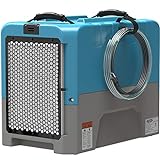 AlorAir Storm LGR Extreme 180 |
|
Check Latest Price→ |
| 5 |  Waykar 150 Pint YDZ with Pump |
|
Check Latest Price→ |
| 6 | 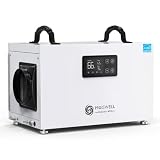 Moiswell MP70 155 Pint Low Profile |
|
Check Latest Price→ |
| 7 |  Moiswell Defender M70 155 Pint |
|
Check Latest Price→ |
| 8 |  AlorAir Storm 80X 170 Pint LGR |
|
Check Latest Price→ |
| 9 | 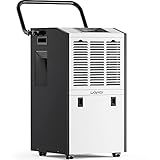 Waykar 155 Pint DP600B |
|
Check Latest Price→ |
| 10 |  Airzentti 155 Pint with Duct Collar |
|
Check Latest Price→ |
| 11 |  MOUNTO 180 Pint LGR |
|
Check Latest Price→ |
| 12 | 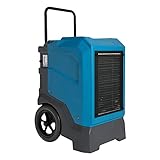 MOUNTO 310 Pint LGR |
|
Check Latest Price→ |
As an Amazon Associate we earn from qualifying purchases, at no additional cost to you. CERTAIN CONTENT THAT APPEARS ON THIS SITE COMES FROM AMAZON. THIS CONTENT IS PROVIDED 'AS IS' AND IS SUBJECT TO CHANGE OR REMOVAL AT ANY TIME.
1. hOmeLabs 120 Pint with Pump and WiFi – The Best-Balanced Pick for a Residential Pool Room
hOmeLabs Dehumidifier 7,500 Sq Ft 50 Pint with Pump 120 Pint 95°F, 90% RH
Key specs
- 50 PPD at 80F/60% RH, 120 PPD max at 95F/90% RH
- 218 CFM turbo airflow
- Built-in pump plus WiFi
- 30.5 lb, 1.6 gal tank
What we like
- 4.6 stars across 15322 reviews
- a strong rating and volume combination
- Built-in pump and WiFi allow true unattended operation
- Three operating modes let you match output to demand
- Lighter and more compact than 150 to 240 pint commercial machines
Worth knowing
- AHAM rating of 50 PPD is low for a large vaulted pool room
- 1.6 gallon tank is small if the pump is not plumbed in
- Turbo mode adds fan noise in an occupied space
As an Amazon Associate we earn from qualifying purchases, at no additional cost to you. CERTAIN CONTENT THAT APPEARS ON THIS SITE COMES FROM AMAZON. THIS CONTENT IS PROVIDED 'AS IS' AND IS SUBJECT TO CHANGE OR REMOVAL AT ANY TIME.
This is the unit I keep coming back to for a residential pool house, and the reason is straightforward: the review data on it is almost uniformly positive. A 4.6 star average across more than 15k reviews is a strong rating-to-volume combination, and the features that matter operationally — a built-in condensate pump and phone-based control — are exactly the two things a pool room punishes you without.
Put it plainly: 50 PPD at 80°F and 60% RH is the real number, and 120 PPD is the saturated ceiling. For a compact pool room with a normal ceiling, that is workable. For a 16 by 28 foot pool under a vaulted ceiling, you would be running it continuously and probably pairing it with a second machine. That is a legitimate design, not a compromise — two smaller units in different corners move air better than one big unit in a corner.
Why the built-in pump matters more in a pool room than in a basement
A basement dehumidifier can be parked next to a floor drain. A pool room often cannot, because decks are sloped, drains sit at the low point of a tile field, and running a hose across a wet walking surface is a slip hazard.
The integrated pump takes that problem away, and the 30.5 pound weight means one person can reposition it as the season changes. On a machine that will sit in a room where nobody wants to spill water, that combination is worth more than raw capacity.
Why WiFi control is the feature that saves money
The phone app matters because a pool room needs a different humidity target at night than on a busy afternoon, and because nobody wants to walk into a 90°F room to read a display.
Reviewers consistently single out the combination of remote control and pump as the reason the machine works unattended. Comfort, Turbo and Continuous modes let you throttle output down rather than cycling a single setting on and off all day, which is how you hold a 55 percent target without cycling the compressor constantly.
Where you gain and lose against a 155-pint commercial unit
The 50-pint AHAM figure is the honest limitation of our editor’s choice pick. A 155-pint commercial LGR machine rated at 70 PPD AHAM pulls roughly 40 percent more water under real conditions, and the 240-pint class pulls more than double.
If your room is genuinely large, buy the bigger machine rather than assuming a higher star rating will close the gap. A 4.6 average tells you owners like the machine, not that it holds a vaulted room on its own.
Price and stock are shown by the retailer.
As an Amazon Associate we earn from qualifying purchases, at no additional cost to you. CERTAIN CONTENT THAT APPEARS ON THIS SITE COMES FROM AMAZON. THIS CONTENT IS PROVIDED 'AS IS' AND IS SUBJECT TO CHANGE OR REMOVAL AT ANY TIME.
2. Waykar 150 Pint for 7,000 Sq Ft – The Most Proven Machine in the Set
Waykar 150 Pint 7000 Sq.Ft Dehumidifier for Basement with Drain Hose & Tank
Key specs
- 150 PPD at 95F/90% RH
- 30-80% adjustable RH range
- 159 CFM with 90 degree swing louver
- 750W compressor, 40 lb
What we like
- Largest review base available at 22519 reviews
- Setpoint range of 30 to 80 percent RH covers a pool-room target with a margin
- 750W draw is modest for the capacity
- Handles up to 7000 sq ft per the manufacturer
Worth knowing
- On-board humidity readout reads high against external hygrometers
- Several owners report performance dropping off between 9 and 22 months
- Included 3.3 ft drain hose is short and described as flimsy
As an Amazon Associate we earn from qualifying purchases, at no additional cost to you. CERTAIN CONTENT THAT APPEARS ON THIS SITE COMES FROM AMAZON. THIS CONTENT IS PROVIDED 'AS IS' AND IS SUBJECT TO CHANGE OR REMOVAL AT ANY TIME.
No other machine here has a review base this deep, and that matters for a category where failure modes only appear after a season or two. Multiple owners report basement relative humidity falling from 60 to 80 percent into the 30s and 40s within hours to days, and Waykar’s warranty replacement service is repeatedly described as fast and painless.
Where a pool room sets this machine apart from a basement job
For a pool room the 30 to 80 percent setpoint range is genuinely useful. It lets you hold a 55 percent target without the compressor short-cycling, and it gives you headroom on either side of that band when the room is packed with swimmers and the door is propped open to the deck.
The 90 degree swing louver spreads discharge air along a wall rather than blowing it into one corner, which matters when the moisture source is a broad water surface rather than a damp patch in one corner of a basement.
Reading the two capacity numbers side by side
This unit is rated at 150 PPD at 95°F and 90% RH with no separate AHAM figure published, so the headline number is a saturated rating. For pool-room planning you should discount it heavily.
The 7,000 sq ft coverage claim in the listing is a manufacturer figure and should be read as a comfort envelope, not a sizing method. A room of that size could easily sit over a small pool that never generates enough moisture to run this machine at anything but short cycles.
The humidity display offset is a real quirk
Owners consistently report the onboard readout sitting noticeably higher than an external hygrometer, requiring a setpoint offset of several percentage points. In a pool room that is worth knowing before you conclude the machine is underperforming.
Check with a calibrated meter you trust and set the machine from that, then leave the machine’s own sensor to govern between readings. Re-setting the humidistat every few days to chase a drifting display is the fastest way to end up running the unit constantly.
Durability is the tradeoff for the brand’s support
Several owners describe the unit eventually ceasing to pull moisture after roughly 9 to 22 months. That is the single most repeated negative in a 22,519-review listing, and it is worth knowing before you rely on the unit unattended.
Waykar’s one-year warranty, extendable to two, is shorter than the 5- and 6-year terms offered by the AlorAir and Moiswell machines in this list. The length of that term is part of why the response to the durability complaints is not more negative.
Price and stock are shown by the retailer.
As an Amazon Associate we earn from qualifying purchases, at no additional cost to you. CERTAIN CONTENT THAT APPEARS ON THIS SITE COMES FROM AMAZON. THIS CONTENT IS PROVIDED 'AS IS' AND IS SUBJECT TO CHANGE OR REMOVAL AT ANY TIME.
3. Moiswell VP240 240 Pint – Best for Large Pools and High Ceilings
Moiswell 240 Pints Commercial Dehumidifier with Pump and Drain Hose
Key specs
- 240 PPD max, 116 PPD at AHAM
- 370 CFM airflow
- Built-in pump with 16 ft lift
- 31.8 in tall alloy steel chassis
What we like
- 240 PPD removal with 116 PPD at AHAM
- a strong real-condition figure for a mid-size room
- 370 CFM moves air quickly across a broad deck surface
- Explicitly listed for indoor pools and spa areas
- Built-in pump with 16 ft vertical and horizontal reach
- 5-year manufacturer warranty
Worth knowing
- Heavy
- with owners reporting around 100 lb
- so stairs need planning
- Louder than residential machines
- 1300W is the highest power draw in the set
- Smallest evidence base of the three top picks
As an Amazon Associate we earn from qualifying purchases, at no additional cost to you. CERTAIN CONTENT THAT APPEARS ON THIS SITE COMES FROM AMAZON. THIS CONTENT IS PROVIDED 'AS IS' AND IS SUBJECT TO CHANGE OR REMOVAL AT ANY TIME.
This is the machine I would look at first for a 20,000 to 30,000 gallon pool under a vaulted ceiling. It removes 240 pints per day at saturation and 116 PPD at AHAM conditions, and at 116 AHAM pints it extracts more than double the real-condition figure on our editor’s choice pick. Owners report cutting an 8,500 sq ft church basement from 80 to 64 percent RH in under 24 hours, and one used a machine non-stop for two years on major mold reduction.
The 370 CFM airflow figure is the other reason it works for pools. Moisture removal is a function of both water condensed and air moved, and a high-ceilinged room has a lot of air to turn over. The built-in pump lifting condensate 16 feet vertically or horizontally means you can place the machine where it works rather than where the drain happens to be.
Why 116 PPD at AHAM changes the sizing conversation
Every capacity claim in this category has to be read at the test condition. 116 PPD is measured at 80°F and 60% RH, which is inside the band a well-controlled pool room actually runs.
That is the number to size against, and it is more than double the 50 PPD figure on our editor’s choice pick. If you are comparing this machine against a cheaper residential unit on headline capacity, the comparison is meaningless.
Placement in a vaulted pool room
With 370 CFM, placement changes everything. Owners of large rooms report best results with the unit set against a return path that circulates air across the entire water surface rather than in a corner.
The two large wheels and two swivel casters with a push-pull handle were built for jobsites and make stairs and thresholds manageable, though the weight is still real.
Where the 100 pound question comes up
Owners put the weight at roughly 100 pounds. If your pool room equipment pad is at grade level with a ramp, that is a non-issue. If the machine has to climb stairs or cross a threshold, plan two people and a dolly.
The 1300W draw is the highest here too, and that is the running cost of moving that much air. Budget for it in the operating plan rather than discovering it on the first monthly bill.
Price and stock are shown by the retailer.
As an Amazon Associate we earn from qualifying purchases, at no additional cost to you. CERTAIN CONTENT THAT APPEARS ON THIS SITE COMES FROM AMAZON. THIS CONTENT IS PROVIDED 'AS IS' AND IS SUBJECT TO CHANGE OR REMOVAL AT ANY TIME.
4. AlorAir Storm LGR Extreme 180 – Longest Warranty and a Genuine LGR Circuit
ALORAIR 180 PPD Commercial Dehumidifier with Pump, 6-Year Limited Warranty
Key specs
- 180 PPD at saturation, 85 PPD at AHAM
- 210 CFM airflow
- Built-in pump, 14.7 ft vertical lift
- 22.8 in wide chassis, 64.3 lb
What we like
- 6-year limited warranty is longer than the other terms in this group
- LGR circuit keeps working in the lower humidity band a pool room settles into
- Compact 22.8 in footprint fits tight pool equipment rooms
- Digital display reports GPP
- coil temperature
- amp draw and job hours
Worth knowing
- Lowest average rating here at 4.0 stars with 16 percent one-star reviews
- Internal pump is buried in the case and needs partial disassembly to service
- Reports of coil or refrigerant failures with error code E5 around 15 months in
- Heavy at 64.3 lb and loud for a 640W machine
As an Amazon Associate we earn from qualifying purchases, at no additional cost to you. CERTAIN CONTENT THAT APPEARS ON THIS SITE COMES FROM AMAZON. THIS CONTENT IS PROVIDED 'AS IS' AND IS SUBJECT TO CHANGE OR REMOVAL AT ANY TIME.
LGR — low grain refrigeration — circuits were developed for a low-temperature, low-humidity grain drying problem, and that is closer to a controlled pool room than a standard compressor unit is. Reviewers report the machine pulling moisture effectively in the lower-humidity ranges a pool room reaches after the first heavy drying pass, which is exactly the phase a standard refrigerant unit handles worst.
The 210 CFM airflow and the compact 22.8 by 13.7 by 17.3 inch footprint make this a good fit for a tight pool equipment room. The six-year limited warranty is the strongest warranty term in this roundup, and the digital diagnostic display reporting grains per pound, coil temperature and amp draw gives you the data to catch a problem early rather than discovering it as corrosion.
What LGR actually changes for a pool room
A standard compressor dehumidifier has an efficiency limit that bites as air dries out. An LGR circuit raises the evaporator temperature so the coil stays above freezing and keeps pulling moisture at 45 to 55 percent room humidity instead of stalling.
In a pool room held near 55 percent, that is the difference between holding the setpoint and watching humidity climb every afternoon. The 85 PPD AHAM figure on this machine is what that circuit buys you at real conditions.
Serviceability is the weak point
The built-in pump is mounted inside the case where cleaning or repairing it requires partial disassembly. In a room where the drain line can clog with residue carried in from pool air, that is a real inconvenience.
It is also the most common long-run complaint alongside sealed-coil refrigerant leaks. If the machine will be hard to get at, budget for a technician visit each time the drain needs clearing rather than treating it as a one-off.
Balancing the rating against the warranty
At 4.0 stars with 16 percent one-star reviews, this is the weakest satisfaction profile in the set despite the 788-review base. The upside is that the six-year term covers exactly the failure mode owners report, sealed-coil refrigerant issues appearing around the 15-month mark.
If you buy it, keep the machine on a maintenance schedule, budget for pump service access, and read the current warranty terms before you commit.
Price and stock are shown by the retailer.
As an Amazon Associate we earn from qualifying purchases, at no additional cost to you. CERTAIN CONTENT THAT APPEARS ON THIS SITE COMES FROM AMAZON. THIS CONTENT IS PROVIDED 'AS IS' AND IS SUBJECT TO CHANGE OR REMOVAL AT ANY TIME.
5. Waykar 150 Pint YDZ – Best Energy Efficiency at This Capacity
Waykar 150 Pint Commercial Dehumidifier with Pump & Drain Hose for Basement
Key specs
- 150 PPD at 95F/90% RH
- 520W rotary compressor, Energy Star certified
- Built-in pump drains up to 9.84 ft
- Self-drying cycle clears residual moisture
What we like
- Lowest wattage of any 150-pint machine here at 520W
- Built-in pump lift of 9.84 ft covers most pool room drain layouts
- Self-drying function reduces moisture left inside the circuit between cycles
- Casters
- top handle and cord storage make repositioning easy
- 7mm threaded pure copper tubing throughout
Worth knowing
- Small 1.85 gallon tank means frequent emptying if the pump is not plumbed
- Pump mode must be re-enabled after a normal shutdown
- 9 percent one-star reviews with some early coil or compressor failures
As an Amazon Associate we earn from qualifying purchases, at no additional cost to you. CERTAIN CONTENT THAT APPEARS ON THIS SITE COMES FROM AMAZON. THIS CONTENT IS PROVIDED 'AS IS' AND IS SUBJECT TO CHANGE OR REMOVAL AT ANY TIME.
A pool dehumidifier is an appliance you run nearly around the clock, so watts matter more here than in a basement job. This model draws 520W for a 150-pint machine, which is the lowest power-to-capacity ratio in the roundup, and it is Energy Star certified with a rotary compressor on 7mm threaded pure copper tubing.
The self-drying function is the detail I would single out. After shutdown, the unit runs its circuit to clear residual moisture, which in a pool room prevents the musty standing-water smell that develops in a machine that has been sitting in humid air for months with the compressor off.
Three drainage options and which one a pool room needs
This machine offers pump-up-to-9.84-ft, floor drain, and gravity hose. In a pool room with a deck drain at grade, gravity is usually simplest. If the drain sits below the machine or across the room, the pump covers it.
The 3.3 ft gravity hose included is short, so budget for a longer run of proper condensate-rated tubing and secure it out of walkways.
Why copper tubing matters around chlorinated air
The cabinet and tubing are specified as painted metal, plastic and 7mm threaded pure copper. In a pool room, air carries chlorine and chloramine off the water surface continuously, and thin-wall aluminium or basic plastic manifolds corrode faster there than in a basement.
Copper tubing on the refrigerant circuit is a reasonable indicator of build quality for a wet-room application, and it matters more here than it would in a dry basement where the same coil would see a fraction of the chemical load.
The pump reset quirk to plan for
Owners report the pump function must be re-enabled after the unit is unplugged during a normal shutdown. If you plumb this into an automated control sequence, factor that in, or set it to gravity drain and accept the hose routing.
The 1.85 gallon tank is small enough that a power loss with the pump off means a wet floor. If your pool room is finished in a material you would rather not get wet, treat the gravity option as the safer default.
Price and stock are shown by the retailer.
As an Amazon Associate we earn from qualifying purchases, at no additional cost to you. CERTAIN CONTENT THAT APPEARS ON THIS SITE COMES FROM AMAZON. THIS CONTENT IS PROVIDED 'AS IS' AND IS SUBJECT TO CHANGE OR REMOVAL AT ANY TIME.
6. Moiswell MP70 155 Pint – Best for Low-Clearance Pool Rooms
155 Pints Commercial Dehumidifier with Pump for Crawl Space
Key specs
- 155 PPD at saturation, 70 PPD at AHAM
- 206 CFM airflow
- Pump drains sideways or up to 16.5 ft
- 24.3 x 14.37 x 15.11 in chassis
What we like
- Low-profile horizontal chassis fits where a vertical unit cannot
- 4.6 stars across 203 reviews with an 82 percent five-star share
- Pump lift of 16.5 ft gives real routing flexibility
- Energy Star certified at 2.01 L/kWh
- Sturdy metal outer casing
Worth knowing
- Draws 1050W
- more power than the 500W and 520W machines in this class
- Listed 6000 sq ft coverage is smaller than the 150-pint vertical machines
As an Amazon Associate we earn from qualifying purchases, at no additional cost to you. CERTAIN CONTENT THAT APPEARS ON THIS SITE COMES FROM AMAZON. THIS CONTENT IS PROVIDED 'AS IS' AND IS SUBJECT TO CHANGE OR REMOVAL AT ANY TIME.
Pool rooms are frequently built over crawl spaces or inside a basement ceiling cavity, and that is exactly the problem this form factor solves. At 24.3 by 14.37 by 15.11 inches it can be mounted horizontally where a 24-inch vertical tower simply will not fit, and the manufacturer describes it as 40 percent smaller than vertical commercial dehumidifiers.
The efficiency figure is worth noting: 2.01 L/kWh Energy Star certified, which is a litres-of-water-per-kWh measure that lets you compare machines with very different compressor sizes. Reviewers note the compact form factor, the pump reach and the efficiency as the three reasons they keep this machine in service.
Energy Star and what L/kWh tells you
Integrated energy factor in litres per kilowatt-hour is the fairest efficiency currency in this category because it normalises for capacity. A 2.01 L/kWh figure means each kilowatt-hour of electricity removes about two litres of water. Pool rooms run this equipment for thousands of hours, so that ratio drives the operating bill more than the purchase price does.
Horizontal mounting in a pool room
Low-profile installation lets you put the machine above a finished ceiling or inside a shallow equipment chase, close to the return path of the room’s air handler. Because the pump pushes condensate sideways or vertically to 16.5 feet, you can run the drain line almost anywhere in the room without a trap-heavy gravity run.
That drain reach is the reason to choose this chassis over a vertical machine of the same output. In a pool room, where there is rarely a drain where you want the machine, pump lift matters as much as capacity.
The power draw tradeoff
1050W is high relative to what the 150-pint Waykar draws, and it is the main reason reviewers flag it. In return you get a metal cabinet that tolerates a wet service environment and a shape that fits spaces nothing else fits.
If the machine is going in an occupied, conditioned space, weigh the 500W or 520W alternative before you commit. A room you cannot hear the dehumidifier in is worth planning for at the spec stage, not afterwards.
Price and stock are shown by the retailer.
As an Amazon Associate we earn from qualifying purchases, at no additional cost to you. CERTAIN CONTENT THAT APPEARS ON THIS SITE COMES FROM AMAZON. THIS CONTENT IS PROVIDED 'AS IS' AND IS SUBJECT TO CHANGE OR REMOVAL AT ANY TIME.
7. Moiswell Defender M70 155 Pint – Best for Overhead Installation
155 Pints Commercial Dehumidifier for Crawl Space | Auto Defrost | Timer
Key specs
- 155 PPD at saturation, 70 PPD at AHAM
- 206 CFM airflow
- Compact chassis for floor or overhead mounting
- 860W, Energy Star certified
What we like
- 5-year limited warranty on a compact commercial chassis
- Same 155-pint and 206 CFM performance as the pump-equipped sibling
- Compact chassis suited to floor-mounted or overhead installation
- 82 percent five-star with only 3 percent one-star
- 860W draw is lower than the pump-equipped sibling
Worth knowing
- No built-in pump so condensate needs gravity routing or a floor drain
- 61.2 lb needs two people to reposition
- Smallest review base of the Moiswell group at 121 reviews
As an Amazon Associate we earn from qualifying purchases, at no additional cost to you. CERTAIN CONTENT THAT APPEARS ON THIS SITE COMES FROM AMAZON. THIS CONTENT IS PROVIDED 'AS IS' AND IS SUBJECT TO CHANGE OR REMOVAL AT ANY TIME.
This is the version to buy when gravity drainage is realistic and you want the lowest power draw of the 155-pint class. It runs the same 206 CFM airflow and 155-pint maximum as the pump-equipped Moiswell machine, but at 860W instead of 1050W, and the 5-year limited warranty is longer than most terms in this roundup.
Overhead mounting is the interesting option in a pool room. A machine above the ceiling line near the air handler’s return can pull the most humid air first, which means less air volume to move through the unit per hour of moisture removed.
When gravity drainage is the right call
If your pool room has a trench drain, a floor drain within a few feet, or a condensate line you can pitch from the unit, gravity is the cheaper and quieter long-term choice. No pump means no pump failure mode, no standing water in a tray, and nothing to service inside the cabinet.
It also means no lift specification to worry about at all, which in a retrofit with an awkward floor plan can be the difference between a one-afternoon install and a plumbing project.
Reading the thin review base honestly
121 reviews with an 82 percent five-star share is encouraging, but it is a young listing and long-term reliability data is thin.
On r/BuildingAutomation a pool owner described a Dayton-manufactured unit with failing controls that required a retrofit program, which is a reminder that controls longevity is a real failure category in this equipment class.
What you give up without the pump
No pump means routing is fixed at install. If your drain location is uncertain or you may move the machine between seasons, the pump-equipped sibling is the more flexible purchase.
At 61.2 lb you will want two people and a ramp for any repositioning, overhead or otherwise. Plan the overhead mounting for two-person installation from the start.
Price and stock are shown by the retailer.
As an Amazon Associate we earn from qualifying purchases, at no additional cost to you. CERTAIN CONTENT THAT APPEARS ON THIS SITE COMES FROM AMAZON. THIS CONTENT IS PROVIDED 'AS IS' AND IS SUBJECT TO CHANGE OR REMOVAL AT ANY TIME.
8. AlorAir Storm 80X 170 Pint – Best Corrosion-Resistant Housing
ALORAIR 170 PPD Commercial Dehumidifier with Pump, LGR for Industrial Use
Key specs
- 170 PPD at saturation, 80 PPD at AHAM
- 200 CFM airflow
- COP of 2.4 L/kWh
- Rotomoulded housing rated to 102.2F
What we like
- Rotomoulded housing resists impact and will not warp like a metal cabinet
- 2.4 L/kWh COP is among the highest efficiency figures quoted among the commercial units here
- Only 5 percent one-star reviews
- Built-in pump with 19.6 ft hose
- Owners report pulling summer indoor humidity from 55-65 percent down to about 39-41 percent
Worth knowing
- Drain hose connection reported to break easily on first use
- Heavy at 63.9 lb and awkward to move between floors
- Included drain tubing often too short to reach a drain
- Companion app reportedly unreliable
As an Amazon Associate we earn from qualifying purchases, at no additional cost to you. CERTAIN CONTENT THAT APPEARS ON THIS SITE COMES FROM AMAZON. THIS CONTENT IS PROVIDED 'AS IS' AND IS SUBJECT TO CHANGE OR REMOVAL AT ANY TIME.
The housing material is what separates this machine from the metal-cabinet competitors, and it is the right call for a pool room. The rotomoulded shell is impact resistant and will not warp or corrode the way a formed steel cabinet does when it lives in chlorinated, humid air for a decade. Its 102.2°F upper temperature rating gives it more headroom than the other units here that publish a limit.
Rotomoulded construction also changes what happens at the panel. There is no formed sheet-metal seam to wick moisture into the electronics enclosure, and the cabinet will not rust at a mounting point the way a steel unit does. On a machine expected to sit in chlorinated air for years, that is worth more than a specification line that will not change how much water the coil pulls.
Performance is solid too. Owners report dropping summer indoor humidity from 55 to 65 percent to roughly 39 to 41 percent while running nearly continuously, and the 2.4 L/kWh COP is among the strongest efficiency figures quoted among the commercial units in this roundup.
Why housing material beats internal specs in a pool room
Pool air carries chlorine, chloramine and warm moist vapour off the water surface twenty-four hours a day. That combination attacks fasteners, brackets, relays and the cabinet itself.
A rotomoulded polymer shell has no exposed seams to wick corrosion and no rust-through point, and it absorbs a dropped-tool impact that would buckle a formed steel panel. In a room where the machine lives for a decade in that atmosphere, the shell outlasts the specification.
The COP figure and what it means for a 24-hour room
A COP of 2.4 L/kWh is efficiency per unit of power. In a room that runs continuously, that ratio is the number that decides whether a dehumidifier is a reasonable operating expense or a permanent line item on your utility bill.
The 607W draw is also among the lowest for a machine in this capacity class, so the efficiency figure is not being bought with a bigger compressor. That combination of a modest draw and a strong COP is what you want in an enclosure you cannot afford to over-cool in summer.
Where the complaints actually cluster
The recurring negatives on this model are hardware details rather than performance: a drain-hose connection that breaks easily, tubing too short to reach a drain, the weight, and an app that does not work reliably.
If you plumb the drain properly at install with your own hose and support, most of that list goes away. The lesson generalises across this whole roundup — buy the machine for the coil and the pump, then buy the drain plumbing from a supplier who will advise on it.
Price and stock are shown by the retailer.
As an Amazon Associate we earn from qualifying purchases, at no additional cost to you. CERTAIN CONTENT THAT APPEARS ON THIS SITE COMES FROM AMAZON. THIS CONTENT IS PROVIDED 'AS IS' AND IS SUBJECT TO CHANGE OR REMOVAL AT ANY TIME.
9. Waykar 155 Pint DP600B – Best for Deep Drying and Wide Setpoint Control
Waykar 155 Pints Large Commercial Dehumidifier with Drain Hose and Water Tank, Industrial Dehumidifier in Large Space up to 8000 Sq. Ft for Home, Basements, Whole House, Library
Key specs
- 155 PPD at 95F/90% RH
- 10 to 90 percent adjustable humidity
- 500W draw in a metal cabinet
- 59.5 lb with universal casters
What we like
- Lowest power draw of any 155-pint unit here at 500W
- 10 to 90 percent RH range supports deep continuous drying at 10 percent
- Single-door access to filter and tank makes servicing fast
- Owners report 62 to 45 percent RH drops in roughly two hours
- Five-year compressor coverage on top of the two-year term
Worth knowing
- Only 1.32 gallon tank
- the smallest capacity in this roundup
- Adds a few degrees of heat to the space while drying
- Cord is short and exits at a rear corner
- Isolated reports of a first-run component failure
As an Amazon Associate we earn from qualifying purchases, at no additional cost to you. CERTAIN CONTENT THAT APPEARS ON THIS SITE COMES FROM AMAZON. THIS CONTENT IS PROVIDED 'AS IS' AND IS SUBJECT TO CHANGE OR REMOVAL AT ANY TIME.
The distinguishing feature here is setpoint range. A 10 to 90 percent adjustable band with a continuous mode down at 10 percent means this machine can take a room well below anything a pool room requires, which makes it useful for seasonal deep-drying of a pool room after a closure, a leak, or a flood event.
At 500W for 155 pints, it also has the lowest power draw of any machine in this capacity class, and owners report some of the fastest results in the review data — 62 to 45 percent relative humidity in roughly two hours in a large basement. The metal cabinet and single service door for filter and tank access make routine maintenance quick.
Why wide setpoint control matters after a flood
Most pool rooms never need 10 percent RH. But after water intrusion, a roof leak, or a season of closure, you want a machine that can pull a wet structure down through the mid-range quickly and keep going.
A unit that stalls at 55 percent cannot finish that job, and this one can. For a pool room owner who also stores equipment, furniture or finishes in the same envelope, that range is worth more than raw capacity.
Heating effect and where the unit belongs
Owners note the machine adds a few degrees of heat while drying, since the compressor rejects heat into the room. In a pool room that is usually welcome, but it means you should think about the room as gaining a heat load in winter rather than as a net cooling source.
The practical consequence is placement. A machine that warms the room should sit where its discharge air mixes with the space rather than against a cold exterior wall, where you would be paying to heat air you have already warmed.
The tank size forces you to plumb it
At 1.32 gallons this is the smallest tank in the roundup, which means the 6.56 ft gravity hose is effectively mandatory rather than optional. Plan the drain run at install, and size the line for a pool room rather than a basement.
The cord exiting at a rear corner is a minor placement constraint worth checking against your outlet location, since a machine you have to pull out and rotate to reach the plug is a machine you will eventually re-site badly.
Price and stock are shown by the retailer.
As an Amazon Associate we earn from qualifying purchases, at no additional cost to you. CERTAIN CONTENT THAT APPEARS ON THIS SITE COMES FROM AMAZON. THIS CONTENT IS PROVIDED 'AS IS' AND IS SUBJECT TO CHANGE OR REMOVAL AT ANY TIME.
10. Airzentti 155 Pint with Duct Collar – Best for Duct Distribution
Airzentti 155 Pint Commercial Dehumidifier with Pump and Drain, Energy Star
Key specs
- 155 PPD at saturation, 70 PPD at AHAM
- 220 CFM airflow
- 6 inch duct collar for air distribution
- Built-in pump to 16.4 ft, Energy Star
What we like
- Only machine here with a duct collar
- allowing direct connection to a distribution plenum
- 220 CFM gives it more air movement than other 155-pint machines in the roundup
- Quiet enough that one owner installed it under living-room flooring unnoticed
- Built-in pump reaches 16.4 ft plus a 6.56 ft gravity hose option
- SPCC steel construction with Energy Star and TUV certification
Worth knowing
- Smallest review base in the roundup at 63 reviews
- 60 lb means crawl-space installation usually needs two people
- Optional remote control panel is a separate purchase
As an Amazon Associate we earn from qualifying purchases, at no additional cost to you. CERTAIN CONTENT THAT APPEARS ON THIS SITE COMES FROM AMAZON. THIS CONTENT IS PROVIDED 'AS IS' AND IS SUBJECT TO CHANGE OR REMOVAL AT ANY TIME.
This is the one machine in the roundup with a 6-inch duct collar, and that single feature changes how it can be deployed. Instead of relying on the room’s air movement to bring humid air to the machine, you can plumb the discharge into a plenum and return it across the pool deck, which is how you get even coverage in a long, vaulted room.
Owners report both large single-day humidity drops and genuinely quiet running. One owner installed it directly beneath living-room flooring and reported not being able to hear it, which is the kind of result that makes a machine in an occupied part of the house possible at all.
When a duct collar is worth the plumbing
If your pool room has more than one air zone, or a long rectangular deck that leaves a far corner unconditioned, a collar-connected unit is the better architecture. The return and supply ducts do the air distribution and the machine only handles moisture, which gets you even coverage without pushing a lot of air across a deck surface.
The trade-off is that you are committing to duct layout at install. Move the machine later and the collar becomes a liability, so plan the plenum for where the machine will stay, not where it looks tidy on day one.
What 63 reviews can and cannot tell you
The 88 percent five-star share on this listing is excellent, and all of the reviews fall within the last two years, which means this is a newer machine. No recurring defect pattern appears in the review data — but a two-year-old listing simply cannot tell you about five-year coil longevity the way the 22k-review Waykar listing can.
Price and stock are shown by the retailer.
As an Amazon Associate we earn from qualifying purchases, at no additional cost to you. CERTAIN CONTENT THAT APPEARS ON THIS SITE COMES FROM AMAZON. THIS CONTENT IS PROVIDED 'AS IS' AND IS SUBJECT TO CHANGE OR REMOVAL AT ANY TIME.
11. MOUNTO 180 Pint LGR – Best Copper-Coil Build for Chlorinated Air
MOUNTO 180 Pint LGR Commercial Dehumidifier with Pump & Drain Hose
Key specs
- 180 PPD at 95F/90% RH
- 350 CFM airflow
- 100 percent copper coil pipe, Panasonic rotary compressor
- Built-in pump with 15 ft lift head
What we like
- Full copper coil pipe and a Panasonic rotary compressor
- build quality that suits a wet room
- 350 CFM moves air quickly across a large deck
- Control panel reports inlet and outlet temperature plus grain depression
- Automatic restart after power failure
- Owners report a 20-year damp basement finally feeling dry
Worth knowing
- Heaviest unit relative to capacity at 95 lb
- On some settings it runs continuously and loudly rather than cycling off
- 0.25 litre tank means it fully depends on the pump and hose
- One unit reportedly arrived without filter screws
As an Amazon Associate we earn from qualifying purchases, at no additional cost to you. CERTAIN CONTENT THAT APPEARS ON THIS SITE COMES FROM AMAZON. THIS CONTENT IS PROVIDED 'AS IS' AND IS SUBJECT TO CHANGE OR REMOVAL AT ANY TIME.
Build quality is the argument for this machine. It uses 100 percent copper coil pipe with a high-efficiency Panasonic rotary compressor, and a stainless steel internal metal bracket, which is the most corrosion-conscious specification listed in this roundup — a deliberate choice in a category where units live in rooms full of chlorinated vapour.
The control panel is unusually good for this class. It displays inlet and outlet temperature, relative humidity and grain depression, which is the number a restoration technician actually works from, and automatic restart after a power failure keeps a long run going without manual intervention.
What grain depression tells you that RH does not
Relative humidity tells you how wet the air is relative to temperature. Grain depression tells you how many grains of moisture were removed per pound of air, a direct measure of what the machine did rather than what the room happened to be.
For a pool room, watching grain depression tells you whether the unit is keeping pace with evaporation. A room humidity reading that looks acceptable while grain depression collapses is a sign the machine is at its limit, and the reading will stay acceptable only until the next busy afternoon.
Continuous running and noise in an occupied space
Owners report that on some settings it runs continuously and loudly rather than cycling off, a reasonable trade for a restoration machine working around the clock.
In a pool room where people swim laps beside it, plan the setpoint so the humidistat cycles the unit, and position the discharge away from the deck. A machine running flat out beside swimmers will be noticed, and a machine cycling to a humidity target will not.
Weight and the dependency on the pump
At 95 pounds, this is among the heaviest machines relative to its capacity in the roundup, and the 0.25 litre tank is effectively decorative. The unit is designed around the 15 ft lift head pump and its drain hose.
If you cannot plumb a drain, choose a different machine. And if the room has no ramp or level path from the door, budget for the move now rather than discovering it on delivery day.
Price and stock are shown by the retailer.
As an Amazon Associate we earn from qualifying purchases, at no additional cost to you. CERTAIN CONTENT THAT APPEARS ON THIS SITE COMES FROM AMAZON. THIS CONTENT IS PROVIDED 'AS IS' AND IS SUBJECT TO CHANGE OR REMOVAL AT ANY TIME.
12. MOUNTO 310 Pint LGR – Highest Raw Capacity for Full Natatoriums
MOUNTO 310 Pint LGR Commercial Dehumidifier with Built-In Pump
Key specs
- 310 PPD at saturation, 165 PPD at AHAM
- COP of 2.9 L/kWh, 10.5A draw
- 550 CFM airflow
- Built-in pump with 15 ft lift and 25 ft hose
What we like
- 310 PPD capacity with 165 PPD at AHAM
- far above every other real-condition rating here
- 2.9 COP is excellent for a machine this size
- 25 ft drain hose with a 15 ft pump lift covers large buildings
- Digital humidistat with real-time inlet and outlet temperature and RH
Worth knowing
- 125 lb means repositioning takes real effort
- Continuous commercial design is not intended for quiet residential use
- Roto-molded plastic housing is less repairable than a metal cabinet
- Smallest review base in the set at 39 reviews
As an Amazon Associate we earn from qualifying purchases, at no additional cost to you. CERTAIN CONTENT THAT APPEARS ON THIS SITE COMES FROM AMAZON. THIS CONTENT IS PROVIDED 'AS IS' AND IS SUBJECT TO CHANGE OR REMOVAL AT ANY TIME.
If you operate a commercial natatorium, this is the largest extraction figure available in this roundup: 310 pints per day at saturation and 165 PPD at AHAM conditions, with 550 CFM of airflow. For a fitness club or YMCA pool house, that is the only one of these twelve whose real-condition rating is in the range a full-size public pool actually needs.
Efficiency is the surprise. A COP of 2.9 L/kWh while drawing only 10.5 amps is a strong figure for a machine this size, and the built-in pump with a 15 ft lift head and 25 ft drain hose gives the routing reach a large building needs.
Where the 310 pint figure stops being useful
That headline number is a saturated rating. The figure to plan with is 165 PPD at AHAM conditions, which is far above the rest of the compressor tier, but it is a 5,000 sq ft coverage class machine. Beyond roughly that footprint you are into multi-unit or reheat-system territory, which is a different project and a different budget conversation.
For a fitness club or community centre pool, the practical question is how many units you run rather than which one you buy. Two smaller machines in separate positions will often hold even humidity better than one large unit in a corner, because each machine can serve the half of the room nearest to it.
Continuous commercial design
This machine is built to run continuously in a space that needs humidity control every hour the building is open. In a residential pool room it would be overpowered, loud for a living-adjacent space, and physically awkward at 125 pounds on casters and wheels.
Roto-moulded plastic housing is also less repairable than a metal cabinet. A cracked or deformed shell on a steel machine can often be braced or patched; a moulded shell usually means replacing the shell, and that is a cost to weigh against the corrosion resistance it buys.
Read the 39-review base carefully
The rating distribution here includes a 12 percent two-star share, higher than most machines in this roundup. The drawbacks listed for this model come from its specification profile rather than owner quotes, and the product data carries no review text for it.
Treat it accordingly, and ask the manufacturer for a wet-room reference before you commit.
Price and stock are shown by the retailer.
As an Amazon Associate we earn from qualifying purchases, at no additional cost to you. CERTAIN CONTENT THAT APPEARS ON THIS SITE COMES FROM AMAZON. THIS CONTENT IS PROVIDED 'AS IS' AND IS SUBJECT TO CHANGE OR REMOVAL AT ANY TIME.
How to Choose a Dehumidifier for an Indoor Pool
Everything above is a machine. This section is the method, and the method matters more than the model, because the same unit can be the right answer in one pool room and badly undersized in the next. The rules below come from the specification data on the twelve units reviewed, from industry sizing guidance, and from what pool owners report on r/poolrooms, r/pools, r/natatorium and heatinghelp.com.
Hold 50 to 60 percent relative humidity, not 40
Target 50 to 60 percent RH in an indoor pool room. Below 50 percent you are driving the space toward static electricity, dry mucous membranes and discomfort for swimmers, and below 40 percent wood framing shrinks and can crack.
Above 60 percent, condensation forms on the coolest surfaces in the room — usually window glass and the underside of the ceiling deck — which is where the drywall staining, corrosion and mould damage start. Sixty percent is the line where insurance claims tend to begin.
Size from pool surface area, not room square footage
This is the error almost everyone makes, and every competitor page on this topic makes it too. A 16 by 28 foot pool exposes 448 sq ft of warm water surface, and evaporation from that surface is the load you have to remove.
The room’s floor area is nearly irrelevant to moisture generation. It tells you about air volume, not about the water.
The practical method: measure the pool surface in square feet, and plan for the moisture a warm pool surface puts into a room that is continuously open. A pool in the 400 to 450 sq ft surface range with a normal ceiling typically needs a machine in the 155 to 240 pint class with an AHAM figure of 70 PPD or better.
Add ceiling height to the demand, because a vaulted ceiling means more air volume to condition and more places for condensation to hide. The r/poolrooms owner with a 25,000 to 30,000 gallon pool in a 1,148 sq ft vaulted room is the canonical case, and that is a commercial-sizing problem rather than a basement-sizing problem.
Read the AHAM number, ignore the saturated number
Two rating conditions appear on every listing in this roundup, and confusing them is the most expensive mistake available. A saturated rating is measured at 95°F and 90% relative humidity, a torture test that makes any machine look impressive. An AHAM rating is measured at 80°F and 60% RH, which sits inside the band a controlled pool room actually occupies.
The gap is dramatic and entirely real. The 155-pint Moiswell MP70 is 155 PPD saturated and 70 PPD at AHAM. The hOmeLabs unit is 120 PPD saturated and 50 PPD at AHAM. The MOUNTO 310 is 310 PPD saturated and 165 PPD at AHAM.
If you compare the first number on one machine to the second number on another, you will pick the wrong unit and you will never know why it underperformed.
Plan the drain before you pick the machine
Condensate handling decides how much attention the machine needs for the rest of its life. A pool room often has no convenient floor drain, which is why pump lift figures appear on nearly every machine here: 9.84 ft, 14.7 ft, 16 ft, 16.4 ft, 16.5 ft.
Measure the vertical distance from where the unit will sit to your drain point before you choose. Three routes work: gravity to a nearby drain, an internal pump to a drain above or beside the unit, or a pumped line to a drain elsewhere in the building.
Each has a failure consequence. Gravity needs correct pitch, a pump needs a serviceable route, and a pumped line needs a check against siphoning back into the room. Whichever you choose, use condensate-rated tubing and secure it so it cannot kink.
If the enclosure also has a crawl space or a below-grade chase under the deck, treat that as a separate moisture problem with its own equipment and its own drainage, rather than expecting the room dehumidifier to pull water out of the structure. We have covered that hardware separately in our indoor pond equipment guide and our koi pond roundup, which cover the same drainage and circulation questions in smaller enclosures.
Understand refrigerant, LGR and reheat before you buy
Three technologies matter here. Standard compressor dehumidifiers condense moisture on a cold coil and are sized generously so the coil stays above freezing. LGR units use a low grain refrigeration circuit with a higher evaporator temperature, so they keep pulling moisture in the 45 to 55 percent band where a pool room lives, and the AlorAir and MOUNTO machines in this roundup use an LGR circuit.
Reheat, or heating-and-dehumidifying, units condense moisture and then reheat the dried air before returning it, recovering the latent heat that a standard unit throws away as warm moist discharge. That recovered heat is the entire economic argument for reheat.
It is why HVAC professionals on heatinghelp.com and r/HVAC keep recommending reheat equipment for indoor pools. If your pool room is heated year-round, a plain compressor unit makes you reheat the extracted moisture load twice, once as air heat and again as the water you drain, while a reheat system runs the recovered heat back into the supply air instead.
This is where the cost shock forum owners describe comes from, and it is also part of the answer to it. On a large commercial pool, a reheat system that costs far more up front can cost less per year to run.
Budget for the whole system, not the machine
Owners on r/pools and r/poolrooms report quotes for dedicated pool dehumidification equipment that run into five figures before ductwork and labour, and biggerpockets threads on indoor pools inside garages describe the same pattern of higher maintenance and higher utility bills. The cost is driven by ducting, controls, electrical work and sometimes a vapor barrier, not by the machine alone.
Two operational tactics cost nothing and are worth doing first. Keep the pool water temperature steady so evaporation does not spike, and run ceiling and deck fans so air moves across the whole water surface instead of pooling near the walls, which lowers the local humidity the machine has to fight.
On the envelope side, a properly specified vapor barrier under the pool room deck and adequate roof-deck ventilation matter as much as the dehumidifier. r/pools owners ask repeatedly whether ventilation is needed in addition to a dehumidifier, and the answer is that a pool room usually needs controlled mechanical ventilation as a separate system, with the building kept slightly negative to the outdoors so moist air is not pushed into adjacent rooms.
Frequently Asked Questions
Do indoor pools need a dehumidifier?
Yes. Warm pool water evaporates continuously, adding moisture to the room around the clock. Without mechanical dehumidification, relative humidity climbs past 60 percent within hours, which causes condensation on ceilings, windows and framing, accelerates corrosion of ductwork and rebar, and supports mould growth. Most owners also need controlled ventilation to keep the building slightly negative to outdoors, and a properly specified vapor barrier under the deck.
What is the ideal humidity for an indoor pool?
Hold 50 to 60 percent relative humidity. Above 60 percent, condensation forms on the coolest surfaces in the room, which is where drywall staining, corrosion and mould damage begin, and insurance claims tend to start. Below 50 percent, the space becomes uncomfortable for swimmers, promotes static electricity and dries wood framing toward cracking. Most pool-room dehumidifiers are set with a humidistat in this band.
How do I reduce humidity in an indoor pool?
Start with the machine, because it carries most of the load. Hold pool water temperature steady so evaporation does not spike, run ceiling and deck fans so air moves across the entire water surface, keep the building slightly negative to outdoors with controlled mechanical ventilation, and specify a vapor barrier under the pool room deck. Then verify the enclosure has adequate roof-deck ventilation. Operating tactics reduce the load the dehumidifier must handle; they do not replace it.
What size dehumidifier do I need for my indoor pool?
Size from pool surface area and evaporation, not from room square footage. A 16 by 28 foot pool exposes about 448 sq ft of warm water, and that surface is the moisture source. For a pool in that range with a normal ceiling, plan on a machine in the 155 to 240 pint class with an AHAM-rated figure of 70 PPD or better. Add capacity for a vaulted ceiling, and use the AHAM figure rather than the saturated headline number.
What is the downside of using a dehumidifier in a pool room?
Three real drawbacks. First, a standard compressor unit extracts water without recovering the latent heat, so you pay to reheat the room twice — once as air heat and once as the moisture you drain. Second, the machine adds heat to the space while running, which matters in winter. Third, pool air carries chlorine and chloramine constantly, so a unit with a thin cabinet, an inaccessible condensate pump or a short drain-hose run will age faster here than in a basement.
What is a common problem with dehumidifiers in pool rooms?
Three failure patterns recur. Drain lines clog or kink, so condensate backs up into the tray and finds the floor. Coils and refrigerant circuits corrode and leak faster in chlorinated, permanently humid air, and internal pumps mounted inside the cabinet are awkward to service. Control boards also fail: an owner on r/BuildingAutomation described a pool dehumidification unit with failing controls that required a retrofit program. Choose a corrosion-resistant housing, a serviceable pump location and a long drain hose.
Should I buy a regular commercial dehumidifier or a pool-rated unit?
For a residential pool room, a good commercial compressor dehumidifier with a built-in condensate pump is a defensible purchase, provided you size it by AHAM-rated extraction and account for the corrosion environment. For a commercial natatorium, a dedicated pool-rated heating-and-dehumidifying system is the correct answer, because the recovered heat matters at that scale. A low-cost basement unit is the wrong choice in either case.
Which Dehumidifier Fits Your Pool Room
If you have a residential pool room with a normal ceiling and want the most-proven, lowest-fuss machine, the hOmeLabs 120 Pint with Pump and WiFi is the one to buy — the built-in pump and phone control do the most to reduce your day-to-day involvement. If your pool sits under a vaulted ceiling or runs past 20,000 gallons, go straight to the Moiswell VP240, whose 116 PPD AHAM figure is far above the rest of the compressor tier and whose 370 CFM airflow covers a large room properly.
If your room is tight or built over a crawl space, the low-profile Moiswell MP70 is the shape that fits. If the enclosure is chlorinated enough that housing material matters, the rotomoulded AlorAir Storm 80X is built for it. If you want even air distribution through a plenum rather than a single point, the Airzentti 155 Pint is the only machine here with a duct collar. And if you run a full commercial natatorium, the MOUNTO 310 Pint has the extraction figure for the job, though a reheat system is the better long-run answer.
Whichever you choose, hold 50 to 60 percent relative humidity, size on the AHAM figure, and plumb the drain before the machine arrives. Those three decisions do more for humidity control than any model on this list. Check the current details and specifications for each pick before you order, and update this guide for 2026 as new pool-rated models arrive.