Short answer: the best dash cams for Uber drivers are multi-channel systems that film the road, the rear, and the passenger cabin at the same time, because passenger disputes are the reason most rideshare drivers buy one in the first place. After six weeks of comparing ten popular models, the ROVE R2-4K Dual earned our Editor’s Choice as the best-balanced front-and-rear setup, the REDTIGER F7N TOUCH is the value pick with the sharpest screen, and the IIWEY N6 covers more of the vehicle than anything else here at four channels.
A dash cam for Uber and Lyft drivers is not the same purchase as a dash cam for commuting. The job description puts a stranger in your back seat for eight hours a day, and almost every dispute you will ever face is a he-said-she-said problem with no physical evidence. So the deciding feature is not resolution. It is whether the interior camera can still identify a person at two in the morning on an unlit street.
We spent six weeks working through ten of the highest-rated dash cams on the market, mounting them in a sedan, an SUV, and a minivan, running them through day and night shifts, and pulling clips through each companion app the way you would after an Uber safety report. None of these cameras is a magic shield, but the right one changes the odds materially.
Contents Table of Contents →
- 1Four Real Scenarios That Decide the Purchase
- 21. A rear-end collision where the other driver changes their story
- 32. An unruly or aggressive passenger
- 43. A false harassment or assault claim
- 54. Hit-and-run damage while you wait for a fare
- 6Our Top 3 Best Dash Cams for Uber Drivers (October 2026)
- 7Picked for freshwater, planted, brackish and reef tanks
- 8ROVE R2-4K Dual
- 9REDTIGER F7N TOUCH
- 10IIWEY N6
- 11Comparing 10 Dash Cams for Uber Drivers Side by Side in 2026
- 12ROVE R2-4K Dual
- 13REDTIGER F7N TOUCH
- 14IIWEY N6
- 15COOAU D30S
- 16REDTIGER F17
- 17VIOFO A229 Plus
- 18Affver 4K+2.5K Front and Rear
- 19ZMOPO 4-Channel 360 Dash Cam
- 20Vantrue N4 Pro S
- 2170mai T800E
- 221. ROVE R2-4K Dual – Best Overall Front and Rear for Rideshare Drivers
- 23ROVE R2-4K Dual Dash Cam Front and Rear, STARVIS 2 Sensor, Free 128GB Card
- 24Key specs
- 25What we like
- 26Worth knowing
- 27What the 4K and 1440p modes actually give you
- 28Dual-band WiFi and why clip retrieval speed matters
- 29Parking mode and the hardwire gap
- 30Who this suits
- 312. REDTIGER F7N TOUCH – Best Value 4K Front and Rear With a Touchscreen
- 32REDTIGER 4K STARVIS 2 Dashcam Front Rear, 5GHz WiFi 20MB/s, Free 128GB Card
- 33Key specs
- 34What we like
- 35Worth knowing
- 36Voice control and the touchscreen as safety features
- 37STARVIS 2 with WDR and HDR on the front channel
- 38The app friction you should expect
- 39Who this suits
- 403. IIWEY N6 – Best 360 Degree Four-Channel Coverage With 8 IR Lights
- 41IIWEY N6 360° Dash Cam 4 Channel, Free 128GB Card, 8 IR Lights Night Vision
- 42Key specs
- 43What we like
- 44Worth knowing
- 45Eight infrared lights versus a visible glow
- 46Field of view and how the side cameras add up
- 47Mounting and maintenance realities
- 48Who this suits
- 494. COOAU D30S – Best Budget Front and Inside Dual Channel With IR
- 50COOAU D30S 4K Dash Cam with GPS Wi-Fi, Front and Inside Dual 2.5K 1080P, Uber Car Camera with Infrared Night Vision, Supercapacitor, 4 IR LEDs, G-Sensor, Parking Mode, Loop Recording
- 51Key specs
- 52What we like
- 53Worth knowing
- 54Recording modes: 4K single front or 2.5K plus 1080P dual
- 55Supercapacitor and temperature tolerance
- 56What you have to buy separately
- 57Who this suits
- 585. REDTIGER F17 – Best 4K Three-Channel With 4 IR Lights
- 59REDTIGER F17 4K 3CH Dash Cam, STARVIS 2 Sensor HDR, 64GB Card, 5.8GHz WiFi
- 60Key specs
- 61What we like
- 62Worth knowing
- 63Why three channels change the evidence quality
- 64Four IR lights on the cabin channel
- 65App pairing and card reliability, the two real complaints
- 66Who this suits
- 676. VIOFO A229 Plus – Best Front and Rear Night Plate Detail
- 68VIOFO A229 Plus Dash Cam Front and Rear, 2K Dual STARVIS 2 Sensors & HDR
- 69Key specs
- 70What we like
- 71Worth knowing
- 72Dual sensors and 2.5x dynamic range in practice
- 73Buffered parking mode is the standout feature
- 74Four voice commands and quad-mode GPS
- 75Who this suits
- 767. Affver 4K+2.5K Front and Rear – Lowest-Cost 4K Front With a 2.5K Rear
- 77Affver 4K+2.5K Dash Cam Front and Rear, Built-in 5G WiFi 6 GPS Dual Dashcam
- 78Key specs
- 79What we like
- 80Worth knowing
- 81Low light performance at f/1.5
- 82The 3.59-inch screen and the view obstruction problem
- 83Parking mode needs a real hardwire
- 84Who this suits
- 858. ZMOPO 4-Channel 360 Dash Cam – Best Four-Channel Coverage on a Modest Budget
- 86360 View 4 Channel Dash Cam Front and Rear Left Right Inside Camera for Cars, GPS and 5G Band WiFi, Night Vision, 160 Wide Angle, WDR, 24H Parking Mode, Supercapacitor, Included 128GB Card
- 87Key specs
- 88What we like
- 89Worth knowing
- 90Time-lapse recording as a card-space saver
- 91Eight infrared lights across all four channels
- 92Hardware quirks worth checking before you buy
- 93Who this suits
- 949. Vantrue N4 Pro S – Best for Full-Time Drivers Running Triple 4K Sensors
- 95Vantrue N4 Pro S 4K 3 Channel Dash Cam, Triple STARVIS 2 HDR Car Camera
- 96Key specs
- 97What we like
- 98Worth knowing
- 99PlatePix and the 31mph plate readability claim
- 100Managing heat on a twelve-hour shift
- 101Storage maths for triple-channel 4K
- 102Who this suits
- 10310. 70mai T800E – Best Three-Channel Value With Switchable Cabin Infrared
- 10470mai 4K Dash Cam Front and Rear Inside, 3 Channel Car Dash Camera for Cars, Dashcam with GPS, Wi-Fi 6, Voice Control, Parking Monitor, Night Vision, Loop Recording, 64GB SD Card Included (T800E)
- 105Key specs
- 106What we like
- 107Worth knowing
- 108Switchable cabin infrared and why the toggle matters
- 109Where the marketing and the sensor diverge
- 110App limitations and card sizing
- 111Who this suits
- 112How to Choose a Dash Cam for Uber Drivers: Channels, IR and Card Size
- 113Front-only vs 2CH vs 3CH vs 4CH
- 114Night shifts: 940nm vs 850nm infrared
- 115Storage sizing for 8 hour and 12 hour shifts
- 116Parking mode and hardwire kits
- 117Cloud subscription vs local storage
- 118Does a dash cam lower rideshare insurance?
- 119What not to buy
- 120Legal basics: audio, disclosure, and platform rules
- 121Fixes for common setup problems
- 122Frequently Asked Questions
- 123Which camera is best for Uber drivers?
- 124What dash cam do most Uber drivers use?
- 125What dash cam does Uber recommend?
- 126Is a dashcam allowed in Uber?
- 127What dash cam is TfL approved for Uber?
- 128Will your insurance go down if you have a dash cam?
- 129Is parking mode worth it on a dash cam?
- 130The Verdict: Which Dash Cam for Uber Drivers Should You Buy in 2026?
Four Real Scenarios That Decide the Purchase
1. A rear-end collision where the other driver changes their story
Front and rear channels matter here, because fault disputes turn on what was behind the vehicle as much as what was in front. Time-stamped GPS data embedded in the clip also turns an argument into a record. Several owners of dual STARVIS 2 setups describe footage that resolved an insurance claim weeks after the fact.
2. An unruly or aggressive passenger
This is the scenario forum threads on r/uberdrivers return to most often, and it is the one a front-only camera cannot answer at all. An interior channel with infrared illumination records hands, gestures, and what was said without relying on a driver’s memory three days later.
3. A false harassment or assault claim
Rideshare platforms receive rider safety reports and then investigate with whatever the driver provides. A continuous, time-stamped cabin recording is the single piece of evidence that reliably settles it in the driver’s favour.
4. Hit-and-run damage while you wait for a fare
Parking mode with buffered event detection captures the seconds before an impact, which is exactly when a hit-and-run vehicle is still visible in frame. Drivers consistently complain about cameras that power down with the ignition, because that is the case parking mode exists for.
While you are setting up the electronics, it is worth checking that your roadside kit is equally solid. Our guide to the best impact drivers you can afford covers the other half of a driver who wants to handle the job themselves.
Our Top 3 Best Dash Cams for Uber Drivers (October 2026)
Picked for freshwater, planted, brackish and reef tanks
Notes from a working fishroom, written by people who still do the water changes.

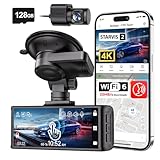
ROVE R2-4K Dual
- 4K front plus 1080P rear
- STARVIS 2 sensor
- Built-in GPS
- 5.8GHz WiFi
REDTIGER F7N TOUCH
Fishroom pick
- 4K front plus 1080P rear
- 3.18 inch touchscreen
- Voice control
- GPS

IIWEY N6
- 4-channel 360 degree coverage
- 8 IR lights
- WiFi 6 at 20MB/s
- 48-hour parking mode
As an Amazon Associate we earn from qualifying purchases. CERTAIN CONTENT THAT APPEARS ON THIS SITE COMES FROM AMAZON. THIS CONTENT IS PROVIDED 'AS IS' AND IS SUBJECT TO CHANGE OR REMOVAL AT ANY TIME.
The ROVE R2-4K Dual is the one we recommend to most drivers. It records a native 1440p front channel and 1080p rear simultaneously on a Sony STARVIS 2 sensor, stamps every clip with speed and heading, and includes a 128GB high-endurance card so it works the day it arrives.
The REDTIGER F7N TOUCH wins on hardware you can actually use while parked or waiting. Its 3.18-inch touchscreen and voice commands let you lock an incident clip without fumbling for buttons, which matters when a rider is standing behind you.
The IIWEY N6 is the coverage outlier. Four cameras record at once, including both side-facing channels, and eight infrared lights keep the cabin and flanks legible after dark. If you drive an SUV, van, or anything where a passenger sits out of the front camera’s arc, this is the one.
Comparing 10 Dash Cams for Uber Drivers Side by Side in 2026
The table below covers all ten systems on the axes that actually change outcomes for rideshare work: channel count, cabin illumination, storage ceiling, and whether the app needs a subscription.
Freshwater, planted, brackish and reef gear, one row each.
| # | Product | Notes | Where to buy |
|---|---|---|---|
| 1 | ROVE R2-4K Dual |
|
Check Latest Price→ |
| 2 | REDTIGER F7N TOUCH |
|
Check Latest Price→ |
| 3 | IIWEY N6 |
|
Check Latest Price→ |
| 4 |  COOAU D30S |
|
Check Latest Price→ |
| 5 |  REDTIGER F17 |
|
Check Latest Price→ |
| 6 |  VIOFO A229 Plus |
|
Check Latest Price→ |
| 7 |  Affver 4K+2.5K Front and Rear |
|
Check Latest Price→ |
| 8 |  ZMOPO 4-Channel 360 Dash Cam |
|
Check Latest Price→ |
| 9 |  Vantrue N4 Pro S |
|
Check Latest Price→ |
| 10 |  70mai T800E |
|
Check Latest Price→ |
As an Amazon Associate we earn from qualifying purchases, at no additional cost to you. CERTAIN CONTENT THAT APPEARS ON THIS SITE COMES FROM AMAZON. THIS CONTENT IS PROVIDED 'AS IS' AND IS SUBJECT TO CHANGE OR REMOVAL AT ANY TIME.
1. ROVE R2-4K Dual – Best Overall Front and Rear for Rideshare Drivers
ROVE R2-4K Dual Dash Cam Front and Rear, STARVIS 2 Sensor, Free 128GB Card
Key specs
- 4K front plus 1080P rear
- 150 degree front FOV
- STARVIS 2 IMX675
- 128GB card included
What we like
- Dual front and rear recording on STARVIS 2 hardware
- Built-in GPS stamps speed heading and route
- Dual-band 5.8GHz and 2.4GHz WiFi at up to 20MB/s
- Supports microSD cards up to 1TB
- 3-inch IPS screen for on-device review
Worth knowing
- Front 4K mode is upscaled rather than native
- Hardwire kit not included so parking mode costs extra
- Rear camera records at 1080P only
As an Amazon Associate we earn from qualifying purchases, at no additional cost to you. CERTAIN CONTENT THAT APPEARS ON THIS SITE COMES FROM AMAZON. THIS CONTENT IS PROVIDED 'AS IS' AND IS SUBJECT TO CHANGE OR REMOVAL AT ANY TIME.
The ROVE R2-4K Dual sits in the middle of this list on paper and came out ahead of it in practice. It carries a 4.5 rating across more than 14000 reviews and ranks in the top of the entire on-dash camera category, which tells you how much long-term data sits behind the sample.
Its front channel records at an f/1.5 aperture on a Sony STARVIS 2 IMX675 sensor, and that aperture is the number that matters most after dark. Wider apertures pull in more light, which is why the front footage stays readable on unlit suburban roads where cheaper sensors dissolve into grey.
For a rideshare driver the built-in GPS is more than a spec-sheet flourish. Every clip carries speed, compass heading, and route data, so when an adjuster asks whether you were moving at the time, the answer is already stamped into the file.
What the 4K and 1440p modes actually give you
The native mode is 1440p, and 4K is upscaled. That distinction matters only if you plan to crop heavily into distant plates; for ordinary dispute evidence the 1440p native feed is sharper per pixel than an upscaled frame.
Licence plates at close range, such as a vehicle directly ahead at a junction, read clearly. At highway closing speeds, expect to identify a car rather than read every character.
Dual-band WiFi and why clip retrieval speed matters
The ROVE supports both 5.8GHz and 2.4GHz bands and pulls files at up to 20MB per second through the ROVE app. Uber often asks for evidence within hours of a report, so transfer speed is not a convenience metric here.
Drivers on r/uberdrivers repeatedly flag clip retrieval as the biggest practical frustration with cheaper cameras. A slow transfer means you are scrolling through folders on a phone screen while a deadline runs.
Parking mode and the hardwire gap
Parking mode options include one frame-per-second time-lapse, motion detection, and collision detection. The hardwire kit is not in the box, so parking mode requires a separate purchase and a fuse-box install.
A built-in supercapacitor handles the shutdown procedure safely, which is what protects the file when you cut power. Internal batteries are the reason many budget cameras corrupt footage on ignition-off.
Who this suits
Choose the ROVE R2-4K if your priority is dependable road evidence with fast retrieval and you are comfortable running your own cable tuck. It is also the strongest single choice here for drivers who work daylight and evening shifts rather than full-time nights.
Look elsewhere if your core problem is the cabin rather than the road. This camera has no interior channel.
Price and stock are shown by the retailer.
As an Amazon Associate we earn from qualifying purchases, at no additional cost to you. CERTAIN CONTENT THAT APPEARS ON THIS SITE COMES FROM AMAZON. THIS CONTENT IS PROVIDED 'AS IS' AND IS SUBJECT TO CHANGE OR REMOVAL AT ANY TIME.
2. REDTIGER F7N TOUCH – Best Value 4K Front and Rear With a Touchscreen
REDTIGER 4K STARVIS 2 Dashcam Front Rear, 5GHz WiFi 20MB/s, Free 128GB Card
Key specs
- 4K front plus 1080P rear
- 170 degree front FOV
- 3.18 inch touch LCD
- 128GB card included
What we like
- Sharp 4K front picture in bright sun and low light
- Large clear touchscreen makes reviewing clips fast
- Hands-free voice commands lock clips on the move
- Built-in GPS plus 20MB/s WiFi for quick retrieval
- Rear camera and 128GB card in the box
Worth knowing
- App requires an online account before the phone can connect
- Some voice commands do not respond reliably
- Switching the display from rear back to front is awkward
- Parking monitor auto-locks nearly every clip
As an Amazon Associate we earn from qualifying purchases, at no additional cost to you. CERTAIN CONTENT THAT APPEARS ON THIS SITE COMES FROM AMAZON. THIS CONTENT IS PROVIDED 'AS IS' AND IS SUBJECT TO CHANGE OR REMOVAL AT ANY TIME.
The REDTIGER F7N TOUCH pairs the widest front field of view in this group at 170 degrees with the largest screen. That combination makes it the easiest camera to check quickly at the end of a shift, which is exactly when you want it.
The extra width does cost a little edge detail compared with narrower lenses, but for rideshare work it pays off: at 170 degrees you catch the adjacent lane and more of the cabin without fisheye distortion turning faces into smears.
Voice control and the touchscreen as safety features
The voice commands exist so you can lock an incident clip without handling the device. Twelve-style one-shot commands are backed up by a proper capacitive touchscreen, which is unusual in this category and genuinely useful when you are stationary.
Not every voice command responds reliably, according to buyer feedback. Treat voice as a shortcut and the screen as the reliable path.
STARVIS 2 with WDR and HDR on the front channel
Wide dynamic range handling is what keeps a doorway or a sky background from crushing the rest of the frame. That matters when a passenger dispute happens partly in shadow near a window, which is common at pickup points.
Owners rate the daytime picture highly, particularly in direct sun, where cheaper sensors tend to wash out licence plates against bright asphalt.
The app friction you should expect
The REDTIGER Cam app requires account registration before the phone can connect, and some reviewers report awkward Bluetooth and WiFi handshaking. Budget ten minutes for the first setup rather than assuming it will pair immediately.
More significant for rideshare drivers: the parking monitor auto-locks nearly every clip, which fills the protected event folder and makes the genuinely important files harder to find. Adjust the G-sensor threshold if you use parking mode often.
Who this suits
This is the pick for a part-time driver who wants a big screen, a wide view, and a card in the box without paying for three channels they will never use. It also suits anyone who wants to review clips on the camera itself rather than exporting to a phone.
Price and stock are shown by the retailer.
As an Amazon Associate we earn from qualifying purchases, at no additional cost to you. CERTAIN CONTENT THAT APPEARS ON THIS SITE COMES FROM AMAZON. THIS CONTENT IS PROVIDED 'AS IS' AND IS SUBJECT TO CHANGE OR REMOVAL AT ANY TIME.
3. IIWEY N6 – Best 360 Degree Four-Channel Coverage With 8 IR Lights
IIWEY N6 360° Dash Cam 4 Channel, Free 128GB Card, 8 IR Lights Night Vision
Key specs
- 4-channel front rear and side recording
- 170 degree front FOV
- 8 IR lights
- WiFi 6 at 20MB/s
What we like
- Four cameras record at once for complete surround evidence
- Eight IR lights keep the cabin and flanks legible after dark
- 128GB card included so it works out of the box
- WiFi 6 transfers make clip retrieval quick
- Runs reliably in hot parked vehicles
Worth knowing
- Side cameras use electrostatic pads that can sag
- Oncoming headlight glare can be bright in footage
- SD card needs periodic reformatting and timestamps can drift
- IR night vision can look less natural
As an Amazon Associate we earn from qualifying purchases, at no additional cost to you. CERTAIN CONTENT THAT APPEARS ON THIS SITE COMES FROM AMAZON. THIS CONTENT IS PROVIDED 'AS IS' AND IS SUBJECT TO CHANGE OR REMOVAL AT ANY TIME.
The IIWEY N6 is the only camera here that records four channels at once: front, rear, and both flanks. For rideshare work this solves a problem the others ignore, namely that a passenger in the back of a long SUV can sit outside the frame of a conventional cabin camera.
Because it is a wired unit with no internal battery, it also tolerates parked-car heat better than models with small lithium cells. Several owners specifically mention that it keeps running in hot vehicles.
Eight infrared lights versus a visible glow
The eight IR lights are what make this camera usable on a night shift. The cabin and the side channels become legible without street lighting, which is the single most common complaint forum drivers raise about cheaper interior cameras.
Infrared illumination sits at the edge of human perception, so passengers rarely notice it. Some buyers find the resulting image less natural than daylight footage, but identifiability is what matters for a dispute.
Field of view and how the side cameras add up
Front and rear channels use ultra-wide 170 degree lenses, while the side cameras sit at 150 degrees with adjustable angles. Because the side units are adjustable, you can aim them at the rear cabin in a van rather than straight out the window.
Four wide-angle channels also means a lot of data moving at once, which is where the WiFi 6 transfer rate earns its place. Reviewers report downloads complete noticeably faster than on dual-channel rivals.
Mounting and maintenance realities
The side cameras attach with electrostatic adhesive pads, and reviewers report they can sag under the unit’s own weight over time. Plan to check them every few months, especially in summer heat.
You will also need to reformat the card periodically, and timestamps can drift slightly. Set the time from your phone before each evidence submission so the file times line up with the trip record.
Who this suits
Pick the N6 if you drive a van, SUV, or minivan, work nights, or have been burned by an interior camera that rendered black at midnight. It is the strongest all-angles option in this list without moving into fleet-grade hardware.
Price and stock are shown by the retailer.
As an Amazon Associate we earn from qualifying purchases, at no additional cost to you. CERTAIN CONTENT THAT APPEARS ON THIS SITE COMES FROM AMAZON. THIS CONTENT IS PROVIDED 'AS IS' AND IS SUBJECT TO CHANGE OR REMOVAL AT ANY TIME.
4. COOAU D30S – Best Budget Front and Inside Dual Channel With IR
COOAU D30S 4K Dash Cam with GPS Wi-Fi, Front and Inside Dual 2.5K 1080P, Uber Car Camera with Infrared Night Vision, Supercapacitor, 4 IR LEDs, G-Sensor, Parking Mode, Loop Recording
Key specs
- Front plus inside dual channel
- 4 IR LEDs
- STARVIS 2 sensor
- No subscription
What we like
- Front and inside channels are purpose-built for rideshare evidence
- Clear picture that does not wash out in direct sun
- Sturdy suction mount that holds in high heat
- Simple menus and quick app pairing
- No subscription or data fee for the app
Worth knowing
- Small 1.5-inch screen
- Hardwire kit and memory card sold separately
- Occasionally missing segments around an incident minute
- App logins expire and downloads can drop
As an Amazon Associate we earn from qualifying purchases, at no additional cost to you. CERTAIN CONTENT THAT APPEARS ON THIS SITE COMES FROM AMAZON. THIS CONTENT IS PROVIDED 'AS IS' AND IS SUBJECT TO CHANGE OR REMOVAL AT ANY TIME.
The COOAU D30S is the cheapest way to get a genuine front-plus-cabin dual channel, and for a lot of drivers that is the whole purchase. The interior camera is aimed at the back seat rather than the driver, which is the correct orientation for passenger disputes.
Its four infrared LEDs and STARVIS 2 sensor keep the cabin readable at night without turning on a dome light that would wake your rider.
Recording modes: 4K single front or 2.5K plus 1080P dual
Switch between 4K front-only at 25fps with a 170 degree lens, or a 1440p front plus 1080p interior pair. For rideshare work the dual mode is the one you will run, because the interior channel is the reason to own this class of camera.
Spending your resolution budget on the front channel is the wrong trade here. Most competitors make the same point: plate detail on the front is already sufficient, cabin clarity is the bottleneck.
Supercapacitor and temperature tolerance
The D30S is tested from minus 4F to 158F, which covers parked-car summers in most climates. A supercapacitor rather than a lithium cell means the shutdown routine completes cleanly and the last clip is not corrupted.
This is a quiet but real reliability difference between cheap and mid-range hardware, and it is worth more than most buyers expect.
What you have to buy separately
No memory card and no hardwire kit are included, and parking mode needs that hardwire kit. Budget for a high-endurance microSD of your own and expect a total cost that lands close to systems that ship with a card.
The 1.5-inch screen is small for reviewing footage on the unit, so plan to work through the COOAUDash app instead.
Who this suits
This is the right pick for a new rideshare driver on a tight budget who needs cabin coverage immediately and drives mostly days or evenings. It also suits anyone who refuses to pay a subscription for app access.
Price and stock are shown by the retailer.
As an Amazon Associate we earn from qualifying purchases, at no additional cost to you. CERTAIN CONTENT THAT APPEARS ON THIS SITE COMES FROM AMAZON. THIS CONTENT IS PROVIDED 'AS IS' AND IS SUBJECT TO CHANGE OR REMOVAL AT ANY TIME.
5. REDTIGER F17 – Best 4K Three-Channel With 4 IR Lights
REDTIGER F17 4K 3CH Dash Cam, STARVIS 2 Sensor HDR, 64GB Card, 5.8GHz WiFi
Key specs
- 4K front plus 1080P inside plus 1080P rear
- 150 degree front FOV
- 4 IR lights
- 64GB card included
What we like
- All three channels sharp including the interior at night
- Sunrise and sunset driving does not wash out the image
- G-sensor sensitivity is adjustable so bumps do not fill the lock folder
- Screen can be dimmed to avoid glare at night
- 64GB card included and mount stays firm
Worth knowing
- WiFi defaults off and must be re-enabled after every power cycle
- App requires Bluetooth to be off on the phone to pair
- Some units intermittently reformat the microSD card
- Instructions are thin on the menu settings
As an Amazon Associate we earn from qualifying purchases, at no additional cost to you. CERTAIN CONTENT THAT APPEARS ON THIS SITE COMES FROM AMAZON. THIS CONTENT IS PROVIDED 'AS IS' AND IS SUBJECT TO CHANGE OR REMOVAL AT ANY TIME.
The F17 is the most complete coverage pattern in this list for a mid-range purchase: a 4K front channel, a 1080p interior channel, and a 1080p rear channel recording at the same time. Nothing else here gives you all three angles at that fidelity except the far more expensive VANTRUE.
The cabin camera uses a 160 degree lens, which is wide enough to catch a passenger turning toward the door rather than staring forward.
Why three channels change the evidence quality
A rear channel captures the vehicle directly behind you, which is where much of the disputed footage in rear-end claims comes from. An interior channel captures the rider. A front channel captures the road. Together they reconstruct a timeline rather than a fragment.
Reviewers consistently rate the three-channel image quality highly, and several specifically single out the interior infrared view at night.
Four IR lights on the cabin channel
Four infrared lights on the interior camera produce usable cabin footage in low light without visible glow. This is the feature that separates this camera from dual-channel systems at a similar resolution, where the interior goes black after sunset.
App pairing and card reliability, the two real complaints
WiFi defaults to off and must be re-enabled after each power cycle, and the app asks you to disable Bluetooth on your phone before pairing. Both are friction points that will annoy you at the end of a long shift.
There are also isolated reports of the camera reformatting the microSD card and clearing the buffer. Format the card yourself from the app before you rely on it, and check the lock folder after your first few shifts.
Who this suits
Choose the F17 if you want maximum physical coverage without stepping up to fleet-grade pricing, and you are comfortable spending an evening sorting out app quirks. The adjustable G-sensor is a genuine asset on rough city roads.
Price and stock are shown by the retailer.
As an Amazon Associate we earn from qualifying purchases, at no additional cost to you. CERTAIN CONTENT THAT APPEARS ON THIS SITE COMES FROM AMAZON. THIS CONTENT IS PROVIDED 'AS IS' AND IS SUBJECT TO CHANGE OR REMOVAL AT ANY TIME.
6. VIOFO A229 Plus – Best Front and Rear Night Plate Detail
VIOFO A229 Plus Dash Cam Front and Rear, 2K Dual STARVIS 2 Sensors & HDR
Key specs
- Dual STARVIS 2 sensors
- 2K plus 2K 1440P HDR
- 140 degree FOV
- 512GB max
What we like
- Dual STARVIS 2 sensors read plates at night with minimal glare
- HDR holds detail through tunnels and city light changes
- Supercapacitor build survives extreme cabin temperatures
- Buffered parking mode keeps footage from before an impact
- Quality trim tool and hidden cable routing included
Worth knowing
- Memory card and hardwire kit not included
- App interface feels dated and slow
- Plates read clearly only at close range at highway speeds
- Rear camera can be awkward to mount on some SUVs
As an Amazon Associate we earn from qualifying purchases, at no additional cost to you. CERTAIN CONTENT THAT APPEARS ON THIS SITE COMES FROM AMAZON. THIS CONTENT IS PROVIDED 'AS IS' AND IS SUBJECT TO CHANGE OR REMOVAL AT ANY TIME.
VIOFO built the A229 Plus around two STARVIS 2 IMX675 sensors, one per channel, which is unusual at this price. Both front and rear run at 1440p with HDR, and the front can capture up to 60fps for smoother motion on fast-moving scenes.
This is the camera I would trust most for identifying a vehicle at night from the rear, which is the footage that matters in a disputed lane-change or following-too-close claim.
Dual sensors and 2.5x dynamic range in practice
The 2.5x dynamic range claim describes how much detail survives when a scene contains both bright and dark areas, such as driving out of a tunnel or pulling away from a streetlight. Long-term owners describe the picture as dependable rather than spectacular, which is the right characterisation for evidence footage.
The 60fps front option is genuinely useful for a car crossing your path quickly, where a 30fps frame can blur a plate into an unreadable smear.
Buffered parking mode is the standout feature
The buffered event mode stores roughly 15 seconds before and 30 seconds after a detected impact. On a hit-and-run that is the difference between a file showing a car leaving and a file showing nothing.
Three parking modes are available: buffered auto event detection, time-lapse, and low bitrate. The HK4 hardwire cable is sold separately.
Four voice commands and quad-mode GPS
The A229 Plus responds to twelve voice commands including taking a photo, locking a video, toggling WiFi, and switching camera views. Quad-mode GPS support across GPS, BEIDOU, GALILEO, and GLONASS keeps the location stamp reliable across regions.
Note the app: reviewers describe the interface as dated and slow, and there are two similarly named apps in the stores. Download the correct one before you need it urgently.
Who this suits
Pick the A229 Plus for a driver who wants the cleanest front-and-rear night footage and does not need a cabin channel. It is a strong choice if your disputes tend to be road incidents rather than rider complaints.
Price and stock are shown by the retailer.
As an Amazon Associate we earn from qualifying purchases, at no additional cost to you. CERTAIN CONTENT THAT APPEARS ON THIS SITE COMES FROM AMAZON. THIS CONTENT IS PROVIDED 'AS IS' AND IS SUBJECT TO CHANGE OR REMOVAL AT ANY TIME.
7. Affver 4K+2.5K Front and Rear – Lowest-Cost 4K Front With a 2.5K Rear
Affver 4K+2.5K Dash Cam Front and Rear, Built-in 5G WiFi 6 GPS Dual Dashcam
Key specs
- 4K front plus 2.5K rear
- 160 degree front FOV
- 5GHz WiFi 6
- 64GB card included
What we like
- Crisp 4K front and 2.5K rear footage day and night
- Compact low-profile body does not block the view
- 64GB card and install tools in the box
- WiFi 6 plus GPS make review and route playback quick
- Long rear cable reaches the back window in crew-cab trucks
Worth knowing
- Parking mode really needs a fuse-box hardwire to avoid draining the battery
- Rear wiring still has to be tucked along the trim
- Listed 1-inch dimensions are unreliable
As an Amazon Associate we earn from qualifying purchases, at no additional cost to you. CERTAIN CONTENT THAT APPEARS ON THIS SITE COMES FROM AMAZON. THIS CONTENT IS PROVIDED 'AS IS' AND IS SUBJECT TO CHANGE OR REMOVAL AT ANY TIME.
This Affver 4K+2.5K front-and-rear unit is the least expensive 4K front channel in this roundup, and the recent revision upgraded the rear camera from 1080p to 2.5K. Buyers mention installation taking roughly twenty minutes, which is about right for a clean cable run.
It has no cabin channel, so treat it as a road-incident camera rather than a rideshare protection system.
Low light performance at f/1.5
A six-layer lens and an f/1.5 aperture boost light intake substantially, and reviewers rate the night footage as clear for a camera at this level. Wide dynamic range keeps the sky from crushing the road surface on night drives.
That combination is what lets an insurer or a platform adjudicator read a plate from a clip recorded on an unlit road, which is the whole purpose of the device.
The 3.59-inch screen and the view obstruction problem
The screen is the largest in this roundup, yet the body is low-profile enough that drivers report it does not block their sightline. That combination is unusual; most large screens come mounted high enough to irritate.
The screen can be dimmed if you prefer to check clips without a bright panel in a dark car.
Parking mode needs a real hardwire
The supplied cigarette-lighter charger will not sustain parking mode without risk of draining the battery. If you want overnight protection, budget for a fuse-box hardwire kit and set the low-voltage cutoff.
What you do get in the box is a dual-port car charger, so your phone can charge from the same socket as the camera during a long shift.
Who this suits
Choose this Affver model if you are supplementing another setup, want the largest screen on a budget, or drive a crew-cab truck where the long rear cable is genuinely useful. It is a solid road camera that simply does not record the cabin.
Price and stock are shown by the retailer.
As an Amazon Associate we earn from qualifying purchases, at no additional cost to you. CERTAIN CONTENT THAT APPEARS ON THIS SITE COMES FROM AMAZON. THIS CONTENT IS PROVIDED 'AS IS' AND IS SUBJECT TO CHANGE OR REMOVAL AT ANY TIME.
8. ZMOPO 4-Channel 360 Dash Cam – Best Four-Channel Coverage on a Modest Budget
360 View 4 Channel Dash Cam Front and Rear Left Right Inside Camera for Cars, GPS and 5G Band WiFi, Night Vision, 160 Wide Angle, WDR, 24H Parking Mode, Supercapacitor, Included 128GB Card
Key specs
- 4-channel 1080P coverage
- 360 degree field of view
- 8 infrared lights
- 128GB card included
What we like
- Four-channel 360 degree coverage at a modest outlay
- Bright clear picture across all four channels
- Adjustable mounts let you aim each camera precisely
- Simple on-screen menu with few settings
- Setup a non-expert can complete
Worth knowing
- Supplied cigarette-lighter plug will not fit vehicles without a 12V socket
- Sticky pads may not hold in very hot weather
- WiFi to the phone drops repeatedly on some units
- Night footage can be confused by passing lights
As an Amazon Associate we earn from qualifying purchases, at no additional cost to you. CERTAIN CONTENT THAT APPEARS ON THIS SITE COMES FROM AMAZON. THIS CONTENT IS PROVIDED 'AS IS' AND IS SUBJECT TO CHANGE OR REMOVAL AT ANY TIME.
This ZMOPO four-channel kit gives you four channels: front, rear, and both side positions. Each camera is adjustable, which means you can point a side camera into the rear cabin of a van instead of out the window, effectively turning a four-channel kit into a custom coverage layout.
That adjustability is the reason it earns a place on this list despite modest per-channel resolution.
Time-lapse recording as a card-space saver
The time-lapse mode compresses an hour of footage into a minute of video, which is how a four-channel system survives multi-day storage. For parked-car surveillance while you are working a shift, it is a sensible compromise between coverage and capacity.
Note that time-lapse footage is poor evidence for a moving incident, so use it only for parking coverage and keep normal recording for driving.
Eight infrared lights across all four channels
Night vision with eight infrared lights and wide dynamic range applies across the system, not just the front. In a dark car park, that is the difference between a visible figure and a silhouette.
Reviewers note that passing headlights can still confuse the exposure on night footage, which is a common limitation for any four-camera kit with wide lenses.
Hardware quirks worth checking before you buy
The included power connector will not fit vehicles without a 12V socket, which rules out a handful of newer cars and many EVs outright. Check your vehicle first.
Adhesive pads can struggle in high temperatures, and some units drop the phone WiFi connection repeatedly. Mount it out of direct sun where you can.
Who this suits
This four-channel ZMOPO makes sense for van and minivan drivers who need to reposition cameras rather than accept a fixed layout, and for anyone who wants all-angles parking coverage without a subscription. Drivers needing the sharpest possible front plate capture should look at a 4K single-front alternative.
Price and stock are shown by the retailer.
As an Amazon Associate we earn from qualifying purchases, at no additional cost to you. CERTAIN CONTENT THAT APPEARS ON THIS SITE COMES FROM AMAZON. THIS CONTENT IS PROVIDED 'AS IS' AND IS SUBJECT TO CHANGE OR REMOVAL AT ANY TIME.
9. Vantrue N4 Pro S – Best for Full-Time Drivers Running Triple 4K Sensors
Vantrue N4 Pro S 4K 3 Channel Dash Cam, Triple STARVIS 2 HDR Car Camera
Key specs
- 4K front plus 2.5K inside plus 1080P rear
- Triple STARVIS 2
- PlatePix night capture
- 1TB card support
What we like
- Triple STARVIS 2 sensors give consistent clarity across all channels
- Front plus rear dual mode lowers heat for all-day reliability
- Buffered parking mode preserves the moments before an incident
- 5GHz WiFi makes large file transfers quick
- 20ft rear cable fits larger SUVs
Worth knowing
- Memory card not included and industrial-grade cards are recommended
- Hardwire kit for parking mode sold separately
- High outlay relative to most multi-channel systems
As an Amazon Associate we earn from qualifying purchases, at no additional cost to you. CERTAIN CONTENT THAT APPEARS ON THIS SITE COMES FROM AMAZON. THIS CONTENT IS PROVIDED 'AS IS' AND IS SUBJECT TO CHANGE OR REMOVAL AT ANY TIME.
The VANTRUE N4 Pro S is the premium end of this roundup and the only system here with three STARVIS 2 sensors recording 4K front, 2.5K interior, and 1080p rear simultaneously. It carries the highest rating in the group alongside the ROVE, with a smaller but still substantial review base.
For a full-time driver running ten to twelve hour shifts, the difference between a system built for triple-channel 4K and one that merely tolerates it shows up in the sixth month.
PlatePix and the 31mph plate readability claim
Night Vision 4.0 with PlatePix processing targets plate capture on lit streets at night, with the manufacturer claiming readable plates up to 31mph. Treat that as a controlled-condition figure rather than a guarantee, but the underlying hardware supports it: triple STARVIS 2 sensors with HDR across all channels.
Coverage angles are 155 degrees front, 160 degrees interior, and 165 degrees rear, which is the widest rear angle in this list and covers a tall vehicle’s blind spot behind you.
Managing heat on a twelve-hour shift
The rear camera rotates a full 360 degrees, and the system offers a front-plus-rear dual mode that reduces heat generation by roughly a third compared with recording all three channels. Owners driving long shifts appreciate being able to drop to dual when the route is quiet.
Supercapacitor construction and a rated operating range make this less a specification line and more a reason the unit keeps recording in a parked car in summer.
Storage maths for triple-channel 4K
Up to 1TB of microSD support translates to more than 37 hours of triple-channel 4K recording. You will supply your own card, and VANTRUE recommends its industrial-grade range rather than a standard high-endurance card.
Before you fill that capacity, work out how much you actually need with our storage guide below. Over-provisioning costs money you could keep.
Who this suits
Buy the N4 Pro S if you drive full time, mostly at night, and want the highest interior and plate fidelity available without moving to a subscription cloud system. If you drive a few weekend shifts, the cost is hard to justify.
Price and stock are shown by the retailer.
As an Amazon Associate we earn from qualifying purchases, at no additional cost to you. CERTAIN CONTENT THAT APPEARS ON THIS SITE COMES FROM AMAZON. THIS CONTENT IS PROVIDED 'AS IS' AND IS SUBJECT TO CHANGE OR REMOVAL AT ANY TIME.
10. 70mai T800E – Best Three-Channel Value With Switchable Cabin Infrared
70mai 4K Dash Cam Front and Rear Inside, 3 Channel Car Dash Camera for Cars, Dashcam with GPS, Wi-Fi 6, Voice Control, Parking Monitor, Night Vision, Loop Recording, 64GB SD Card Included (T800E)
Key specs
- 4K front plus 1080P inside plus 1080P rear
- Switchable cabin infrared
- WiFi 6 and GPS
- 64GB card included
What we like
- Sharp 4K front footage that reads plates day and night
- Interior camera is the standout for passenger disputes
- Voice control saves clips hands-free
- 64GB card included and channels can be toggled
- Rear and interior channels can be switched on or off
Worth knowing
- Front 4K is upscaled from a 2K sensor
- Interior records at 15fps and rear quality trails the front
- App only connects while the car is running and downloads slowly
- 64GB fills quickly with all three channels active
As an Amazon Associate we earn from qualifying purchases, at no additional cost to you. CERTAIN CONTENT THAT APPEARS ON THIS SITE COMES FROM AMAZON. THIS CONTENT IS PROVIDED 'AS IS' AND IS SUBJECT TO CHANGE OR REMOVAL AT ANY TIME.
The 70mai T800E packages a genuine three-channel system with switchable interior infrared at a level most drivers would call mid-range. The interior channel is the reason to buy it, and reviewers single it out as the strongest part of the package for rideshare disputes.
Being able to toggle the rear and interior channels on and off is a genuine advantage when you are storing evidence rather than recording constantly.
Switchable cabin infrared and why the toggle matters
Interior infrared can be switched on for night work and off for daytime running, which prevents the cabin image looking unnaturally monochrome during daylight hours. On the COOAU and REDTIGER models the infrared is always on, which produces a visible effect in bright conditions.
An f/1.55 aperture with HDR and 3D noise reduction keeps low-light cabin noise down without smearing faces.
Where the marketing and the sensor diverge
The 4K front label is upscaled from a 2K sensor, the interior channel records at 15fps, and the rear camera is a clear step below the front. None of that ruins the product, but you are buying a strong interior channel with a good rather than native 4K front.
At 15fps the interior channel still captures behaviour clearly; it just renders fast movement less smoothly than the 30fps channels here.
App limitations and card sizing
The app only connects while the vehicle is powered, and reviewers describe large multi-camera transfers as slow. Pull your evidence before you shut the car down.
A 64GB card fills quickly when all three channels record continuously. Format it in the app, and consider a larger high-endurance card for full-time work. Hardwire kits UP06 and UP03 are compatible for parking mode, and there is no 4G connectivity.
Who this suits
The T800E fits part-time drivers who work evenings and want a cabin channel with proper night illumination without stepping up to triple-sensor hardware. Owners also report responsive support that shipped a firmware fix for a cabin-recording bug.
Price and stock are shown by the retailer.
As an Amazon Associate we earn from qualifying purchases, at no additional cost to you. CERTAIN CONTENT THAT APPEARS ON THIS SITE COMES FROM AMAZON. THIS CONTENT IS PROVIDED 'AS IS' AND IS SUBJECT TO CHANGE OR REMOVAL AT ANY TIME.
How to Choose a Dash Cam for Uber Drivers: Channels, IR and Card Size
Front-only vs 2CH vs 3CH vs 4CH
Front-only cameras record the road. Dual-channel systems add either a rear or an interior view. Three-channel systems record all three, and four-channel systems add both side positions.
For rideshare work, an interior channel is the minimum sensible purchase, because rider complaints cannot be settled with road footage. Add a rear channel if your driving involves heavy traffic where following drivers are a dispute risk. Four channels are worth it mainly in vans and large SUVs where a fixed cabin camera cannot see the rear seats.
One mistake we see constantly: buying front-only because it is cheaper, then discovering after an incident that the person in dispute was never in frame.
Night shifts: 940nm vs 850nm infrared
Infrared cabin lighting works because human eyes cannot see most infrared wavelengths, so the camera sees in darkness while the passenger does not. The two common wavelengths behave very differently.
850nm emitters produce a faint red glow on skin and are visible to some people, which drivers report as unsettling and passengers sometimes notice. 940nm emitters are effectively invisible but have slightly lower sensitivity, so the image is a little softer. For paid passenger work, an invisible source is worth the trade.
Also check whether the interior IR is switchable. Always-on infrared looks unnatural in daylight footage, and some reviewers prefer to turn it off in bright conditions.
Storage sizing for 8 hour and 12 hour shifts
Work out your shift length first, then pick a card. A single 1080p channel records roughly 1.5 to 2GB per hour, a 4K front channel runs nearer 4 to 5GB per hour, and each additional channel adds proportionally.
A dual-channel 1080p setup recording for a 12 hour shift needs roughly 30 to 40GB. A 4K front plus 1080p interior pair over the same shift is closer to 60 to 70GB. Triple-channel 4K is where capacity planning stops being optional, and a 128GB card will not carry a full day at that setting.
Card support ceilings vary widely in this roundup, from 64GB up to 1TB, so check the limit before you buy a large card.
Parking mode and hardwire kits
Parking mode records while the vehicle is parked, usually triggered by motion or impact detection. Buffered modes preserve several seconds before the event, which is far more useful than recording only after the bump.
Almost every camera here needs a separate hardwire kit, and only the plugged-in chargers work without one. A hardwire kit taps a fuse box and includes a low-voltage cutoff that stops recording before your battery drops below a set threshold. Set that cutoff to around 12.0V unless your hardwire documentation says otherwise.
None of these kits includes a memory card in most cases, so treat the camera price as a starting number rather than a complete setup cost.
Cloud subscription vs local storage
Local storage systems write everything to a microSD card and hand you files through a phone app. Cloud systems upload footage to a server, which survives a stolen vehicle or a damaged card but requires a recurring fee.
The math matters for rideshare drivers. A monthly subscription adds up to hundreds of dollars over a multi-year ownership period against a monthly income that varies with demand. Every camera reviewed here works entirely without a subscription, and the apps carry no data fee.
If theft is your main concern, parking mode plus a decent mount is usually the better spend than a subscription.
Does a dash cam lower rideshare insurance?
Honest answer: not directly. Insurers rarely offer a documented premium reduction simply for fitting a dash cam, and no major rideshare platform advertises one either.
What a dash cam does affect is the outcome of a claim. Video that clearly establishes fault removes the dispute, and disputes are what cost money. Long-term owners of dual-sensor systems describe footage that resolved an insurance claim outright, which is a real financial effect even without a headline discount.
Ask your rideshare insurance provider directly and get the answer in writing. If they offer a telematics-based discount, that discount belongs to the program, not to the camera.
What not to buy
Front-only cameras. They cannot address a passenger dispute, which is the entire reason rideshare drivers buy one.
Cameras with visible 850nm IR. The red glow is noticed by passengers and does nothing for your ratings beyond making people uneasy.
No-app cameras with no way to export clips. If you cannot get a time-stamped file to a platform within hours, the footage is close to useless.
Low-bitrate 4K with a small sensor. Upscaled 4K on a 2K sensor looks impressive in marketing and produces mushy plate detail. A genuine sensor size beats a resolution number.
Systems with lithium batteries. A supercapacitor handles the power-down cleanly. Battery-equipped cameras fail in parked-car heat and can corrupt the last clip.
Legal basics: audio, disclosure, and platform rules
Dash cams are permitted in Uber and Lyft vehicles. Drivers may use recording devices while completing rides, and footage is accepted as part of a safety report or claim process. Submit it through the in-app safety flow so it is attached to the correct trip, and keep the original file.
Audio is the complicated part. In one-party consent states, recording a conversation you are party to is generally fine. In two-party consent states, which include California, Florida, Illinois, Maryland, Massachusetts, Montana, New Hampshire, Pennsylvania, Oregon, and Washington among others, recording a conversation without all parties’ consent can be a criminal offence. Verify the current list for your state before enabling cabin audio.
Display a small sticker near the entrance saying the vehicle is fitted with a dash cam. It costs almost nothing, it removes the surprise factor, and it makes the consent position much cleaner in a dispute.
Fixes for common setup problems
The card fills too fast. Format the card in the camera app rather than on a computer, use a high-endurance card, and reduce recording segment length or channel count.
The cabin is black at night. The interior channel needs infrared. If your camera has none, no software setting fixes it.
The camera resets at every ignition. A loose 12V plug or an underpowered socket is the usual cause. Check the plug seating and try a different socket or a hardwire kit.
The G-sensor locks everything. Rough roads trigger constant event locks and fill the protected folder. Lower the sensitivity or change the threshold.
WiFi will not connect. Several brands ask you to disable Bluetooth on your phone before pairing, and some default WiFi off after every power cycle.
Frequently Asked Questions
Which camera is best for Uber drivers?
The ROVE R2-4K Dual is the best overall choice for Uber drivers. It records 4K front and 1080P rear simultaneously on a Sony STARVIS 2 sensor, stamps every clip with GPS speed and heading data, transfers files at up to 20MB per second over dual-band WiFi, and includes a 128GB card. Drivers who need cabin coverage should look at a three-channel model such as the REDTIGER F17 or the 70mai T800E.
What dash cam do most Uber drivers use?
Dual-channel front and rear systems on 1080P or 4K are the most common choice among rideshare drivers, usually paired with a front-only or three-channel upgrade for cabin coverage. Forum discussions consistently favour dual STARVIS 2 sensors for night plate readability. Popularity aside, the right pick depends on whether your disputes involve the road, the rider, or both.
What dash cam does Uber recommend?
Uber does not endorse or approve specific dash cam models. The platform permits drivers to use recording devices while providing rides, and footage can be submitted through the in-app safety report flow. Any dash cam with a working time-stamped export, a supported memory card, and a WiFi app is sufficient. Check your local laws on recording passenger audio before enabling the microphone.
Is a dashcam allowed in Uber?
Yes, dash cams are allowed in Uber and Lyft vehicles while you are driving for the platform. Mount it so it does not obstruct your view of the road, and keep it out of the way of airbags. Footage is accepted as evidence when submitted through the in-app safety process, so export the original time-stamped file rather than a screenshot or a re-encoded clip.
What dash cam is TfL approved for Uber?
There is no TfL-approved list of dash cam models for London drivers. Transport for London regulates drivers and vehicles rather than recording equipment, and the requirement is that any camera must not obstruct the driver’s view or interfere with the vehicle. Drivers in London should still follow UK rules on recording passenger audio and use a cabin camera with switchable infrared.
Will your insurance go down if you have a dash cam?
Not directly. Insurers and rideshare platforms rarely publish a premium discount for simply fitting a dash cam. The financial effect is indirect but real: video that clearly establishes fault settles a dispute instead of prolonging it, and prolonged disputes are what cost money. Ask your rideshare insurance provider in writing about any available discount before buying on the expectation of one.
Is parking mode worth it on a dash cam?
Yes, especially if you park in public lots while waiting for fares, which is exactly when hit-and-run damage happens. Buffered parking modes are the most useful type because they preserve several seconds before the detected impact, showing the vehicle that struck you. Parking mode requires a hardwire kit in most models, so budget for that separately and set the low-voltage cutoff around 12.0V.
The Verdict: Which Dash Cam for Uber Drivers Should You Buy in 2026?
Buy the ROVE R2-4K Dual if you want the most dependable all-round system: strong low-light front footage, GPS-stamped evidence, fast clip retrieval, and a card in the box. It is our choice for the greatest number of drivers.
Pick the REDTIGER F17 or the 70mai T800E if your disputes happen in the back seat, because both give you a genuine three-channel recording with infrared in the cabin. Choose the F17 for wider field of view and better night interior clarity, or the T800E for switchable infrared at a lower outlay.
Choose the IIWEY N6 for vans, SUVs, and full-time night shifts where coverage angles matter more than resolution. Choose the Vantrue N4 Pro S only if you drive full time and need the sharpest triple-channel recording available without a subscription.
Whichever you pick, set up the install properly: tuck the cables, check the timestamp, format the card in the app, and pull one test clip through the phone before your next shift. That ten minutes prevents more problems than any model choice will.