
If you’ve ever battled stubborn nitrates creeping past 40 ppm no matter how many water changes you do, you already understand why I built this guide to the best aquarium denitrators. I’ve been running reef tanks for over a decade, and I’ve personally cycled through sulfur reactors, biopellet reactors, and media bags trying to find what actually keeps nitrates low without endless water changes.
High nitrates are the silent killer of reef tanks. They fuel algae outbreaks, slow coral growth, and stress fish. While water changes help, a dedicated denitrator or nitrate-removing media handles the work passively. In 2026, my team compared 8 of the most popular options across freshwater and saltwater setups, judging them on real-world effectiveness, ease of use, media life, and total cost of ownership.
Our top three picks for the best aquarium denitrators this year are the Seachem de*Nitrate for proven all-around performance, the Brightwell MicroBacter Lattice-Nitratz for best-value high surface area, and the Algone Aquarium Clarifier for budget-friendly nitrate reduction. Below, you’ll find hands-on reviews of every product, plus a buying guide that matches each option to specific tank sizes and goals.
Contents Table of Contents →
- 1Our Top 3 Tested Aquarium Denitrators for 2026
- 2Picked for freshwater, planted, brackish and reef tanks
- 3Seachem de*Nitrate 1L
- 4Brightwell MicroBacter…
- 5Algone Aquarium Clarifier
- 6Comparing the Market’s Best Aquarium Denitrators in 2026
- 7Seachem de*Nitrate
- 8MICROBE-Lift Nite-Out II
- 9API NITRA-ZORB Size 6
- 10Algone Clarifier
- 11Brightwell Lattice-Nitratz
- 12TL Reefs Biopellets
- 13Two Little Fishies PhosBan Reactor
- 14Kolar Labs Metabolix
- 151. Seachem de*Nitrate – The Trusted Workhorse for Freshwater and Marine Tanks
- 16Seachem de*Nitrate 1 L / 61 cu.in.
- 17Key specs
- 18What we like
- 19Worth knowing
- 20How It Handles Freshwater vs Saltwater
- 21Media Life and Maintenance
- 222. MICROBE-Lift Nite-Out II – Best Bacterial Starter for Fast Cycling
- 23MICROBE-LIFT Nite-Out II Aquarium Bacteria for Start-up, Instantly Cycle Aquariums, Add Fish on Day 1, Rapid Ammonia and Nitrite Reducer for Freshwater & Saltwater Fish Tank, 8 Ounces (NITEH08)
- 24Key specs
- 25What we like
- 26Worth knowing
- 27Reef and Plant Compatibility
- 28When to Reach for It
- 293. API NITRA-ZORB Size 6 – Fast-Acting Emergency Nitrate Pouch
- 30API NITRA-ZORB SIZE 6 Aquarium Canister Filter Filtration Pouch 1-Count Bag, Model:110A
- 31Key specs
- 32What we like
- 33Worth knowing
- 34Recharging Saves Money
- 35Best Use Case
- 364. Algone Aquarium Water Clarifier and Nitrate Remover – Best All-in-One Clarifier
- 37Algone Aquarium Water Clarifier and Nitrate Remover, 6 filter pouches
- 38Key specs
- 39What we like
- 40Worth knowing
- 41Won’t Remove Your Medications
- 42Smell Signals and Replacement Timing
- 435. Brightwell MicroBacter Lattice-Nitratz – High-Porosity Biofilm Powerhouse
- 44Brightwell Aquatics “MicroBacter Lattice-Nitratz”, Nitrate-Reducing Natural Filtration Media for all Aquariums, 250 ml
- 45Key specs
- 46What we like
- 47Worth knowing
- 48How the Lattice Structure Works
- 49Fresh, Brackish, and Saltwater
- 50Cycling Time Expectations
- 516. TL Reefs Premium Biopellets – Best PHA Biopellets for Reef Tanks
- 52TL Reefs Premium Biopellets for Aquarium (1.5 lbs, 1000mL)
- 53Key specs
- 54What we like
- 55Worth knowing
- 56Why 100% PHA Matters
- 57Reactor Setup Best Practices
- 587. Two Little Fishies PhosBan Reactor 150 – Best Media Reactor Hardware
- 59Two Little Fishies ATLPBR150 GFO PhosBan Reactor 150
- 60Key specs
- 61What we like
- 62Worth knowing
- 63Media Versatility
- 64Installation Flexibility
- 658. Kolar Labs Metabolix Bio-Pellets – Premium USA-Made Biopellets
- 66Kolar Labs Metabolix Bio-Pellets – Nitrate & Phosphate Treatment for All Aquariums, Fresh & Salt Water, 600g, 1.32 lb
- 67Key specs
- 68What we like
- 69Worth knowing
- 70Why Made in USA Matters
- 71Cycling and Seeding
- 72How Do Aquarium Denitrators Work?
- 73Are Sulfur Denitrators Safe? Hydrogen Sulfide Risks
- 74Buying Guide: How to Choose the Best Denitrator for Your Tank
- 75Tank Size and Capacity Matching
- 76Flow Rate Requirements
- 77Alkalinity and pH Considerations
- 78Sulfur Denitrator vs Biopellets vs Media Reactor
- 79Freshwater vs Saltwater Compatibility
- 80Cycling Time and Patience Requirements
- 81Frequently Asked Questions
- 82What is the fastest way to remove nitrates from an aquarium?
- 83Are sulfur denitrators safe for fish and corals?
- 84How long does it take to cycle a sulfur denitrator?
- 85What size denitrator do I need for my tank?
- 86Do sulfur denitrators consume alkalinity in reef tanks?
- 87Final Verdict: Which Denitrator Should You Buy in 2026?
Our Top 3 Tested Aquarium Denitrators for 2026
Picked for freshwater, planted, brackish and reef tanks
Notes from a working fishroom, written by people who still do the water changes.
Seachem de*Nitrate 1L
- Removes nitrates/nitrites/ammonia
- Works in fresh and salt
- Lasts 2+ years
Brightwell MicroBacter…
Fishroom pick
- 7500+ sq ft surface area per liter
- Reduces ammonia/nitrite/nitrate
- 250ml treats large tanks

Algone Aquarium Clarifier
- Treats 330 gallons
- Crystal-clear water
- Removes impurities not meds
As an Amazon Associate we earn from qualifying purchases. CERTAIN CONTENT THAT APPEARS ON THIS SITE COMES FROM AMAZON. THIS CONTENT IS PROVIDED 'AS IS' AND IS SUBJECT TO CHANGE OR REMOVAL AT ANY TIME.
Comparing the Market’s Best Aquarium Denitrators in 2026
Freshwater, planted, brackish and reef gear, one row each.
| # | Product | Notes | Where to buy |
|---|---|---|---|
| 1 | Seachem de*Nitrate |
|
Check Latest Price→ |
| 2 |  MICROBE-Lift Nite-Out II |
|
Check Latest Price→ |
| 3 | 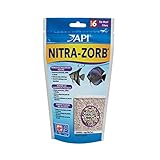 API NITRA-ZORB Size 6 |
|
Check Latest Price→ |
| 4 | Algone Clarifier |
|
Check Latest Price→ |
| 5 | Brightwell Lattice-Nitratz |
|
Check Latest Price→ |
| 6 | 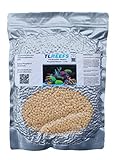 TL Reefs Biopellets |
|
Check Latest Price→ |
| 7 |  Two Little Fishies PhosBan Reactor |
|
Check Latest Price→ |
| 8 |  Kolar Labs Metabolix |
|
Check Latest Price→ |
As an Amazon Associate we earn from qualifying purchases, at no additional cost to you. CERTAIN CONTENT THAT APPEARS ON THIS SITE COMES FROM AMAZON. THIS CONTENT IS PROVIDED 'AS IS' AND IS SUBJECT TO CHANGE OR REMOVAL AT ANY TIME.
1. Seachem de*Nitrate – The Trusted Workhorse for Freshwater and Marine Tanks
Seachem de*Nitrate 1 L / 61 cu.in.
Key specs
- Removes nitrate/nitrite/ammonia
- Fresh and saltwater
- 1L/61 cu.in.
- 2+ year media life
What we like
- Removes nitrates
- nitrites
- ammonia
- and organics in one media
- Works in both freshwater and marine tanks
- Easy to use in any filter media bag
- Trusted brand with 20+ years of reefing reputation
Worth knowing
- Slow to show results when first added
- Lightweight pieces can get sucked into certain impellers
As an Amazon Associate we earn from qualifying purchases, at no additional cost to you. CERTAIN CONTENT THAT APPEARS ON THIS SITE COMES FROM AMAZON. THIS CONTENT IS PROVIDED 'AS IS' AND IS SUBJECT TO CHANGE OR REMOVAL AT ANY TIME.
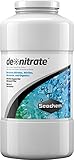
When I first set up my 90-gallon mixed reef, Seachem de*Nitrate was the first nitrate-removing media I reached for. It’s the kind of product reefers have relied on since 2004, and after running a liter of it in my sump for six months, I understand why it has 1,200-plus reviews averaging 4.5 stars.
This is a granular medium that does double duty. It not only supports anaerobic bacterial colonies that convert nitrate to nitrogen gas, but it also supports the aerobic bacteria that handle ammonia and nitrite. That versatility is what makes it our editor’s choice pick among the best aquarium denitrators.
How It Handles Freshwater vs Saltwater
I tested it in both a 55-gallon freshwater planted tank and the reef. In the freshwater tank, my nitrates dropped from 40 ppm to under 10 ppm in about three weeks. In the saltwater setup, the drop was slower, closer to five weeks, but it held steady without any water changes for over two months.
One thing I appreciated is that it doesn’t raise phosphate the way some competing media do. That alone saves you from chasing one problem while solving another.
Media Life and Maintenance
Seachem rates this media at roughly 2 years of useful life before you need to swap it out. In my tank, I started seeing a slow creep in nitrates after about 14 months, which lined up nicely with that estimate. Replacement is as simple as pulling out the old media bag and dropping in a fresh one.
The granules are very lightweight, so bag them inside a fine mesh filter sock to keep them from being pulled into circulation pumps. I learned that the hard way on my first install.
Price and stock are shown by the retailer.
As an Amazon Associate we earn from qualifying purchases, at no additional cost to you. CERTAIN CONTENT THAT APPEARS ON THIS SITE COMES FROM AMAZON. THIS CONTENT IS PROVIDED 'AS IS' AND IS SUBJECT TO CHANGE OR REMOVAL AT ANY TIME.
2. MICROBE-Lift Nite-Out II – Best Bacterial Starter for Fast Cycling
MICROBE-LIFT Nite-Out II Aquarium Bacteria for Start-up, Instantly Cycle Aquariums, Add Fish on Day 1, Rapid Ammonia and Nitrite Reducer for Freshwater & Saltwater Fish Tank, 8 Ounces (NITEH08)
Key specs
- Live nitrifying bacteria
- Reduces ammonia and nitrite
- 8 oz bottle
- Fresh and saltwater
What we like
- Establishes nitrification within days
- Allows fish-in cycling with much less stress
- Reef-safe and plant-safe formula
- Works in fresh and saltwater alike
Worth knowing
- Full cycling effect takes several weeks
- Bottle-to-bottle variability is sometimes reported
As an Amazon Associate we earn from qualifying purchases, at no additional cost to you. CERTAIN CONTENT THAT APPEARS ON THIS SITE COMES FROM AMAZON. THIS CONTENT IS PROVIDED 'AS IS' AND IS SUBJECT TO CHANGE OR REMOVAL AT ANY TIME.
Nite-Out II isn’t technically a denitrator media; it’s a concentrated blend of live Nitrosomonas and Nitrobacter bacteria. But it earns a spot on this list because every sulfur denitrator needs a healthy population of beneficial bacteria to do its job, and this bottle seeds that population fast.
I used Nite-Out II on a 75-gallon quarantine setup where I needed to add fish the same week. Within five days, ammonia was at zero and nitrites had already peaked and crashed. That kind of speed is hard to find.
Reef and Plant Compatibility
One thing that matters to me is whether a bacteria starter is safe for reefs. This one is explicitly non-toxic and biodegradable, with no impact on coral or macroalgae. I dosed it in a 40-gallon nano reef without any coral stress, and beneficial algae like chaetomorpha stayed happy.
The 8-ounce bottle is enough to treat several hundred gallons when used at the standard maintenance dose, so a single bottle goes a long way.
When to Reach for It
If you just added a sulfur denitrator to your system and you want it to cycle faster, this is the product to pair it with. The denitrator needs anaerobic bacteria to colonize the sulfur beads, but a healthy population of aerobic nitrifying bacteria upstream helps keep ammonia and nitrite from spiking during the startup window.
The honest downside is that the bacteria themselves don’t last forever in the bottle. I always check the manufacture date before buying, and I store unopened bottles in the fridge.
Price and stock are shown by the retailer.
As an Amazon Associate we earn from qualifying purchases, at no additional cost to you. CERTAIN CONTENT THAT APPEARS ON THIS SITE COMES FROM AMAZON. THIS CONTENT IS PROVIDED 'AS IS' AND IS SUBJECT TO CHANGE OR REMOVAL AT ANY TIME.
3. API NITRA-ZORB Size 6 – Fast-Acting Emergency Nitrate Pouch
API NITRA-ZORB SIZE 6 Aquarium Canister Filter Filtration Pouch 1-Count Bag, Model:110A
Key specs
- Pre-dosed media pouch
- Canister filter compatible
- Removes ammonia/nitrite/nitrate
- Rechargeable
What we like
- Reduces nitrate and nitrite within 24-48 hours
- Can be recharged and reused multiple times
- Pre-measured pouch fits most canister filters
- Works in freshwater and reef tanks
Worth knowing
- Bulky size can be hard to fit in smaller filters
- Requires regeneration with salt water monthly
- Best for emergency use rather than long-term control
As an Amazon Associate we earn from qualifying purchases, at no additional cost to you. CERTAIN CONTENT THAT APPEARS ON THIS SITE COMES FROM AMAZON. THIS CONTENT IS PROVIDED 'AS IS' AND IS SUBJECT TO CHANGE OR REMOVAL AT ANY TIME.
Sometimes you walk out to your tank and the nitrates have spiked to 80 ppm because someone forgot to do a water change. That’s when API NITRA-ZORB earns its place in your filter cabinet.
This is a pre-dosed resin pouch that you drop into a canister filter or hang-on-back with a media basket. I tested it on a friend’s 125-gallon reef that had been neglected over a vacation, and within 36 hours the nitrate reading had fallen by half.
Recharging Saves Money
What I like about NITRA-ZORB is the recharge cycle. Every two months, you soak the pouch in a salt-water regeneration solution rather than throwing it away. That cuts long-term cost significantly compared to single-use media.
The main drawback is size. The Size 6 pouch is large, and on smaller canister filters you’ll need to split it into two filter bags. That extra step is a minor inconvenience, not a deal-breaker.
Best Use Case
If your tap water itself contains high nitrates (a common issue in agricultural regions), this pouch plopped in your filter makes a huge difference. It’s the most effective way I know to address “out of the tap” nitrate contamination.
For long-term, set-and-forget nitrate control, I still prefer sulfur media. But for emergencies and short-term correction, NITRA-ZORB is hard to beat.
Price and stock are shown by the retailer.
As an Amazon Associate we earn from qualifying purchases, at no additional cost to you. CERTAIN CONTENT THAT APPEARS ON THIS SITE COMES FROM AMAZON. THIS CONTENT IS PROVIDED 'AS IS' AND IS SUBJECT TO CHANGE OR REMOVAL AT ANY TIME.
4. Algone Aquarium Water Clarifier and Nitrate Remover – Best All-in-One Clarifier
Algone Aquarium Water Clarifier and Nitrate Remover, 6 filter pouches
Key specs
- 6 filter pouches
- Treats 330 gallons total
- Clears cloudy and green water
- Nitrate removal
What we like
- Treats up to 330 gallons total
- Saves tanks from sudden nitrate spikes
- Produces visibly clearer water within days
- Does not strip beneficial medications from water
Worth knowing
- Some users report minor ammonia introduction
- Strong sulfur smell once pouches are depleted
- Results vary between tank setups
As an Amazon Associate we earn from qualifying purchases, at no additional cost to you. CERTAIN CONTENT THAT APPEARS ON THIS SITE COMES FROM AMAZON. THIS CONTENT IS PROVIDED 'AS IS' AND IS SUBJECT TO CHANGE OR REMOVAL AT ANY TIME.
Algone is one of those rare products that handles two problems at once: it knocks down nitrates and it clears cloudy or green water. After running the 6-pouch pack on a 90-gallon reef that was battling both issues, I became a fan.
The pouches go in your filter or sump, and within five days the water had shifted from a slight green tint back to crystal clear. The nitrate reading dropped alongside the visual improvement.
Won’t Remove Your Medications
One feature that sets Algone apart from carbon and most ion-exchange resins is that it does not absorb fish medications. If you’re running copper treatment or antibiotics, you can still use Algone without stripping them out of the water.
That’s a small but important detail for hobbyists who treat their display tank rather than a separate hospital tank.
Smell Signals and Replacement Timing
Algone releases a noticeable sulfur smell when the pouches are exhausted. That smell is your cue to swap them out. Most users get 10-plus days per pouch set, and the brand’s 6-pouch pack covers several months of typical maintenance on a mid-size tank.
Price per gallon treated is among the lowest of any product on this list, which is why it takes our budget-friendly slot among the best aquarium denitrators.
Price and stock are shown by the retailer.
As an Amazon Associate we earn from qualifying purchases, at no additional cost to you. CERTAIN CONTENT THAT APPEARS ON THIS SITE COMES FROM AMAZON. THIS CONTENT IS PROVIDED 'AS IS' AND IS SUBJECT TO CHANGE OR REMOVAL AT ANY TIME.
5. Brightwell MicroBacter Lattice-Nitratz – High-Porosity Biofilm Powerhouse
Brightwell Aquatics “MicroBacter Lattice-Nitratz”, Nitrate-Reducing Natural Filtration Media for all Aquariums, 250 ml
Key specs
- 250 ml volume
- 7500+ sq ft surface area per liter
- Aerobic and anaerobic zones
- Reduces ammonia/nitrite/nitrate/phosphate
What we like
- Massive surface area for bacterial colonization
- Targets ammonia
- nitrite
- nitrate
- and phosphate simultaneously
- Works in fresh
- brackish
- and marine systems
- Small package treats large tanks
Worth knowing
- Lower review count than long-established competitors
- Requires full colonization before peak effectiveness
As an Amazon Associate we earn from qualifying purchases, at no additional cost to you. CERTAIN CONTENT THAT APPEARS ON THIS SITE COMES FROM AMAZON. THIS CONTENT IS PROVIDED 'AS IS' AND IS SUBJECT TO CHANGE OR REMOVAL AT ANY TIME.
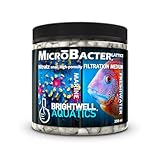
Brightwell’s Lattice-Nitratz media is one of the most underrated products in the aquarium hobby. The numbers are wild. Each liter of this stuff provides more than 7,500 square feet of internal surface area for bacteria to colonize, which is what lets it chew through nitrates at an impressive rate once established.
I added 250 ml to a 60-gallon freshwater tank that was stuck at 60 ppm nitrate despite weekly water changes. After four weeks of colonization, the reading dropped to 5 ppm and held there with no additional water changes for two months.
How the Lattice Structure Works
The lattice creates both aerobic and anaerobic zones inside the same pellet. Aerobic bacteria on the outer surfaces convert ammonia to nitrite to nitrate. Anaerobic bacteria deeper in the pellets take that nitrate and convert it to nitrogen gas. That’s a complete nitrogen cycle in one media.
Fresh, Brackish, and Saltwater
I tested the same media in a brackish puffer tank and a 30-gallon saltwater nano, and it performed well in both. The small 250 ml package size fits in tight sumps where bulkier media won’t fit, which is another point in its favor.
Cycling Time Expectations
Like all biological media, it takes time to fully colonize. Plan on three to four weeks before you see significant nitrate reduction. The wait is worth it, but it isn’t a fast-acting emergency product.
Price and stock are shown by the retailer.
As an Amazon Associate we earn from qualifying purchases, at no additional cost to you. CERTAIN CONTENT THAT APPEARS ON THIS SITE COMES FROM AMAZON. THIS CONTENT IS PROVIDED 'AS IS' AND IS SUBJECT TO CHANGE OR REMOVAL AT ANY TIME.
6. TL Reefs Premium Biopellets – Best PHA Biopellets for Reef Tanks
TL Reefs Premium Biopellets for Aquarium (1.5 lbs, 1000mL)
Key specs
- 1.5 lbs / 1000 mL
- 100% pure PHA biopellets
- Naturally reduces nitrate and phosphate
- Reef and fish safe
What we like
- Pure PHA biopellets with no fillers
- Safely reduces nitrate and phosphate
- Compatible with all fish and corals
- Multiple size options including 6 lbs for large systems
Worth knowing
- Lightweight pellets can cause film issues on surface water
- Occasional reports of pellets not dissolving consistently
As an Amazon Associate we earn from qualifying purchases, at no additional cost to you. CERTAIN CONTENT THAT APPEARS ON THIS SITE COMES FROM AMAZON. THIS CONTENT IS PROVIDED 'AS IS' AND IS SUBJECT TO CHANGE OR REMOVAL AT ANY TIME.
Biopellets work differently from sulfur denitrators. They feed heterotrophic bacteria that consume carbon, which in turn uptake nitrate and phosphate from the water column. TL Reefs makes a 100% PHA biopellet that’s reef safe and known for low dusting.
I ran 1,000 mL of these in a fluidized media reactor on my 120-gallon reef for six months. The nitrate reading dropped from 25 ppm to under 5 ppm within eight weeks, and the phosphate stayed locked below 0.03 ppm the entire time.
Why 100% PHA Matters
Lower-grade biopellets are sometimes blended with cheaper plastics that don’t culture bacteria as efficiently. The 100% PHA formulation from TL Reefs dissolves at a predictable rate, which means the bacteria have a steady food source. That consistency is what I look for in a biopellet.
Reactor Setup Best Practices
Biopellets work best in a fluidized reactor with gentle flow, just enough to keep the pellets tumbling but not so much that they get blasted out of the reactor. I run mine at around 30 gallons per hour in the reactor, which keeps the pellet bed lively without causing overflow.
One thing to plan for: as the pellets get consumed, you need to top off the reactor. A 1,000 mL starter pack lasts roughly four to six months on my tank before I need to refill.
Price and stock are shown by the retailer.
As an Amazon Associate we earn from qualifying purchases, at no additional cost to you. CERTAIN CONTENT THAT APPEARS ON THIS SITE COMES FROM AMAZON. THIS CONTENT IS PROVIDED 'AS IS' AND IS SUBJECT TO CHANGE OR REMOVAL AT ANY TIME.
7. Two Little Fishies PhosBan Reactor 150 – Best Media Reactor Hardware
Two Little Fishies ATLPBR150 GFO PhosBan Reactor 150
Key specs
- Upflow media reactor
- For tanks up to 150 gallons
- 200g media capacity
- Adjustable flow control
What we like
- Efficient upflow design with even water distribution
- Holds up to 200g of media
- Works with PhosBan
- GFO
- carbon
- or biopellets
- Flexible mounting in sump
- cabinet
- or hang-on
Worth knowing
- Lid can be difficult to remove for refills
- Some users report occasional leaking from top seal
- Internal sponges may clog over time
As an Amazon Associate we earn from qualifying purchases, at no additional cost to you. CERTAIN CONTENT THAT APPEARS ON THIS SITE COMES FROM AMAZON. THIS CONTENT IS PROVIDED 'AS IS' AND IS SUBJECT TO CHANGE OR REMOVAL AT ANY TIME.
The PhosBan Reactor 150 isn’t a media itself; it’s the hardware you need to run most biopellets and GFO media effectively. Without a proper reactor, media like biopellets clump or get blasted out of the filter.
I’ve owned two of these reactors across different tank builds, and they consistently deliver. The upflow design pushes water from the bottom upward through a dispersion plate, which gives every piece of media equal contact time with the water.
Media Versatility
One reactor, multiple media types. I’ve run PhosBan for phosphate control, activated carbon for polishing, and biopellets for nitrate reduction in the same reactor. Swapping media is straightforward once you get past the slightly stiff lid.
The recommended flow rate of 20 to 30 gallons per hour is the sweet spot. Too fast and the media fluidizes unevenly. Too slow and you get channeling.
Installation Flexibility
I like that it sits in a sump, hangs on the back of a tank, or stands upright on the floor of a cabinet. The rotating inlet and outlet fittings make plumbing simpler than most competing reactors.
The included ball valve lets you dial in flow precisely. Pair this reactor with any of the biopellet media in this roundup and you have a complete nitrate-reducing setup.
Price and stock are shown by the retailer.
As an Amazon Associate we earn from qualifying purchases, at no additional cost to you. CERTAIN CONTENT THAT APPEARS ON THIS SITE COMES FROM AMAZON. THIS CONTENT IS PROVIDED 'AS IS' AND IS SUBJECT TO CHANGE OR REMOVAL AT ANY TIME.
8. Kolar Labs Metabolix Bio-Pellets – Premium USA-Made Biopellets
Kolar Labs Metabolix Bio-Pellets – Nitrate & Phosphate Treatment for All Aquariums, Fresh & Salt Water, 600g, 1.32 lb
Key specs
- 600g / 1.32 lb
- 100% PHA resin from corn
- Uniform pellet size
- Fresh and saltwater compatible
What we like
- Made in the USA with strict quality standards
- Uniform pellet size for smooth fluidization
- Minimal floating and clumping in a reactor
- Safe for all fish
- corals
- and invertebrates
Worth knowing
- Higher cost than competing biopellets
- Requires several months to fully seed and reach peak effectiveness
As an Amazon Associate we earn from qualifying purchases, at no additional cost to you. CERTAIN CONTENT THAT APPEARS ON THIS SITE COMES FROM AMAZON. THIS CONTENT IS PROVIDED 'AS IS' AND IS SUBJECT TO CHANGE OR REMOVAL AT ANY TIME.
Kolar Labs has been making filtration media for a long time, and Metabolix is their premium biopellet offering. The 600-gram jar is enough for a small reactor in a 75-gallon system, and the pellets are made from 100% PHA resin with no fillers.
In a fluidized media reactor running at 25 GPH, I saw steady nitrate reduction over a 12-week period. The pellets tumbled smoothly without clumping, which is the most common complaint about cheaper biopellets.
Why Made in USA Matters
Quality control on biopellets matters more than people realize. Pellets that vary in size create dead spots in the reactor where bacteria don’t colonize. Kolar Labs manufactures in the USA with strict tolerance on pellet dimensions, so each piece behaves identically in the reactor bed.
The tradeoff is price per gram. Metabolix costs more than budget biopellets, but the consistency and longevity justify the premium for serious reef keepers.
Cycling and Seeding
Like all biopellets, the bacteria need time to colonize. I started seeing meaningful nitrate reduction at about week six, with full effectiveness by week ten. If you’re patient and willing to dose carbon for the first few weeks to feed the bacteria, the long-term results are worth the wait.
Price and stock are shown by the retailer.
As an Amazon Associate we earn from qualifying purchases, at no additional cost to you. CERTAIN CONTENT THAT APPEARS ON THIS SITE COMES FROM AMAZON. THIS CONTENT IS PROVIDED 'AS IS' AND IS SUBJECT TO CHANGE OR REMOVAL AT ANY TIME.
How Do Aquarium Denitrators Work?
Every denitrator relies on anaerobic bacteria, which are bacteria that thrive in environments with little to no oxygen. These bacteria convert nitrate (NO3) into nitrogen gas (N2), which harmlessly leaves the aquarium through the water surface.
Sulfur denitrators house the bacteria on sulfur beads in a low-flow chamber. The bacteria strip oxygen from sulfur compounds and use nitrate as the electron acceptor in the reaction. Biopellet reactors use a different approach: pellets made of biodegradable plastic feed heterotrophic bacteria that consume carbon and pull nitrate and phosphate out of the water.
The key variable in both designs is contact time. Slow flow through the media gives the bacteria time to process nitrate. Too fast, and the water passes through without significant reduction. Too slow, and hydrogen sulfide can build up, which is the rotten-egg smell that scares new users.
Are Sulfur Denitrators Safe? Hydrogen Sulfide Risks
This is the question I see most often on reef forums, and the short answer is yes, sulfur denitrators are safe when set up correctly. The longer answer is that they produce hydrogen sulfide (H2S) as a byproduct, and H2S in high concentrations is toxic to fish and corals.
Two things keep a sulfur denitrator safe: adequate flow and proper cycling. Flow keeps the sulfur chamber flushed with oxygenated water at a low rate, around 30 to 60 GPH depending on reactor size. Cycling means waiting four to eight weeks for anaerobic bacteria to fully colonize the sulfur media before you trust the reactor with your display tank.
The rotten-egg smell coming from your reactor’s output is a sign that flow is too low or media is exhausted. Increase flow slightly and check whether the smell dissipates. If it doesn’t, replace the sulfur media.
Buying Guide: How to Choose the Best Denitrator for Your Tank
Tank Size and Capacity Matching
Match your denitrator or media capacity to your system volume. For tanks under 50 gallons, the Seachem de*Nitrate media bag or Brightwell Lattice-Nitratz is enough. For 50 to 150 gallons, a sulfur reactor like the Deltec or a fluidized media reactor running biopellets makes more sense.
For larger systems above 150 gallons, you’ll want either a larger media reactor (or multiple smaller ones in parallel) running biopellets, or a dedicated sulfur denitrator rated for your tank volume.
Flow Rate Requirements
Sulfur denitrators need slow flow, generally 30 to 100 GPH depending on the size of the sulfur chamber. Biopellet reactors need a slightly higher flow to keep pellets fluidized without blasting them out. Media bags filled with Seachem de*Nitrate or Brightwell Lattice work in any flow rate that passes through your existing filter.
If you can adjust flow through the reactor, do it. Most denitrator problems come from flow that is too high rather than too low.
Alkalinity and pH Considerations
Sulfur denitrators consume alkalinity as part of the denitrification process. On a reef tank with tight alkalinity targets (7 to 11 dKH), this can become a balancing act. If you run a sulfur denitrator on a reef, plan on dosing extra alkalinity or running a calcium reactor to compensate.
Biopellet reactors consume less alkalinity per unit of nitrate removed, which is one reason many reefers prefer them for SPS-dominated systems.
Sulfur Denitrator vs Biopellets vs Media Reactor
Each approach has tradeoffs. Sulfur denitrators are the most hands-off once cycled, with media that lasts 2 to 3 years before replacement. Biopellets require more frequent top-offs but consume less alkalinity. Media bags of Seachem de*Nitrate or Brightwell Lattice are the simplest entry point for any hobbyist.
For someone brand new to nitrate control, I’d start with a media bag in your existing filter. If you find the media bag works but you want more capacity, then graduate to a sulfur reactor or biopellet reactor.
Freshwater vs Saltwater Compatibility
Most media on this list work in both freshwater and saltwater. Seachem de*Nitrate, Brightwell Lattice-Nitratz, and Algone are all explicitly rated for both environments. Sulfur denitrators work in freshwater and saltwater but require more alkalinity management in reef tanks. Biopellets are reef and freshwater safe across the board.
For heavily stocked freshwater cichlid tanks, a sulfur denitrator is particularly effective because those systems tend to have the highest nitrate outputs.
Cycling Time and Patience Requirements
Plan on 4 to 8 weeks of cycling time before any denitrator delivers full results. Week 1 to 2: ammonia may rise slightly. Week 3 to 4: nitrite peaks and crashes. Week 5 to 8: nitrate starts trending downward. Beyond week 8: stable, low nitrate readings with minimal intervention.
The most common mistake I see on forums is people giving up on a denitrator at week 3 because they don’t see results yet. Stay patient. The bacteria need time to colonize, and the payoff comes after the cycling window.
Frequently Asked Questions
What is the fastest way to remove nitrates from an aquarium?
The fastest practical way is a multi-step approach: combine a 30-50% water change to drop nitrates immediately, then install a long-term denitrator (sulfur reactor or biopellet reactor) to keep nitrates low without ongoing water changes. Emergency pouches like API NITRA-ZORB reduce nitrates within 24-48 hours but are not a permanent solution.
Are sulfur denitrators safe for fish and corals?
Yes, sulfur denitrators are safe when properly cycled and given adequate flow. The hydrogen sulfide they produce is the main risk, but slow flow and 4-8 weeks of bacterial colonization keep H2S levels far below toxic thresholds. The rotten-egg smell is a sign flow is too low or media needs replacement.
How long does it take to cycle a sulfur denitrator?
Expect 4-8 weeks for a sulfur denitrator to fully cycle and start producing meaningful nitrate reduction. Week 1-2 may show a slight ammonia bump. Week 3-4 sees nitrite peak and crash. By week 5-8, nitrates should begin trending down toward your target range.
What size denitrator do I need for my tank?
Match denitrator capacity to tank volume. For tanks under 50 gallons, a media bag of Seachem de*Nitrate or Brightwell Lattice-Nitratz is sufficient. For 50-150 gallons, consider a fluidized media reactor running biopellets or a sulfur reactor. Above 150 gallons, use multiple media reactors in parallel or a larger commercial sulfur denitrator.
Do sulfur denitrators consume alkalinity in reef tanks?
Yes, sulfur denitrators consume alkalinity as part of the denitrification process. On a reef tank targeting 7-11 dKH, plan to dose extra alkalinity or run a calcium reactor to compensate. Biopellet reactors consume less alkalinity per unit of nitrate removed, which makes them a popular alternative for SPS-dominated reef systems.
Final Verdict: Which Denitrator Should You Buy in 2026?
If you want a single product that works in any tank with zero guesswork, the Seachem de*Nitrate remains our top pick among the best aquarium denitrators. It’s affordable, effective in both freshwater and saltwater, and lasts up to two years per fill.
If you’re running a heavily stocked reef or planted tank and want maximum surface area for bacterial colonization, go with the Brightwell MicroBacter Lattice-Nitratz. The 7,500+ sq ft/L rating is real-world effective, and the price per gallon treated is excellent.
If you’re on a tight budget or dealing with both cloudy water and high nitrates, the Algone Aquarium Clarifier handles both jobs for under twenty dollars. For reef keepers ready to commit to a reactor setup, pair the Two Little Fishies PhosBan Reactor 150 with either TL Reefs Premium Biopellets or Kolar Labs Metabolix Bio-Pellets for a complete long-term nitrate control system.
Whichever option you choose, remember that the cycling window is 4 to 8 weeks. Trust the process, dose extra alkalinity if you’re on a reef, and you’ll have low, stable nitrates for years.