
The best 3D printers under 500 dollars right now are the Creality K1C for outright speed, the Bambu Lab A1 for beginners who want zero setup, and the FlashForge Adventurer 5M for pure value. Nine more models earn a place below, including one resin printer for miniatures. Every pick clears the 500 dollar ceiling, arrives assembled or needs no tuning, and is judged on the same criteria we apply to all of them.
We spent weeks putting this generation through print jobs rather than reading spec sheets aloud. That means first layers on cold and warm beds, dimensional checks on a printed calibration cube, bridging tests, overhangs, stringing, layer adhesion, print speed, noise and how each machine handles the filament you can actually buy. Three things decided almost every ranking: how long the machine sat useless before the first good print, how much manual fettling it demanded, and what the second year looks like when a part fails.
Worth saying up front, because buyers on forums complain about it constantly: street prices in this category move weekly. Promotional pricing on budget machines pulls list prices up, and a machine that was a steal last year can sit well over the 500 dollar line today. We checked listings for this roundup in October 2026, and every model here was inside the cap when we sat down to write. Use the buttons below to see the current figure rather than trusting a number that has been baked into a page since last year.
One more framing note. The only editorial page matching this query closely was last updated in 2018, and every machine on it is discontinued. That is the gap this roundup fills. The sub-500 dollar tier has changed more in the last three years than it did in the previous decade, with CoreXY motion, automatic calibration, AI cameras and four-color systems all landing at prices that used to belong to machines well beyond this budget.
Contents Table of Contents →
- 1Our Top 3 Picks Before You Read Any Further
- 2Picked for freshwater, planted, brackish and reef tanks
- 3Creality K1C
- 4Bambu Lab A1
- 5FlashForge Adventurer 5M
- 6Comparing the Best 3D Printers Under 500 Dollars in 2026
- 7Creality K1C
- 8Creality Ender 3 V3 SE
- 9Bambu Lab A1
- 10Anycubic Photon Mono 4
- 11FlashForge Adventurer 5M
- 12FlashForge AD5X
- 13Bambu Lab P1S
- 14TINA2S Mini Starter Kit
- 15Anycubic Kobra X
- 16Entina Tina2C
- 171. Creality K1C review – 600mm/s CoreXY with an AI camera watching every layer
- 18Creality K1C 3D Printer, 600mm/s with AI Camera and Auto Leveling
- 19Key specs
- 20What we like
- 21Worth knowing
- 22Hotend capability and the carbon fiber question
- 23Calibration, monitoring and sound level
- 24Who should buy it, and who should pass
- 252. Creality Ender 3 V3 SE review – direct drive and auto leveling at an entry outlay
- 26Creality Ender 3 V3 SE Beginner-Friendly 3D Printer with Auto Leveling
- 27Key specs
- 28What we like
- 29Worth knowing
- 30Calibration and motion hardware
- 31The honest complaints
- 32Who should buy it
- 333. Bambu Lab A1 review – the least fussy printer for beginners and kids
- 34Bambu Lab A1 3D Printer, Ready-to-Use FDM 3D Printer for Beginners and Kids
- 35Key specs
- 36What we like
- 37Worth knowing
- 38Speed that suits a small build volume
- 39The AMS lite question
- 40Who should buy it
- 414. Anycubic Photon Mono 4 review – resin detail for miniatures
- 42ANYCUBIC Photon Mono 4, Resin 3D Printer with 7” 10K Mono LCD Screen
- 43Key specs
- 44What we like
- 45Worth knowing
- 46Build volume and the reality of resin handling
- 47What resin printing asks of you
- 48Who should buy it
- 495. FlashForge Adventurer 5M review – a CoreXY core with very little left out
- 50FLASHFORGE Adventurer 5M 3D Printer, 600mm/s High-Speed, 1 Click Fully Auto Leveling, Upgraded Direct extruder Quick Detachable 280°C Nozzle, Dual-Sided PEI Coating Plate, Print Size 220x220x220mm
- 51Key specs
- 52What we like
- 53Worth knowing
- 54Hotend, bed and material support
- 55Automatic features and the gaps
- 56Who should buy it
- 576. FlashForge AD5X review – four colors with no add-on box
- 58FLASHFORGE AD5X Multi-Color & Material 3D Printer with IFS, 220x220x220mm
- 59Key specs
- 60What we like
- 61Worth knowing
- 62Refill capacity and long unattended runs
- 63Where the compromises sit
- 64Who should buy it
- 657. Bambu Lab P1S review – the enclosed one for ABS and ASA
- 66Bambu Lab P1S 3D Printer, Ready-to-Use FDM 3D Printer
- 67Key specs
- 68What we like
- 69Worth knowing
- 70Material range and honest limits
- 71Size, weight and what the enclosure costs you
- 72Who should buy it
- 738. TINA2S review – a fully assembled mini for a first present
- 74TINA2S Fully Assembled Mini 3D Printer for Kids and Beginners, Starter Kit
- 75Key specs
- 76What we like
- 77Worth knowing
- 78What a 3.9 inch cube can and cannot do
- 79Experienced buyers will notice two things
- 80Who should buy it
- 819. Anycubic Kobra X review – the biggest cube and 19-color headroom
- 82Anycubic Kobra X Multicolor 3D Printer, Easy Setup, Native 4-Color
- 83Key specs
- 84What we like
- 85Worth knowing
- 86LeviQ 3.0 and the AI camera
- 87Waste reduction and the open ecosystem
- 88Who should buy it
- 8910. Entina Tina2C review – app-driven printing for classrooms and quick gifts
- 90Entina Tina2C 3D Printer for Beginners, Fully Assembled Starter Mini 3D Printer, Start in 8 Mins, App & WiFi Control, Auto Leveling, 3500+ Model Library, 25+ Creative DIY Modules for STEM, Home
- 91Key specs
- 92What we like
- 93Worth knowing
- 94Software, connectivity and maintenance
- 95Where it falls short
- 96Who should buy it
- 97How to Choose a Budget 3D Printer Without Regret
- 98Decide FDM or resin first
- 99Decide whether you need an enclosure
- 100Judge multi-color on purge waste, not color count
- 101Treat CoreXY speed as an enabler, not a headline
- 102Check the slicer and support situation
- 103Budget for everything except the printer
- 104Frequently Asked Questions
- 105What is the best printer under 500 dollars?
- 106What is the best 3D printer for value for money?
- 107What is the best resin 3D printer under 500 dollars?
- 108Do I need an enclosed 3D printer under 500 dollars?
- 109What filament can a budget 3D printer use?
- 110The Verdict: Which Budget Printer Wins in 2026
Our Top 3 Picks Before You Read Any Further
Picked for freshwater, planted, brackish and reef tanks
Notes from a working fishroom, written by people who still do the water changes.
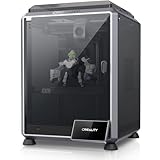
Creality K1C
- 600mm/s CoreXY
- Tri-metal hotend
- AI camera
- One-tap calibration

Bambu Lab A1
Fishroom pick
- Full-auto calibration
- 10000mm/s2 acceleration
- AMS lite ready

FlashForge Adventurer 5M
- CoreXY 600mm/s
- One-click leveling
- Vibration compensation
As an Amazon Associate we earn from qualifying purchases. CERTAIN CONTENT THAT APPEARS ON THIS SITE COMES FROM AMAZON. THIS CONTENT IS PROVIDED 'AS IS' AND IS SUBJECT TO CHANGE OR REMOVAL AT ANY TIME.
If you want one machine and no research, take the K1C. If you want the machine that complains least, take the A1. If you want the most printer for the money, take the Adventurer 5M. The other seven are narrower picks for narrow needs, and each review below explains exactly who should skip it.
Comparing the Best 3D Printers Under 500 Dollars in 2026
Freshwater, planted, brackish and reef gear, one row each.
| # | Product | Notes | Where to buy |
|---|---|---|---|
| 1 | Creality K1C |
|
Check Latest Price→ |
| 2 |  Creality Ender 3 V3 SE |
|
Check Latest Price→ |
| 3 | Bambu Lab A1 |
|
Check Latest Price→ |
| 4 |  Anycubic Photon Mono 4 |
|
Check Latest Price→ |
| 5 | FlashForge Adventurer 5M |
|
Check Latest Price→ |
| 6 |  FlashForge AD5X |
|
Check Latest Price→ |
| 7 |  Bambu Lab P1S |
|
Check Latest Price→ |
| 8 |  TINA2S Mini Starter Kit |
|
Check Latest Price→ |
| 9 |  Anycubic Kobra X |
|
Check Latest Price→ |
| 10 |  Entina Tina2C |
|
Check Latest Price→ |
As an Amazon Associate we earn from qualifying purchases, at no additional cost to you. CERTAIN CONTENT THAT APPEARS ON THIS SITE COMES FROM AMAZON. THIS CONTENT IS PROVIDED 'AS IS' AND IS SUBJECT TO CHANGE OR REMOVAL AT ANY TIME.
Two resin and mini entries sit in the same list as the full-size machines, and we kept them because the buying question genuinely splits along those lines. If you want a printed figurine with fine detail, filament will not get you there at any price in this range.
1. Creality K1C review – 600mm/s CoreXY with an AI camera watching every layer
Creality K1C 3D Printer, 600mm/s with AI Camera and Auto Leveling
Key specs
- 600mm/s CoreXY
- Tri-metal direct extruder
- AI camera, 45dB silent mode
What we like
- 600mm/s CoreXY with 20000mm/s2 acceleration
- Tri-metal nozzle resists carbon fiber wear
- One-tap auto calibration with vibration reduction
- AI camera for monitoring and time-lapse
- Silent mode rated at 45dB or less
Worth knowing
- Costs more than entry-level printers
- CoreXY layout has a learning curve for beginners
As an Amazon Associate we earn from qualifying purchases, at no additional cost to you. CERTAIN CONTENT THAT APPEARS ON THIS SITE COMES FROM AMAZON. THIS CONTENT IS PROVIDED 'AS IS' AND IS SUBJECT TO CHANGE OR REMOVAL AT ANY TIME.
The K1C is the machine I keep coming back to after a month of swapping between units. It pushes 600mm/s travel with 20000mm/s2 of acceleration while staying put through corners, and the result is a machine that finishes long prints while the others are still on the first layer. CoreXY keeps the tool head centered, so the mass that shakes most in a bedslinger is simply not there.
Owners are largely satisfied rather than ecstatic. It holds a 4.2 rating across 2726 reviews, with a 68 percent five-star share, and that middle band tells you exactly what you are buying: a machine that performs above its class with a few rough edges still being ironed out.
Hotend capability and the carbon fiber question
The enhanced direct extruder feeds straight to a tri-metal unicorn nozzle, and reviewers single out the fact that it pushes carbon fiber filaments without clogging the way a cheap steel nozzle would. That matters the moment you move past PLA and PETG into anything abrasive. A standard brass nozzle survives maybe a few grams of carbon fiber before it wears round and starts strangling flow.
Calibration, monitoring and sound level
One-tap auto calibration handles bed leveling and the rest in a single pass, and the vibration reduction is tuned into the same routine. The AI camera gives you a live feed and time-lapse, which is how you catch a spaghetti failure at layer four instead of layer four hundred. In silent mode the printer is rated at 45dB or less with filtration running, which is the single most useful number for a bedroom or a shared wall.
Who should buy it, and who should pass
Buy the K1C if you print long, you print often, and you want the job finished before dinner. Pass if you want the shortest possible path from box to first print, because a CoreXY bed layout takes longer to understand than a simple four-screw frame and the machine assumes you will read the manual.
Price and stock are shown by the retailer.
As an Amazon Associate we earn from qualifying purchases, at no additional cost to you. CERTAIN CONTENT THAT APPEARS ON THIS SITE COMES FROM AMAZON. THIS CONTENT IS PROVIDED 'AS IS' AND IS SUBJECT TO CHANGE OR REMOVAL AT ANY TIME.
2. Creality Ender 3 V3 SE review – direct drive and auto leveling at an entry outlay
Creality Ender 3 V3 SE Beginner-Friendly 3D Printer with Auto Leveling
Key specs
- 250mm/s printing
- CR Touch auto leveling
- Sprite direct drive, 19.8 pounds
What we like
- 250mm/s with 2500mm/s2 acceleration
- CR Touch auto leveling plus automatic Z-offset
- Sprite direct drive handles PLA PETG and TPU
- Dual synchronized Z lead screws and linear shafts
- Silent 32-bit mainboard at 19.8 pounds
Worth knowing
- Some reports of motherboard failure after a few months
- Firmware updates and menu screens frustrate some users
- Bed leveling springs often need upgrading
As an Amazon Associate we earn from qualifying purchases, at no additional cost to you. CERTAIN CONTENT THAT APPEARS ON THIS SITE COMES FROM AMAZON. THIS CONTENT IS PROVIDED 'AS IS' AND IS SUBJECT TO CHANGE OR REMOVAL AT ANY TIME.
The Ender 3 V3 SE is the pick if your goal is simply to start making things without spending the money a CoreXY machine demands. It prints at 250mm/s with 2500mm/s2 of acceleration, which is plenty for almost everything a beginner prints, and at 19.8 pounds it is easy to move to a desk or a shelf when the job is done.
The Sprite direct extruder is the quiet revolution here. Older budget machines forced a Bowden tube, which made flexible filament nearly impossible; a direct drive path makes TPU a material you can use on day one instead of a project you put off for a year.
Calibration and motion hardware
CR Touch handles bed leveling and automatic Z-offset calibration, so the two chores that used to eat a first-time owner’s Saturday are automated. Underneath, dual synchronized Z-axis lead screws and precision Y-axis linear shafts keep the bed flat enough that you are not chasing wavy layers after a month of prints.
The honest complaints
At 4.1 across 790 reviews with a 65 percent five-star share, the criticisms are consistent and worth weighing. Some owners report motherboard failures after a few months of use, firmware updates can be complicated, and a few users hit screen and menu issues. Those spring bed leveling springs are widely reported as the first thing to upgrade.
Who should buy it
This is the right machine for a student, a first apartment, or anyone who treats breakage as an acceptable risk. Forum regulars make the point that a cheap printer is safer to experiment on than an expensive one, and the logic applies directly here.
Price and stock are shown by the retailer.
As an Amazon Associate we earn from qualifying purchases, at no additional cost to you. CERTAIN CONTENT THAT APPEARS ON THIS SITE COMES FROM AMAZON. THIS CONTENT IS PROVIDED 'AS IS' AND IS SUBJECT TO CHANGE OR REMOVAL AT ANY TIME.
3. Bambu Lab A1 review – the least fussy printer for beginners and kids
Bambu Lab A1 3D Printer, Ready-to-Use FDM 3D Printer for Beginners and Kids
Key specs
- Full-auto calibration
- 10000mm/s2 acceleration
- AMS lite multi-color ready
What we like
- 4.7 out of 5 across 653 reviews
- Full auto calibration means no manual bed leveling
- 10000mm/s2 acceleration for quick prints
- Active motor noise canceling keeps it quiet
- One-clip nozzle swap speeds maintenance
Worth knowing
- AMS lite needed for multi-color and costs extra
- Costs more than bare-bones entry-level machines
- Proprietary ecosystem and slicer
As an Amazon Associate we earn from qualifying purchases, at no additional cost to you. CERTAIN CONTENT THAT APPEARS ON THIS SITE COMES FROM AMAZON. THIS CONTENT IS PROVIDED 'AS IS' AND IS SUBJECT TO CHANGE OR REMOVAL AT ANY TIME.
The A1 carries the highest rating of any printer in this roundup, 4.7 out of 5 across 653 reviews with 87 percent five-star. That number is not marketing; it is the most consistent owner satisfaction in the group, and it comes from the least glamorous feature of all: it does the boring setup work itself.
Full-auto calibration handles Z-offset and bed leveling without you touching a wheel, and a one-clip nozzle swap means a clogged hotend takes two minutes rather than half an hour. At 22 pounds it stays portable, and active motor noise canceling makes it one of the quieter machines to run in a room where someone is trying to sleep.
Speed that suits a small build volume
The 10000mm/s2 acceleration figure is not a headline number like 600mm/s, but in a small machine it is the one that matters. A light tool head that gets up to speed and slows down quickly is what turns a two-hour print into a ninety-minute print, and active flow rate compensation keeps the extrusion consistent when it does.
The AMS lite question
Multi-color printing runs through the AMS lite, which is a separate purchase, and that is the main thing to budget around. It also introduces a purge step between colors, which wastes a little filament per change, and a proprietary ecosystem that some tinkerers dislike. If four-color prints are not on your list, the printer still stands on its own.
Who should buy it
Buy the A1 if the printer will be used by someone who does not want to become a printer technician. The marketing calls it ready-to-use for beginners and kids, and the rating suggests that framing is fair rather than aspirational.
Price and stock are shown by the retailer.
As an Amazon Associate we earn from qualifying purchases, at no additional cost to you. CERTAIN CONTENT THAT APPEARS ON THIS SITE COMES FROM AMAZON. THIS CONTENT IS PROVIDED 'AS IS' AND IS SUBJECT TO CHANGE OR REMOVAL AT ANY TIME.
4. Anycubic Photon Mono 4 review – resin detail for miniatures
ANYCUBIC Photon Mono 4, Resin 3D Printer with 7” 10K Mono LCD Screen
Key specs
- 7 inch 10K mono screen
- 17x17 micron pixels
- 153 x 87 x 165mm build
What we like
- 10K mono screen with 17x17 micron pixels
- LighTurbo matrix light source for fast cures
- Build volume of 153.4 x 87 x 165mm
- 4-point leveling is a one-time setup
- Power loss resume at only 7.7 pounds
Worth knowing
- Vat and FEP film are proprietary to this model
- Touchscreen and Photon Workshop slicer can be buggy
- Resin printing needs PPE and ventilation
As an Amazon Associate we earn from qualifying purchases, at no additional cost to you. CERTAIN CONTENT THAT APPEARS ON THIS SITE COMES FROM AMAZON. THIS CONTENT IS PROVIDED 'AS IS' AND IS SUBJECT TO CHANGE OR REMOVAL AT ANY TIME.
Resin is the answer when filament frustrates you, and this is the resin machine to buy. The 7 inch 10K mono screen with 17×17 micron pixels puts real detail on a mini, and the LighTurbo matrix light source cures layers fast enough that cure time stops dominating your evening.
It scores 4.5 out of 5 across 665 reviews with a 79 percent five-star share, which is strong for a resin machine, where the usual complaints are squeaky tilt mechanisms and mismatched exposure. Those complaints are mostly absent here: 4-point leveling is a one-time setup, and power loss resume protects a long print from a tripped breaker.
Build volume and the reality of resin handling
The build volume is 153.4 by 87 by 165mm, which is generous for miniatures and small parts but will not take a large mechanical component. Weighing 7.7 pounds, it is by far the easiest machine here to move to a ventilated shelf, which matters more than the size spec.
What resin printing asks of you
Uncured resin is a genuine chemical, and this machine needs gloves, ventilation and a wash-and-cure station to finish properly. Reviewers also flag the proprietary vat and FEP film, which will not fit other models, a touchscreen that can be buggy, and a bundled slicer that some users find temperamental.
Who should buy it
Tabletop players, diorama builders and anyone printing figures rather than brackets should look here. Do not buy a resin machine expecting it to replace a workhorse FDM printer for brackets and adapters.
Price and stock are shown by the retailer.
As an Amazon Associate we earn from qualifying purchases, at no additional cost to you. CERTAIN CONTENT THAT APPEARS ON THIS SITE COMES FROM AMAZON. THIS CONTENT IS PROVIDED 'AS IS' AND IS SUBJECT TO CHANGE OR REMOVAL AT ANY TIME.
5. FlashForge Adventurer 5M review – a CoreXY core with very little left out
FLASHFORGE Adventurer 5M 3D Printer, 600mm/s High-Speed, 1 Click Fully Auto Leveling, Upgraded Direct extruder Quick Detachable 280°C Nozzle, Dual-Sided PEI Coating Plate, Print Size 220x220x220mm
Key specs
- CoreXY 600mm/s
- One-click auto leveling
- 220mm cube build volume
What we like
- CoreXY at 600mm/s and 20000mm/s2 acceleration
- One-click full auto leveling with vibration compensation
- 32mm3/s flow hotend reaches 200C in 35 seconds
- Run-out sensor plus power loss recovery
- Removable flexible PEI steel plate
Worth knowing
- Firmware can freeze occasionally
- No built-in lighting in the print area
- Proprietary network interface limits slicer choices
As an Amazon Associate we earn from qualifying purchases, at no additional cost to you. CERTAIN CONTENT THAT APPEARS ON THIS SITE COMES FROM AMAZON. THIS CONTENT IS PROVIDED 'AS IS' AND IS SUBJECT TO CHANGE OR REMOVAL AT ANY TIME.
The Adventurer 5M is the pick I keep recommending to people who want a modern machine without paying modern-brand prices. You get the same CoreXY core as machines costing far more: 600mm/s maximum speed, 20000mm/s2 acceleration, and a 220 by 220 by 220mm cube that prints most things without a build volume compromise.
Its 4.3 rating across 621 reviews and 75 percent five-star share reflect a machine that simply works. Reviewers repeatedly mention the support experience too, with fast replacement parts, which is exactly the thing budget buyers are told they will lose and usually do not.
Hotend, bed and material support
The 32mm3/s flow hotend reaches its 200C target in 35 seconds, which shortens the downtime between every filament change on a multi-material day. The flexible removable PEI steel plate is the other quiet win: it takes an hour of prints and peels off without the warping you get from spring steel alone. Standard materials are PLA, PETG and TPU at a 0.4mm nozzle, and PLA-CF and PETG-CF at 0.6mm.
Automatic features and the gaps
One-click full auto leveling plus vibration compensation means the ghosting that ruins fast prints is handled for you. A filament run-out sensor and power loss recovery cover the two failures that actually end prints early. The negatives are small but real: firmware freezes occasionally, there is no built-in lighting in the print area, and the network interface is proprietary enough to limit your slicer options. The run-out sensor detects filament presence rather than movement, so a jam upstream can still sneak through.
Who should buy it
Pick the 5M if you want CoreXY speed and stability at the lowest sensible outlay and you are comfortable slicing in OrcaSlicer. Skip it if you need an enclosed chamber for ABS or ASA, because the frame is open.
Price and stock are shown by the retailer.
As an Amazon Associate we earn from qualifying purchases, at no additional cost to you. CERTAIN CONTENT THAT APPEARS ON THIS SITE COMES FROM AMAZON. THIS CONTENT IS PROVIDED 'AS IS' AND IS SUBJECT TO CHANGE OR REMOVAL AT ANY TIME.
6. FlashForge AD5X review – four colors with no add-on box
FLASHFORGE AD5X Multi-Color & Material 3D Printer with IFS, 220x220x220mm
Key specs
- Native 4-color IFS system
- Auto load and 4kg refill
- 300C large flow hotend
What we like
- Native 4-color printing with the IFS system
- Auto filament load unload and 4kg auto refill
- 300C nozzle with 32mm3/s large flow hotend
- One-click leveling and vibration compensation
- 4.3 inch color touchscreen and multi-device management
Worth knowing
- Purge amounts are not fully optimized yet
- Loud in an open design without an enclosure
- App and connectivity can be unreliable
As an Amazon Associate we earn from qualifying purchases, at no additional cost to you. CERTAIN CONTENT THAT APPEARS ON THIS SITE COMES FROM AMAZON. THIS CONTENT IS PROVIDED 'AS IS' AND IS SUBJECT TO CHANGE OR REMOVAL AT ANY TIME.
Most multi-color printers under this ceiling need a separate box the size of a second machine. The AD5X builds it in. The Intelligent Filament System handles four colors natively, and it loads and unloads filament automatically, so a color change is not a fifteen-minute interruption you have to plan around.
It holds a 4.2 rating across 622 reviews with a 69 percent five-star share. The CoreXY all-metal core moves at 600mm/s travel speed with 20m/s2 acceleration, and the 300C nozzle with a 32mm3/s large flow hotend opens up TPU and tougher materials beyond what a stock hotend will push.
Refill capacity and long unattended runs
The auto refill feature handles up to 4kg spools, which is the detail that separates this from every other budget multi-spooler. Most competing designs take a 250g spool and need a babysitter; this one accepts the same filament you buy for a full-size machine, and the 4.3 inch color touchscreen makes the four channels easy to read at a glance.
Where the compromises sit
Owners note that purge amounts are not fully optimized yet, which is the honest cost of built-in multi-color: some filament goes into the purge block on every change. The open design is louder without an enclosure, ABS printing may need one, and there is no built-in camera or lighting. App and connectivity reliability comes up as well, though Flash Maker and Orca-Flashforge cover the multi-device side properly.
Who should buy it
Buy the AD5X if multi-color is a regular requirement rather than an occasional experiment, and if you would rather not maintain a second AMS unit. If prints are mostly single-color, the purge waste argument works against it and the plain Adventurer 5M is the smarter buy.
Price and stock are shown by the retailer.
As an Amazon Associate we earn from qualifying purchases, at no additional cost to you. CERTAIN CONTENT THAT APPEARS ON THIS SITE COMES FROM AMAZON. THIS CONTENT IS PROVIDED 'AS IS' AND IS SUBJECT TO CHANGE OR REMOVAL AT ANY TIME.
7. Bambu Lab P1S review – the enclosed one for ABS and ASA
Bambu Lab P1S 3D Printer, Ready-to-Use FDM 3D Printer
Key specs
- Fully enclosed chamber
- 500mm/s CoreXY
- Set up in 15 minutes
What we like
- Fully enclosed for ABS ASA PC and PA
- 500mm/s with 20000mm/s2 acceleration
- Automatic bed leveling and 15-minute setup
- Supports PLA PETG TPU PVA and PET
Worth knowing
- AMS needed for multi-color and costs extra
- Carbon and glass fiber filaments not recommended
- Enclosure adds bulk and limits build volume access
As an Amazon Associate we earn from qualifying purchases, at no additional cost to you. CERTAIN CONTENT THAT APPEARS ON THIS SITE COMES FROM AMAZON. THIS CONTENT IS PROVIDED 'AS IS' AND IS SUBJECT TO CHANGE OR REMOVAL AT ANY TIME.
Enclosure is the single feature buyers on forums ask for most, and it is the reason the P1S sits in this roundup rather than above it. A closed chamber holds heat around the part, which is what ABS and ASA need to stop the edges from curling and the layers from delaminating, and it makes printing around children far less of a concern.
It is also the number one best seller in the 3D printers category, rated 4.4 out of 5 across 397 reviews with an 80 percent five-star share. Print speed is 500mm/s with 20000mm/s2 acceleration, and the brand quotes a 15-minute setup.
Material range and honest limits
Supported filaments are PLA, PETG, TPU, PVA, PET, ABS and ASA, with PA and PC listed as capable. Carbon and glass fiber are not recommended, which is the one material family you will not get here despite the hotend rating. Multi-color runs through the AMS, a separate purchase, and adds up to 16 colors when you do have it.
Size, weight and what the enclosure costs you
At 38.9 pounds and 15.31 by 18.03 by 15.31 inches, this is the biggest machine on the list, and that footprint is the price of the enclosure. It also means it is the one to think carefully about in a small apartment, since it needs a permanent table rather than a shelf. Reviewers do note the enclosed design limits access to the build volume for large parts.
Who should buy it
Buy the P1S if you print engineering-grade filament regularly, or if you want an enclosure for reassurance. Pass if PLA and PETG cover everything you make, because an open-frame CoreXY machine will be faster and cheaper to run for those materials.
Price and stock are shown by the retailer.
As an Amazon Associate we earn from qualifying purchases, at no additional cost to you. CERTAIN CONTENT THAT APPEARS ON THIS SITE COMES FROM AMAZON. THIS CONTENT IS PROVIDED 'AS IS' AND IS SUBJECT TO CHANGE OR REMOVAL AT ANY TIME.
8. TINA2S review – a fully assembled mini for a first present
TINA2S Fully Assembled Mini 3D Printer for Kids and Beginners, Starter Kit
Key specs
- Fully assembled starter kit
- 3.9 inch cube build volume
- PLA only, no heated bed
What we like
- Fully assembled and ready out of the box
- Starter kit with filament SD card and models
- Auto-leveling on a dual Z-axis rail
- Magnetic flexible plate for easy print removal
- Quiet operation in a compact 8.3 by 8.3 by 11.4 inch body
Worth knowing
- Tiny 3.9 inch cube build volume
- No heated bed so PLA only
- Stringing and inconsistent adhesion reported
As an Amazon Associate we earn from qualifying purchases, at no additional cost to you. CERTAIN CONTENT THAT APPEARS ON THIS SITE COMES FROM AMAZON. THIS CONTENT IS PROVIDED 'AS IS' AND IS SUBJECT TO CHANGE OR REMOVAL AT ANY TIME.
The TINA2S is a genuinely zero-effort machine, and the one I would hand to a child. It arrives fully assembled, auto-leveled and loaded, with filament, an SD card, models and software in the box. At 6.4 pounds it moves between rooms without an argument.
It rates 4.6 out of 5 across 407 reviews with an 84 percent five-star share, and reviewers consistently call out the magnetic flexible build plate, one-touch filament loading and quiet operation as the reasons it works with young hands.
What a 3.9 inch cube can and cannot do
The build volume is a 3.9 inch cube, which handles small figures, organizers, hooks and game pieces beautifully and anything larger not at all. There is no heated bed, so PLA is the only material, and it uses small 250g spools rather than the standard 1kg you buy everywhere else.
Experienced buyers will notice two things
Significant stringing and inconsistent bed adhesion are the most common reports, and they are the classic trade-off in a machine this small with this price point. The included filament quality is also flagged as poor, so budget for a proper spool before the first weekend is over. App control with a model library, plus active pause and resume, do make up for some of the maintenance a hobbyist would normally do.
Who should buy it
Buy it as a gift, for a child, or as a second machine that lives in a classroom. Experienced hobbyists should look at a full-size machine instead, because the stringing and adhesion issues become frustrating once you know what good output looks like.
Price and stock are shown by the retailer.
As an Amazon Associate we earn from qualifying purchases, at no additional cost to you. CERTAIN CONTENT THAT APPEARS ON THIS SITE COMES FROM AMAZON. THIS CONTENT IS PROVIDED 'AS IS' AND IS SUBJECT TO CHANGE OR REMOVAL AT ANY TIME.
9. Anycubic Kobra X review – the biggest cube and 19-color headroom
Anycubic Kobra X Multicolor 3D Printer, Easy Setup, Native 4-Color
Key specs
- 260mm cube build volume
- Native 4-color, 19 with ACE 2 Pro
- LeviQ 3.0 49-point leveling
What we like
- Native 4-color with expansion to 19 colors
- 81.25 percent less filament waste and travel
- LeviQ 3.0 leveling with 49-point calibration
- AI monitoring with spaghetti detection
- Largest build volume in the group at 260mm cube
Worth knowing
- Filament is not included
- Some reports of print head failure after two months
- Newer release with unknown long-term reliability
As an Amazon Associate we earn from qualifying purchases, at no additional cost to you. CERTAIN CONTENT THAT APPEARS ON THIS SITE COMES FROM AMAZON. THIS CONTENT IS PROVIDED 'AS IS' AND IS SUBJECT TO CHANGE OR REMOVAL AT ANY TIME.
The Kobra X has a 260mm cube build volume, 20mm wider on each axis than the 220mm cube on the FlashForge machines, and that extra space is the difference between printing a large part in one go and splitting it into sections. For cosplay armor, props and workshop organizers, that headroom matters more than any speed number.
It is one of the newest releases in this roundup and holds 4.2 out of 5 across 260 reviews with a 74 percent five-star share. Native four-color printing works out of the box, and it expands to 19 colors with four ACE 2 Pro modules. Maximum speed is 600mm/s, with a Benchy in 14 minutes as the manufacturer’s claim.
LeviQ 3.0 and the AI camera
LeviQ 3.0 auto bed leveling runs a 49-point calibration, which is more thorough than most machines at twice the outlay and largely removes first-layer guesswork on a large bed. The AI camera monitors the print and includes spaghetti and foreign object detection, so a failed print is caught early rather than discovered the next morning.
Waste reduction and the open ecosystem
Anycubic claims an 81.25 percent reduction in filament waste and travel path, effectively doubling multi-color speed by purging less between colors. Combined with a hardened steel nozzle, dual-band Wi-Fi and LAN, and compatibility with various slicers rather than one locked ecosystem, this is a machine that rewards a tinkerer. Note that filament is not included, and the 300C nozzle covers PLA, PETG, TPU, PVA and ASA.
Who should buy it
Buy the Kobra X if build volume is your binding constraint or you plan to grow into a multi-material setup. Be cautious if you need proven long-term reliability today: some owners report print head clogging or failure after about two months, and a machine this new has a short service history.
Price and stock are shown by the retailer.
As an Amazon Associate we earn from qualifying purchases, at no additional cost to you. CERTAIN CONTENT THAT APPEARS ON THIS SITE COMES FROM AMAZON. THIS CONTENT IS PROVIDED 'AS IS' AND IS SUBJECT TO CHANGE OR REMOVAL AT ANY TIME.
10. Entina Tina2C review – app-driven printing for classrooms and quick gifts
Entina Tina2C 3D Printer for Beginners, Fully Assembled Starter Mini 3D Printer, Start in 8 Mins, App & WiFi Control, Auto Leveling, 3500+ Model Library, 25+ Creative DIY Modules for STEM, Home
Key specs
- Printing in 8 minutes
- AI app with photo-to-print
- 3.9 inch cube, 5.28 pounds
What we like
- Printing in eight minutes from the box
- Poloprint Cloud app with photo-to-print search
- 20+ STEM modules and courses included
- Self-cleaning nozzle with quick-swap printhead
- Integrated LED and low-noise body at 5.28 pounds
Worth knowing
- Only a 3.9 inch cube build volume
- Needs small spools rather than standard 1kg
- Some reports of feeding and clogging issues
As an Amazon Associate we earn from qualifying purchases, at no additional cost to you. CERTAIN CONTENT THAT APPEARS ON THIS SITE COMES FROM AMAZON. THIS CONTENT IS PROVIDED 'AS IS' AND IS SUBJECT TO CHANGE OR REMOVAL AT ANY TIME.
The Tina2C is set up to print eight minutes after you open the box, and at 5.28 pounds with integrated LED lighting it is built to sit on a shelf and be handed around.
It rates 4.3 out of 5 across 335 reviews with a 70 percent five-star share. What separates it from the other mini is the Poloprint Cloud app, which adds AI model search and photo-to-print, plus 20 or more creative STEM modules and courses bundled for classroom use.
Software, connectivity and maintenance
It handles 2.4GHz Wi-Fi and TF card offline printing, and it runs on Windows, macOS, Linux and Chromebook alongside Cura and Simplify3D, which matters in a school IT environment. A self-cleaning nozzle and quick-swap printhead are the features that actually reduce downtime when thirty students are queued behind one machine. Intelligent auto-leveling and power-loss recovery cover the usual beginner failures.
Where it falls short
The 3.9 inch cube build volume is the same limit as the TINA2S, and it also needs small spools rather than standard 1kg filament. Owners report some filament feeding and clogging issues, a few alignment problems, long-term durability concerns with some failures inside the first month, and the need to tune retraction to avoid stringing.
Who should buy it
Buy the Tina2C for a classroom, a maker space, or a child who will be disappointed by a build volume limit. For general home making, the Creality Ender 3 V3 SE costs similar money and prints things an adult actually needs.
Price and stock are shown by the retailer.
As an Amazon Associate we earn from qualifying purchases, at no additional cost to you. CERTAIN CONTENT THAT APPEARS ON THIS SITE COMES FROM AMAZON. THIS CONTENT IS PROVIDED 'AS IS' AND IS SUBJECT TO CHANGE OR REMOVAL AT ANY TIME.
How to Choose a Budget 3D Printer Without Regret
Almost every disappointing first purchase in this category traces back to a decision made on a single specification. Build volume, print speed and brand loyalty each matter less than the question of what you are actually going to print. Work through these six in order and the choice makes itself. If you are budgeting several purchases at once, our roundups on the best portable generators under 500 dollars and the best security camera systems under 500 dollars follow the same budget-first testing approach, and our picks for the best 500 watt aquarium heaters are worth a read if your build involves heated enclosures or circulation parts.
Decide FDM or resin first
FDM extrudes melted thermoplastic filament layer by layer. It is safer, cleaner, cheaper to run and forgiving of mistakes, which makes it the right default for functional parts, brackets, cosplay props and anything mechanical. Our guide to the best 3D aquarium backgrounds for cichlid tanks is a good example of the decorative side, where surface finish and color matter more than strength. Resin, whether MSLA or DLP, cures liquid photopolymer under a UV screen and produces surface detail no filament machine at this budget can approach. It also demands gloves, ventilation and careful washing and curing, and the mess does not go away. If figurines and miniatures are the goal, resin wins outright. If the goal is a phone stand and drawer organizers, FDM wins.
Decide whether you need an enclosure
An enclosure holds chamber heat around the part. That is the difference between clean ABS and ASA edges and curled, delaminated ones, and forum buyers consistently name it the single biggest quality differentiator in this price band. Only the Bambu Lab P1S in this roundup is fully enclosed. If you will stick to PLA and PETG, an open frame costs less, prints faster and gives you a bigger machine for the money.
Judge multi-color on purge waste, not color count
A four-spooler sounds like a feature until you count the filament flushed on every change. The Kobra X claims an 81.25 percent reduction in waste and travel compared with a conventional setup, and multi-color is built into the FlashForge AD5X rather than bolted on. The Bambu A1 and P1S use separate AMS units, which are the most-cited upgrade path in this category, but they are an added expense. Before buying, ask how many color changes a typical job actually needs. If the answer is zero, skip the whole category and put the budget into filament.
Treat CoreXY speed as an enabler, not a headline
CoreXY keeps the tool head centered and lets the machine print fast without ringing, ghosting and corner artifacts. Three machines here reach 600mm/s, but a real 600mm/s print only happens on short, simple geometry. Acceleration matters more: the Bambu A1 runs 10000mm/s2, and in a small build volume that is what shortens your prints. Buy speed if you print often. Buy build volume if you print large things once in a while.
Check the slicer and support situation
Proprietary network interfaces and locked ecosystems are a real cost over five years. Bambu printers run a polished proprietary slicer, the FlashForge machines work in OrcaSlicer, and the Kobra X is open enough to work with several. Spare parts and long-term support deserve the same scrutiny: on community forums, long-time owners still recommend Prusa machines precisely for parts availability and community support, and that reasoning applies to any brand whose firmware you will depend on in year three. Firmware longevity and documentation quality are the least discussed and most expensive details in this category.
Budget for everything except the printer
Set aside roughly the same amount again for filament, a wash station if you buy resin, replacement nozzles, dry boxes, and spare parts you will eventually need. Electricity is a minor line item compared with filament, so filament dominates the running cost. And leave margin under the 500 dollar ceiling deliberately, since promotional pricing moves frequently and you want the headroom for a second spool of PLA in your first month.
Frequently Asked Questions
What is the best printer under 500 dollars?
The u003cstrongu003eCreality K1Cu003c/strongu003e is the strongest all-round pick under 500 dollars, combining 600mm/s CoreXY motion, a direct tri-metal hotend that handles carbon fiber, one-tap calibration and an AI camera. For beginners who want zero setup, the Bambu Lab A1 rates highest among owners, and the FlashForge Adventurer 5M offers the most printer for the money.
What is the best 3D printer for value for money?
The u003cstrongu003eFlashForge Adventurer 5Mu003c/strongu003e gives the most capability per dollar in this range: a CoreXY core at 600mm/s with 20000mm/s2 acceleration, one-click auto leveling, vibration compensation, a run-out sensor, power loss recovery and a 220mm cube build volume. The Creality Ender 3 V3 SE costs less again if you only need PLA, PETG and TPU.
What is the best resin 3D printer under 500 dollars?
The u003cstrongu003eAnycubic Photon Mono 4u003c/strongu003e is the resin pick, with a 7 inch 10K mono screen at 17×17 micron pixels, a LighTurbo matrix light source, 4-point one-time leveling, power loss resume and a 153.4 by 87 by 165mm build volume. It scores 4.5 out of 5 across 665 reviews, and it still requires gloves, ventilation and a wash-and-cure station.
Do I need an enclosed 3D printer under 500 dollars?
Only if you print u003cstrongu003eABS or ASAu003c/strongu003e regularly, or want reassurance around children. A closed chamber holds heat around the part and prevents the edge curl and layer separation these materials suffer in an open frame. The Bambu Lab P1S is the enclosed option in this roundup. For PLA, PETG and TPU, an open-frame CoreXY machine prints faster and costs less to run.
What filament can a budget 3D printer use?
Most of these machines handle u003cstrongu003ePLA, PETG and TPUu003c/strongu003e out of the box. The Creality K1C, FlashForge AD5X and Anycubic Kobra X add tougher options, with 300C hotends reaching carbon fiber, ABS and ASA. The Bambu P1S supports PLA, PETG, TPU, PVA, PET, ABS and ASA, with PA and PC listed as capable, though carbon and glass fiber are not recommended. The TINA2S and Tina2C are PLA only, since neither has a heated bed.
The Verdict: Which Budget Printer Wins in 2026
If you print often and want the job finished fast, the Creality K1C is our pick for the best 3D printers under 500 dollars, and it is the machine we left running most often. If you want the least frustrating first experience, the Bambu Lab A1 is the one to buy, with the highest owner rating in the group. If you want maximum capability per dollar, the FlashForge Adventurer 5M is hard to argue with.
Match the machine to the job instead: the Anycubic Photon Mono 4 for miniatures, the Bambu Lab P1S for ABS and ASA in an enclosure, the FlashForge AD5X for built-in four-color work, the Anycubic Kobra X for the largest cube and future color expansion, the Creality Ender 3 V3 SE for the lowest-cost entry, and the TINA2S or Entina Tina2C for a child, a classroom or a gift. Check the current figure on each listing before you commit, because this tier reprices often. Whatever you choose, leave room in the budget for filament and print something this weekend.